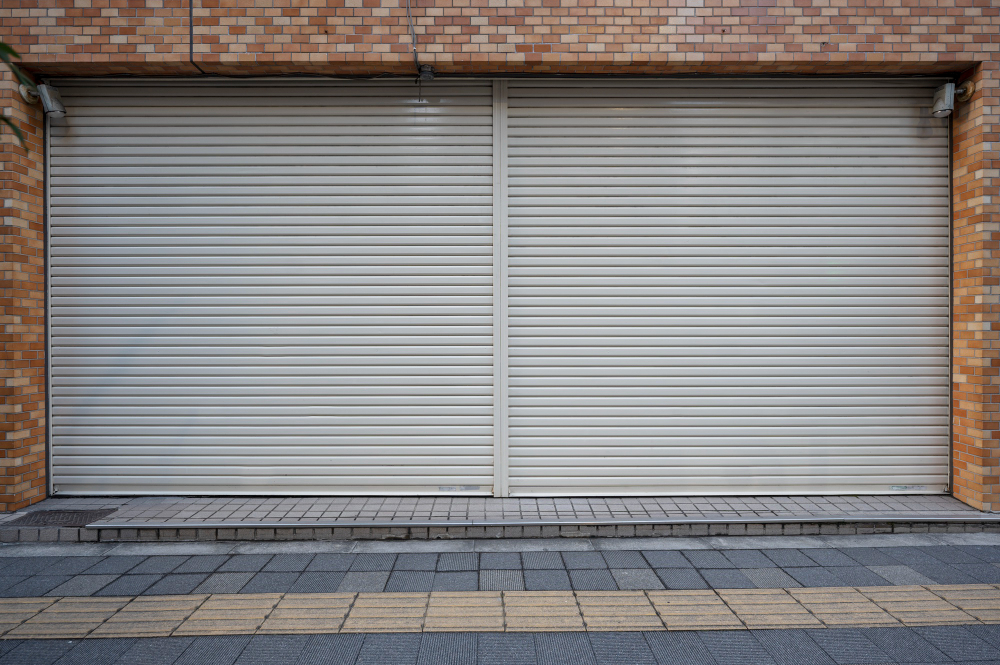
Choose the roller shutter door Choosing the right closure for a store, restaurant, or commercial warehouse involves more than just deciding between a manual or automatic model. The size of the opening, the thickness of the panel, the frequency of use, and exposure to rain, sea air, or pollution determine whether the closure will function well in daily operations or require maintenance sooner than expected.
A complete kit includes structural and finishing parts that work together: articulated profile or sheet, door bar, frame, metal tubing, and pipe. When these components are specified without connection to each other, gaps, noise, misalignment, and premature wear occur.
The right choice starts with the actual use of the commercial space: how many times the door will be activated, what level of security is needed, and in what environment it will be installed.
The roller shutter door kit is the set of metal parts that forms the roller shutter closure for shops, restaurants, pharmacies, warehouses, and shopping centers.
Unlike a sliding or hinged door, it moves vertically. When opened, the closure rolls up onto a shaft installed above the opening, freeing up useful space on the facade, sidewalk, or interior area.
THE profile for automatic door It forms the main surface of the closure. It can be used on manual or automatic doors, depending on the drive system defined for the project.
THE articulated plate It is also used in roller doors and can meet the needs of closures that require greater visual blocking and better sealing against dust, light, or insect entry.
At the bottom, the door bar It helps to keep the closure firm, level, and aligned. As for... frame It forms the side guides along which the profile moves.
The profile, bar, frame, metal frame, and tube must be compatible with each other for the door to open, close, and lock correctly.
Manual doors are typically suitable for establishments with infrequent opening and closing times. A warehouse, a store that opens once in the morning and closes at night, or an indoor storage facility can all work well with this system.
Manual operation can be achieved via chain, gearbox, or spring shaft, without relying on electrical power. This reduces installation complexity and facilitates use in locations with simple routines.
Automatic doors tend to make more sense in restaurants, pharmacies, convenience stores, shopping centers, and high-traffic areas. In these cases, manually opening and closing them several times a day wears down the mechanism, consumes staff time, and can generate excessive strain.
The motor and electronic control unit handle this cycle, but require proper electrical installation. In some projects, locks, sensors, pushbuttons, and stop systems are also included.
Since there are motorized moving parts, the NR-12 This should be considered in the system security assessment, especially in work environments with employee and customer traffic.
An automatic door isn't the best option in every situation. It's more suitable when the daily routine justifies the investment in the motor, electrical installation, and maintenance of the operating system.
The width and height of the opening determine the total weight of the door, the roller diameter, the axle strength, and the motor power, when automation is present.
Wide openings, common in commercial garages, department stores, and warehouses, require stronger panels and a structure compatible with the weight of the assembly. Otherwise, the enclosure may deform, become misaligned in the guides, or require more force than expected to operate.
Smaller openings, such as kiosks and narrow street-level shops, allow for lighter solutions. Even so, the measurement needs to consider the finished masonry, the frame space, and the area required for retracting the roll.
Ceiling height also plays a role. Low ceilings can limit the installation of the axle and collection box, requiring adjustments to the blade diameter or the overall design.
Measuring only the visible opening of the doorway is a common mistake. The door needs space for guidance, securing, retraction, and safe movement.
Projects with varying dimensions, more than one facade, or multiple closure points gain predictability when... purchase of steel for industrial works and projects It already takes into account final dimensions, installation sequence, and complementary parts.
The blade thickness influences resistance to impacts, wind, daily handling, and attempts at forced opening.
Street-level shops and restaurants that close at night often require more robust storage than low-traffic indoor warehouses. The material is exposed to impacts from carts, cargo handling, dust, rain, and, in some cases, the risk of break-ins.
Intense commercial use also alters the decision. Restaurants that open and close their doors several times a day, 24-hour pharmacies, and convenience stores need profiles or plates compatible with frequent cycles.
A very thin blade can become dented, warped, or noisy over time. On the other hand, a greater thickness also increases the overall weight and may require a more powerful motor.
There is no single thickness that works for all businesses. The choice depends on the opening size, exposure, required security, and frequency of operation.
Ideally, the supplier should receive this information before the quote is provided, so they can recommend a kit that is compatible with the operation.
The traditional profile consists of interlocking strips that allow the door to roll up. Some models may have micro-perforations for partial ventilation.
This configuration is suitable for shops, garages, and warehouses that need to be enclosed but still benefit from some air circulation or partial visibility.
Folding panels typically make more sense when the goal is to better block views and prevent the entry of dust, light, or insects. Food warehouses, storage areas, and facades that require more complete sealing can benefit from this format.
The choice also affects the weight. Heavier sheets may require a motor with more torque in automatic doors. Lighter profiles reduce the operating effort, but may offer less rigidity depending on the application.
The decision between profile and articulated sheet metal should be based on the function of the space: shop window, storage, facade, garage, auxiliary kitchen, or loading area.
Closing a store that wants to keep part of its window display visible at night doesn't require the same solution as a restaurant that stores dust-sensitive ingredients.
While the profile, sheet metal, and bar form the visible part of the door, the metal frame and tube support the assembly. They are used in the winding axis, supports, bearings, and masonry fastening.
One rectangular metalon An undersized rail can sag, bend, or compromise the alignment of the guides. This problem doesn't always appear immediately after installation.
In the first few months, the door may function normally. Later, noises appear, it becomes difficult to roll up completely, there are gaps on the sides, and it jams.
The tube also needs to match the weight and width of the door. When the structure cannot withstand the stress of use, the system works out of alignment and overloads other parts.
In metalwork and construction, many problems arise precisely from inadequate thickness, poorly executed welding, weak fastening, and lack of calculation. These precautions also apply to... errors in the use of metal tubing in door, gate, roof and enclosure structures.
The structure that supports the door should not be treated as a generic item in the budget. It needs to be tailored to the weight, the opening width, and the frequency of use of the door.
Roller shutters installed on exterior facades are exposed to rain, sun, dust, pollution and, in coastal regions, sea air.
Under these conditions, the galvanized steel It is usually evaluated because it receives a zinc coating, which helps protect the base steel against corrosion.
This protection, however, does not make the door immune to rust. Deep scratches, accumulated dirt, lack of cleaning, and constant exposure to salts or aggressive agents can reduce the durability of the assembly.
In dry, indoor areas, the requirement for corrosion protection is usually lower. However, industrial kitchens, wash areas, street-facing facades, and coastal regions require more attention.
Cuts, holes, and fastening points also deserve attention. When they expose the base steel, they can become vulnerable areas.
Corrosion protection needs to be defined before manufacturing, not just after stains or oxidized spots appear.
Environments subject to sea air, constant humidity, or pollution should consider how this occurs. corrosion of steel to define cleaning, inspection and maintenance with more criteria.
Street-level stores typically prioritize security and impact resistance. The storefront is exposed to sidewalk traffic, pollution, daily handling, and nighttime closing times.
Restaurants need to balance safety, appearance, and operation. During service, the door is usually closed, and the facade needs to remain clean, inviting, and in keeping with the rest of the environment.
In food service establishments with balconies, decks, or outdoor queues, the door also interacts with other facade structures. Enclosures, awnings, roofs, gutters, and waiting areas should be designed together to protect customers and operations.
Commercial warehouses and distribution centers operate on a different logic. Wide spans, truck traffic, yard dust, and frequent opening cycles may require automatic doors with reinforced structures.
The same door model might work in a small shop and fail in a warehouse, simply because the usage patterns and the size of the opening are different.
Therefore, the application must be clearly described before choosing the kit.
The roller shutter door isn't just visible when the establishment is closed. It also influences the facade during business hours.
When retracted, the door occupies space above the opening. If the roller, header, or frame remains visible, the finish must match the visual design of the store or restaurant.
On narrow facades, the door's volume can interfere with signage, lighting, and awnings. In stores with storefronts, the type of profile also changes the perception of space when the door is closed.
Street-level restaurants often use their storefront as an invitation to customers. Therefore, the door needs to offer protection without hindering access, brand recognition, or sidewalk traffic.
The choice should also consider closing outside of business hours. A misaligned, noisy door or one with signs of corrosion gives the impression of a lack of care for the location.
Safety and appearance need to be evaluated together in commercial facades open to the public.
Some errors are repeated in the specification of commercial roller doors. Many only appear after installation, when the cost of correction is already higher.
The most common ones are:
The cheapest quote can end up being more expensive when it omits parts, reduces thickness, or fails to consider the actual installation environment.
Maintenance begins with cleaning. Dust, salt, soot, and accumulated debris in the guides act as abrasives and accelerate wear.
In coastal regions or areas near industrial zones, this cleaning needs to be more frequent. The same applies to facades facing busy avenues.
In manual models, chains, bearings, and spring shafts require inspection. In automatic models, the motor, electronic control unit, sensors, and locks also need to be checked.
The lower bar deserves special attention because it receives impact during daily closing. Dents, misalignments, or locking failures can compromise safety and operation.
The screws and fasteners of the door frame to the masonry should also be checked. Small gaps can increase with repeated door movement.
Even a well-specified door can still present problems when cleaning, lubrication, and inspection are ignored.
The specification should include information such as span, drive type, installation environment, safety level, and frequency of use.
It should also indicate the components of the kit. Profile, hinged plate, door bar, frame, metal tubing, tube, motor, and accessories need to be clearly described.
In automatic doors, the motor power must match the weight of the assembly. In manual doors, the drive system needs to allow opening without excessive effort.
Exterior facades require attention to galvanized steel, finishes, and areas susceptible to corrosion. Interior environments may have less stringent requirements, provided there is no humidity or harsh cleaning products.
Before buying, it's worth checking:
At the purchase stage, the product category structural and metalwork It includes parts used in enclosures, bases, guides, reinforcements, and metal structures.
The more complete the specification, the lower the risk of comparing quotes with different materials.
A commercial roller shutter door needs to have a combination of opening, thickness, operating mechanism, corrosion protection, and supporting structure. The profile, bar, frame, metal tubing, and tube must all work together as a unified unit.
At Aço Cearense Comercial, we distribute galvanized steel products and parts for commercial enclosures, shops, restaurants, warehouses, and shopping centers.
To compare dimensions, thicknesses, and available options, Download our product catalog.. With the measurements and type of operation defined, request a Get a quote from our team..
The manual system is operated by a chain, reducer, or spring shaft and is typically used in locations with few openings per day. The automatic system uses a motor and electronic control unit, reduces staff effort, and better suits routines with frequent cycles.
Zinc coating helps slow down corrosion, but it doesn't make the door immune to rust. Deep scratches, sea air, accumulated dirt, and lack of cleaning can reduce its protective effect.
The thickness depends on the span, frequency of use, exposure to the elements, and the required level of safety. Areas with high traffic and a greater risk of impact usually require more robust profiles or sheets.
Installation involves securing the frame to the sides of the opening, assembling the axle, metal frame and support tube, fitting the profile or hinged plate, and installing the motor if the door is automatic.
Yes. In addition to cleaning and lubricating the guides and bearings, the automatic door needs checking of the motor, the electronic control unit, and the safety devices. The manual door focuses maintenance on the chain, shaft, and lower bar.
In many cases, yes. However, the profile, shaft, metal tubing, and pipe need to support the weight and stress of the motor. In some projects, the structure needs to be reinforced before automation.
Noise can arise from dirt in the guides, lack of lubrication, play, misaligned frame, deformed profile, or undersized structure. Preventive maintenance helps identify the cause before jamming occurs.