Steel is undoubtedly one of engineering's greatest allies. When we talk about building, transforming cities, and erecting structures, it immediately comes to mind. Whether we're investing in taller buildings, sturdy warehouses, safe bridges, or comfortable homes, steel and its derivatives are essential.
Its strength, versatility in design, remarkable durability, and constructive flexibility form the basis of 21st-century civil construction. Ceará Steel Group, We are proud to be a part of this journey.
This guide was designed to provide a comprehensive overview of the main steel products and their applications in civil construction. In addition to technical information, we share experiences, real-world examples, and practical tips that we have gathered throughout our careers in the industry.
Continue reading and join us as we explore the essence of the most commonly used materials on construction sites, their characteristics, advantages, where to apply them, and how they can impact the success of projects—from residential to industrial, including large infrastructure works.
The evolution of urban landscapes reveals an irreversible trend: the predominance of structures that prioritize safety, agility, and technical modernity. Steel is one of the cornerstones of this transformation, present in everything from critical structural elements that support high loads to the cladding of facades and highly complex architectural details.
But what leads the engineering industry and large architecture firms to choose this material as the main focus of their projects?
The omnipresence of steel in the world's most ambitious projects is not a matter of chance, but rather a combination of physical and chemical properties that overcome the limitations of conventional materials.
When we analyze the mechanical resistance, Steel stands out for its isotropic ability to withstand tensile, compressive, and bending stresses with minimal deformation.
| Unlike plain concrete, which has excellent compressive strength but fails under tension, steel maintains its structural integrity in high-stress scenarios, allowing engineers to design safer and more slender structures capable of absorbing dynamic and static loads without compromising the overall stability. |
This resistance is linked to relative lightness and high structural capacity of the material. The weight-to-strength ratio of steel is superior to that of structural masonry or traditional reinforced concrete.
In practice, this translates into a considerable reduction in the loads transmitted to the foundations, which generates cascading savings throughout the entire project budget.
Lighter structures require shallower and less expensive foundations, allowing construction on land with lower bearing capacity and promoting maximum use of the project's usable area.
THE logistical agility and speed of assembly These are differentiating factors that directly impact the developer's return on investment. While tailored methods on site Depending on curing times and complex formwork, metal structures operate under the logic of industrialized assembly.
The steel arrives at the construction site ready for installation, reducing the overall project schedule by up to 40%. This speed anticipates the client's cash flow and also minimizes indirect site costs, such as security, equipment rental, and field team maintenance.
THE Versatility and adaptability of projects They give steel unparalleled creative freedom. Through precise cutting, welding, and fitting processes, the material easily molds itself to complex geometries and future expansions. Unlike a concrete structure, which requires traumatic demolitions for renovations, steel allows for clean and safe structural reinforcements and layout modifications, adapting to changes in the building's use over time.
As regards longevity and sustainability, Steel positions itself as a long-term asset. When protected by appropriate surface treatments, such as galvanizing or high-performance epoxy paints, it withstands decades of exposure to harsh environments without loss of mechanical performance.
Furthermore, the ESG commitment of Ceará Steel Group It is reflected in nature. 100% recyclable of the material. The steel produced by Sinobras It utilizes bio-reducing agents and integrates into the circular economy, ensuring that the product's life cycle is environmentally responsible, from industrial casting to eventual reuse in new structures, drastically reducing the carbon footprint of the construction sector.
These characteristics place steel beyond the position of a simple raw material. It transforms into a global solution for the construction of the future.
Within construction projects, steel appears in different forms, each designed for specific functions. The secret lies in choosing the right material for each construction stage.
We've selected some products that make their mark from the foundations to the finishing touches. Check them out!
Sheet metal, whether flat or corrugated, is one of the most versatile elements in the metallurgical industry. It varies in thickness, finish, and composition, providing solutions for a wide range of needs.
What makes steel sheets indispensable is their ability to unite opposite poles: the Raw strength combined with ease of shaping.. They allow the designer to faithfully recreate the design from paper, thanks to the ease of technical manipulation and the diversity of gauges available in the portfolio of [company name]. Sinobras and Ceará Steel.
This flexibility explains why they are the right-hand man of those who build: from the lightness needed for an architectural detail to the safety and precision required in the flooring of industrial platforms and heavy machinery.
Metal profiles are shaped into specific geometric forms to provide support, forming beams, columns, and trusses. Their use ensures... structural precision and dimensional resistance.
Among the advantages of these profiles are standardized dimensions, the ability to span large distances, clean and quick assembly, precise adaptation to the project, and reduced weight compared to conventional alternatives.
In logistics warehouses, distribution centers, and corporate buildings, the use of metal profiles results in lighter structures, savings on foundations, and more freedom to create open environments.
You tubes They occupy central space in structures as well as in plumbing, electrical, and even decorative installations. They range from thin ducts to sturdy pillars, shaping innovative forms in architecture.
In our daily work on projects for construction companies, we've noticed a growing demand for solutions using tubing in staircases, railings, sports roofing, and "do-it-yourself" systems that optimize time and budget. Steel pipes combine function, beauty, and strength.
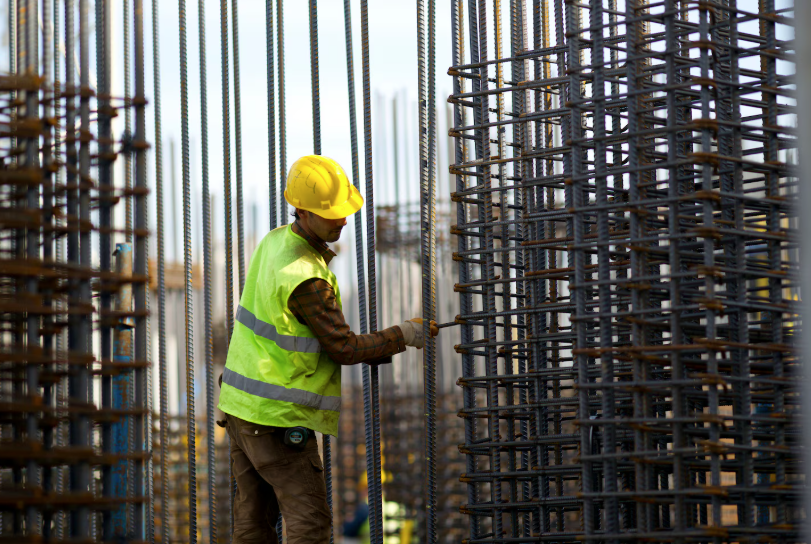
Bars are a classic element in everyday construction work. They appear as reinforcing bars in concrete reinforcement, Round, used in grids and accessories, or flat, used in supports and fixings.
In reinforced concrete, the bar stiffens and distributes the weight evenly, preventing cracks and ruptures. In metalworking shops and industrial parts manufacturing, bars allow for cutting, bending, and welding for customized adaptations.
THE Metalon represents industrialization of metalworking. The standardization of its sections allows complex assemblies, such as stages, stands, and internal partitions, to be executed with millimeter precision and minimal waste.
Its application in high-end gates and window frames is justified by... dimensional stability The material resists deformation and ensures perfect alignment over time.
For professionals looking to optimize their workflow, Metalon, distributed by Ceará Steel It offers the guarantee of steel with homogeneous particle size distribution (originating from Sinobras), facilitating precise cuts and high-penetration welds that accelerate the final delivery of the project.
To the Corner brackets (or L-profiles) appear in almost every construction project.. They reinforce vulnerable corners, remove chips from fragile finishes, help secure window and door frames, and often appear as a design element in staircases and street furniture. Among the main advantages are:
We install corner guards in a wide variety of situations: from protecting stair treads to supporting panels and kiosks in public squares. It's a simple product, but one that makes all the difference in both technical and visual details.
To illustrate the role of different steel products in practice, we have selected case studies from our portfolio and experiences reported by partners. Each context calls for specific solutions, and the "right tool in the right place" factor brings clear gains in safety, assembly, and durability.
In residential buildings, we use rebar as the skeleton for foundations, blocks, beams, and slabs. Sheets galvanized They can be part of both the roof structure and the ventilated facade. Flat bars appear in gates, railings, window and door frames, and condominium details.
In recent years, we have seen significant growth in the use of metal structures for leisure and party hall roofs, which offer advantages such as dry assembly, a cleaner construction site, and ease of future expansion.
U and I profiles are commonly used in support beams, while metal tubing complements details in playgrounds, gourmet areas, and some of the common-use furniture.
In industry and logistics warehouses, the application of steel reaches the pinnacle of technical creativity. Structures designed with I and U profiles span large distances, allowing for column-free areas, which facilitates the circulation of machinery and the organization of the production line.
Structural tubes and bars are used to construct mezzanines, walkways, lifting platforms, and even internal metal staircases. Thick checkered plates are highly sought after for forming floors in loading areas, given their stability even under impacts.
Our technical team highlights that a large portion of industrial projects also require custom-made joints and parts, cut using plasma or oxyfuel cutting, demonstrating the need to adapt the steel to each client's specific requirements.
Large infrastructure projects cannot exist without steel. Rolled profiles, high-strength bars, and special plates form the structural basis of projects such as bridges, viaducts, and urban walkways.
In urban areas, steel bars are used in guardrails, partitions, and other protective elements.
In construction environments, questions often arise: "Should I opt for concrete or steel slabs?", "Steel or conventional structure, which one to choose?".
We know how common these issues are — and in each case, it's necessary to evaluate not only the initial cost, but also the life cycle, maintenance, safety, and expansion possibilities.
To facilitate the analysis, we have listed the main benefits of Choose steel., as observed by our clients in their projects:
Each stage of the project requires a specific type of steel product. More than just price or availability, it's necessary to analyze the scenario from a broader perspective:
Our suggestion is: engage in dialogue with qualified professionals (engineers, architects, and specialized suppliers) to evaluate the descriptive report, structural calculations, and technical standards. And, more than that, rely on our sales team to identify opportunities to optimize costs and performance.
Node Ceará Steel Group, We work in accordance with the needs of Ceará and surrounding regions, offering solutions for small and large projects. Sinobras, our group's brand responsible for production, guarantees the origin and quality of the steel used; while Aço Cearense is the agile and specialized purchasing channel for customer service.
The construction industry has a direct impact on the environment, and therefore it is our duty to act responsibly. In our group, this commitment is reflected both in the production cycle and in our sustainability and social impact strategies.
In the Sinobras Forestry, We invest in eucalyptus plantations for renewable energy production, reducing emissions and preserving native biomes. Through the Instituto Aço Cearense, we support educational, sports, and cultural projects for local communities.
These are actions that demonstrate our responsibility beyond the boundaries of the industry — reinforcing ESG values both inside and outside the production area.
If you want to know more about specific examples, check out the article "Practical applications of Aço Cearense and Sinobras products in civil construction and industry." You will understand how we transform steel into real projects with less environmental impact.
Receiving the steel products at the construction site is only the beginning of the challenge. Success is achieved through proper assembly, adherence to processes, and careful maintenance.
Preventive maintenance is the key to the longevity of metal structures. Close monitoring with reliable suppliers, such as our service team in Ceará, reduces the risk of failures and optimizes the life cycle of projects.
Every day, the The industry reinvents itself.. New steel alloys, advanced laser cutting processes, electrostatic painting, special profiles, and high-performance sheets are transforming the construction industry.
3D structural calculation software, BIM modeling, custom manufacturing, and prefabricated assembly have made the use of steel more democratic and accessible – from small houses to mega urban projects.
Among the main expectations for the sector, we highlight:
All these advancements benefit not only the engineering sector, but also contribute to greener, more economical, and more comfortable buildings.
Throughout this material, we emphasize the importance of specifying the correct product, following standards, and trusting committed suppliers. At Grupo Aço Cearense, we are proud to combine cutting-edge industrial production, by Sinobras, with the commercial efficiency and agility of Aço Cearense in Ceará.
Our production integrates best practices in quality, traceability, process control, and innovation. Our sales team focuses on fast service, customized solutions, agile logistics delivery, and comprehensive support for B2B clients, including construction companies, industries, metalworking shops, and technical professionals.
We believe that choosing the right supplier is as strategic as the project itself. Count on us to provide... Support at every stage of your project, from budgeting to final assembly.
To build, in the fullest sense, is to transform ideas into safe, durable, and innovative structures. When we choose the right steel product, combining technical specifications, proven quality, and environmental responsibility, we overcome challenges and create projects that last for generations.
Throughout this guide, we present the main materials used in civil construction, real-world examples of their application, tips for selection and care, and technological trends that are emerging as the new industry standard.
If you are an engineer, architect, builder, metalworker, or simply dream of starting your own business, take the opportunity to learn about the solutions, unique features, and tradition of [Company Name]. Ceará Steel Group. We are part of your project, side by side, making possible what you've always imagined.
Building responsibly is the best business. Discover how Grupo Aço Cearense transforms the steel cycle into a competitive advantage for your project. Check out the article “Recycled steel in civil construction: sustainability and efficiency”.
Iron and steel products are materials derived from the processing of iron ore and other alloys, such as steel or cast iron, with different shapes and purposes. Among them, sheets, profiles, tubes, bars, reinforcing bars, and other components used in civil and industrial works and urban installations stand out. Their main function is structural, but they can also be used in finishes and architectural elements.
The most commonly used steel products in construction include sheets (plain, galvanized, checkered), metal profiles (I, U, L and T), pipes (structural, industrial, conduit), metal tubing, angle bars, bars (flat, round, square) and reinforcing bars. Each one meets specific needs in different stages of construction, such as foundations, framing, facades, roofs, railings and internal structures.
To choose the best product for each project, we recommend analyzing factors such as structural requirements (weight, load, spans), exposure to harsh environments (humidity, weather, chemical agents), desired finish type (paint, galvanization, stainless steel), technical standards, and supplier references.
If you're looking for quality, speed, and security, the ideal solution is to partner with recognized companies like Aço Cearense, the commercial arm of the Aço Cearense Group, specializing in the sale and distribution of construction materials in Ceará and surrounding areas. We offer comprehensive support, a broad portfolio, a varied inventory, and personalized B2B service.
The price of products depends on the type of material, finish, dimensions, quantity, and market price of steel. Bars, sheets, tubes, and profiles can vary considerably depending on their carbon content, thickness, galvanization, or specific application.