THE FIPA 2026 It showed that the industrial development of the Northern region depends on a combination of investment, innovation, sustainability, skills development, and the strengthening of local supply chains. For the steel sector, the fair reinforced the strategic role of steel in construction, infrastructure, and industrial modernization.
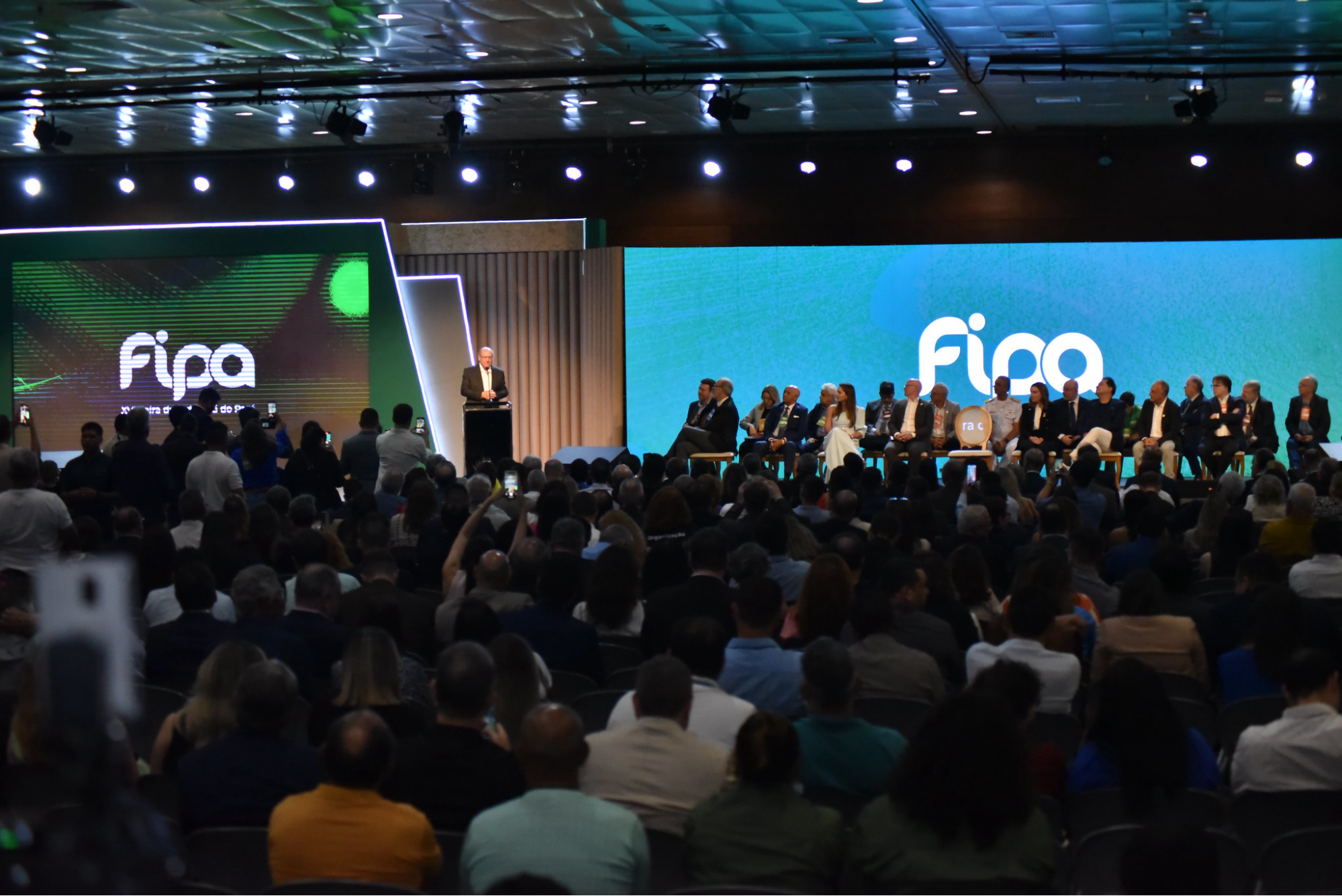
Held between May 20th and 23rd in Belém, the 17th Pará Industry Fair brought together companies, suppliers, financial institutions, specialists, and representatives of the public sector. The program created space for business, technical debates, and the presentation of solutions focused on productivity.
We participated in this meeting through SINOBRAS. Our presence helped to strengthen relationships and discuss topics related to the circular economy, industrialization, and the development of the Northern region.
FIPA 2026 confirmed the diversity of Amazonian industry and its capacity to generate business. According to the Federation of Industries of the State of Pará, approximately 40,000 people attended the event during the four days.
Furthermore, the program brought together exhibitors from different sectors. Mining, steelmaking, energy, construction, food, logistics, and bioeconomy all shared the same space.
This diversity showed that no industrial chain advances in isolation. An infrastructure project, for example, depends on steel, concrete, energy, transportation, equipment, and specialized services.
Similarly, the expansion of a factory drives the growth of suppliers of structures, machinery, electrical systems, and logistics solutions. Therefore, industrial development generates effects that reach various sectors.
The fair also served as a space for commercial networking. The business roundtables promoted more than 320 qualified interactions between companies from different municipalities in Pará.
Meanwhile, credit initiatives have created prospects for new financing. FIEPA reported a projection exceeding R$ 5 million based on connections made during the event.
These results help to understand the region's potential. Local companies need access to credit, suppliers, technology, and new markets to expand their production capacity.
At the same time, large industries depend on a well-prepared regional base. Small and medium-sized suppliers participate in the supply of materials, maintenance, transportation, assembly, and technical services.
In this context, steel occupies a relevant position. It appears in industrial structures, warehouses, equipment, foundations, storage systems, and infrastructure projects.
THE SINOBRAS It integrates this chain through its operation in Marabá. Our industrial presence in the region expands access to steel and strengthens the connection between production and regional development.
Thus, FIPA didn't just showcase products or brands. The event demonstrated how different companies can work together in an integrated way to transform resources, knowledge, and investments into industrial activity.
FIPA 2026 was not an exclusive trade fair for the steel industry. However, the topics covered directly influence the production, transformation, and use of steel.
The discussions showed that productive efficiency and environmental responsibility must advance together. Furthermore, the industry needs to increase its capacity to respond to regional demands.
Among the main movements observed, some deserve attention:
These trends are directly related to Brazilian steel industry. The sector needs to keep up with technological changes without losing efficiency, quality, and safety.
The pursuit of productivity also demands more precise decisions. A company that understands its key performance indicators (KPIs) can identify raw material losses, recurring downtime, and logistical bottlenecks.
Furthermore, digital systems can improve maintenance planning. Sensors, operational data, and failure histories help organize interventions before a critical shutdown.
However, technology alone cannot solve poorly structured processes. The company needs to combine tools, people, and management methods.
In the steel industry, this care extends to transformation. Cutting, bending, welding, and shaping depend on appropriate parameters to preserve the material's performance.
Therefore, the modernization observed at FIPA points to an integrated approach. The industry needs to invest in equipment, but also in training, control, and process improvement.
Digital transformation gained significant prominence at FIPA 2026. The "Brazil More Productive" program, for example, presented solutions focused on management, process optimization, and the adoption of industrial technologies.
This movement shows that innovation is not restricted to large factories. Micro, small and medium-sized enterprises can also improve their results with organized changes.
In many cases, improvement begins with observing the production flow. Unnecessary movements, disorganized inventory, and repetitive steps increase delivery time.
Based on this diagnosis, the company can reorganize the space, standardize tasks, and monitor indicators. Then, digital tools can enhance control.
In the steel industry, modernization can encompass various activities. Management systems assist in purchase planning, inventory monitoring, and delivery scheduling.
In the factory, operational data helps control yield, energy consumption, and equipment availability. Furthermore, quality systems support the traceability of materials.
Maintenance is also undergoing changes. Predictive maintenance in industry It allows you to monitor signs of wear before a failure interrupts operation.
On the other hand, digitization demands security and reliability of information. Incomplete data or data entered without a standard can lead to incorrect decisions.
Therefore, team training remains essential. Professionals need to understand both the operation and the tools used to control it.
FIPA also brought students, companies, and educational institutions closer together. Initiatives such as innovation competitions and skills training activities demonstrated the value of this connection.
When industry presents real-world challenges to students, it helps to train better-prepared professionals. At the same time, it receives new ideas for solutions to known problems.
This relationship fosters technological innovation. However, the solutions need to respect local conditions, investment capacity, and the objectives of each company.
In the case of the steel industry, modernization does not mean abandoning accumulated knowledge. Progress occurs when technical expertise, data, and new technologies begin to work together.
Sustainability occupied a central position at FIPA 2026. The event's theme itself, "Amazon: Root of the Future," linked economic development to environmental responsibility.
The results of the fair also reflected this proposal. According to FIEPA, almost two tons of waste were removed from the flow destined for landfills.
The event achieved a recyclability rate of 92%. Furthermore, it prevented the use of over 36,000 plastic cups and offset 60.2 tons of carbon dioxide.
These figures do not represent the full complexity of industrial sustainability. However, they show that environmental goals can be incorporated into the planning of large events.
For industry, the challenge is broader. Companies need to assess energy consumption, raw material use, emissions, waste, and byproduct disposal.
The circular economy helps to organize part of this discussion. In this model, materials are no longer treated merely as waste and can return to production processes.
Steel has an important characteristic in this context. It can be recycled and used as a raw material for new steel products.
However, circularity requires an organized chain. Collection, sorting, transportation, processing, and quality control need to function in a coordinated manner.
The content about the relationship between circular economy and steel It explains how the material participates in this model.
During FIPA, we also contributed to this discussion. Ian Corrêa, Vice President of Operations at SINOBRAS, participated in a panel on the circular economy.
The participation reinforced the importance of discussing solutions compatible with the characteristics of the Amazon. The region offers economic opportunities, but also requires careful management of natural resources and communities.
Furthermore, our chain includes the operation of SINOBRAS Florestal, responsible for cultivating eucalyptus on its own land.
This integration contributes to the supply of bio-reducing agent used in the production process. At the same time, it demands environmental management, monitoring, and long-term planning.
On our page sustainability, We present the group's initiatives related to environmental and social aspects.
FIPA demonstrated that sustainability is no longer a separate issue from industrial strategy. It influences market access, efficiency, reputation, and investment capacity.
The industrial growth of the Northern region depends on the expansion of its infrastructure. Roads, bridges, ports, power grids, and sanitation systems are essential for connecting cities and productive activities.
Steel plays a role in different stages of these projects. In reinforced concrete, rebar helps to form foundations, columns, beams, and slabs.
In metal structures, profiles, sheets, and tubes form sheds, walkways, roofs, and supports. Furthermore, machinery and equipment also depend on steel components.
This diversity makes the steel industry a foundation for other supply chains. When the demand for infrastructure grows, so does the need for materials, services, and labor.
The construction industry has a similar effect. Residential, commercial, and industrial projects drive activity in suppliers of steel, cement, equipment, and technical solutions.
However, the availability of materials is not the only relevant factor. Projects need to receive products that are suitable for the design, on time and in the conditions specified.
Therefore, the supply chain must combine production, transformation, transportation, and distribution. Failures in any of these stages can affect the project schedule.
Our operations in Marabá bring steel production closer to the demands of the Northern region. This presence reduces the distance between the industrial base and different consumer markets.
SINOBRAS produces materials for the construction industry and other applications. Therefore, we participate in a supply chain linked to construction, infrastructure, and regional development.
The article about applications of Aço Cearense and SINOBRAS products It provides examples of how these materials can be used.
FIPA also showed that industrial works and projects require qualified suppliers. Price remains relevant, but it should not be the only criterion.
Provenance, quality, consistency, and commercial support help reduce risks. Furthermore, correct specifications prevent substitutions that could compromise the project's execution.
The steel must meet the standards and conditions defined by the responsible technician. Therefore, buyers and construction teams must maintain clear communication.
THE steel quality in civil construction It influences the safety, productivity, and lifespan of projects.
With the advancement of infrastructure, demand is expected to extend beyond just steel products. Companies will also need transportation, storage, assembly, and maintenance services.
In this way, the steel sector contributes to creating opportunities throughout the region's industrial chain.
We participated in the 17th FIPA to strengthen our connection with clients, partners, leaders, and industry professionals. The event created a favorable environment for exchanging experiences and showcasing our work.
During the four days, we welcomed audiences interested in the steel industry and regional development. Our presence also helped to bring SINOBRAS closer to companies involved in the construction supply chain.
Furthermore, the fair allowed us to reinforce our commitment to the Northern region. Our operation in Marabá represents an industrial base linked to job creation, production, and serving the market.
One of the highlights was the recognition given by Coopercon Pará. SINOBRAS was honored as one of the five largest suppliers to the organization in terms of business volume for 2025.
This recognition demonstrates the importance of the business relationships built in the region. It also reinforces our presence among companies in the construction sector.
Ian Corrêa's participation in the panel on circular economy broadened our contribution to the technical content of the fair. The discussion allowed us to connect industrial production, sustainability, and resource reuse.
At our booth, we showcased how we transform resources into development. We also presented our connection to a chain that integrates steel production, forestry activity, and socio-environmental responsibility.
FIPA allowed this performance to be presented to a diverse audience. Companies, students, experts, and institutional representatives circulated throughout the program.
Therefore, our participation was not limited to brand exposure. The event provided an opportunity for listening, networking, and identifying new opportunities.
This close relationship helps us understand how market demands are changing. Clients are looking for materials, but they also expect predictability, quality, and commitment to projects.
At the same time, industry events help suppliers keep up with challenges that arise on construction sites and in factories. This exchange improves the responsiveness of the entire supply chain.
THE SINOBRAS' trajectory This demonstrates our relationship with the industrialization of the region. The unit began operating in Marabá and expanded the presence of the Aço Cearense Group in the North.
At FIPA 2026, we reinforce this history and our interest in participating in the next development cycles of Pará and the Amazon.
The closing of the fair does not end the debates initiated during the program. The topics presented continue to influence decisions made by companies and institutions.
The first opportunity lies in strengthening local suppliers. Large projects need companies capable of meeting technical requirements, deadlines, and volumes.
In this process, qualification and management make all the difference. Suppliers who organize their controls can compete for more demanding contracts.
The second opportunity lies in modernization. Companies can start with simple diagnostics and identify steps that generate losses of time, energy, or materials.
Then, they can adopt technologies compatible with their objectives. The investment should respond to concrete needs, and not just follow trends.
The third opportunity involves sustainability. Reuse, waste reduction, and energy efficiency can generate environmental and operational benefits.
In the steel industry, this progress depends on the integration of production, recycling, and resource management. Furthermore, companies need to communicate their practices transparently.
Finally, regional infrastructure will remain crucial. Without adequate logistics, energy, and services, industry faces costs and limitations to growth.
FIPA 2026 demonstrated an interest in building joint solutions. Companies, public authorities, financial institutions, and industrial entities participated in the same environment.
The challenge now is to transform connections into lasting projects, investments, and business relationships.
For us, the trade fair reinforced the importance of maintaining dialogue with the market. It also confirmed SINOBRAS' role in strengthening the steel and industrial chain in the Northern region.
FIPA 2026 revealed an Amazonian industry connected to innovation, sustainability, business, and regional development.
At SINOBRAS, we participate in this transformation through steel production and our industrial presence in Marabá. We meet demands related to civil construction and various projects in the region.
To learn about the products and solutions offered by the Aço Cearense Group, Download our catalog. and check out the options available for your company or project.
The fair showcased products, services, technologies, and initiatives from various industrial sectors. The program also included discussions on sustainability, credit, innovation, skills development, and economic development.
Modernization of production, digitalization, circular economy, and integration with local suppliers have gained ground. Furthermore, quality, energy efficiency, and traceability remain relevant to the sector.
The industry supplies reinforcing bars, wires, profiles, and other products used in reinforced concrete structures and elements. Therefore, its production capacity influences availability, quality, and the progress of construction projects.
FIPA brings together industries, suppliers, investors, institutions, and professionals. This connection fosters business, knowledge exchange, and the identification of opportunities for the regional economy.
These events generate business contacts, introduce suppliers, and facilitate access to credit and knowledge. Furthermore, they help local businesses gain visibility and participate in new supply chains.