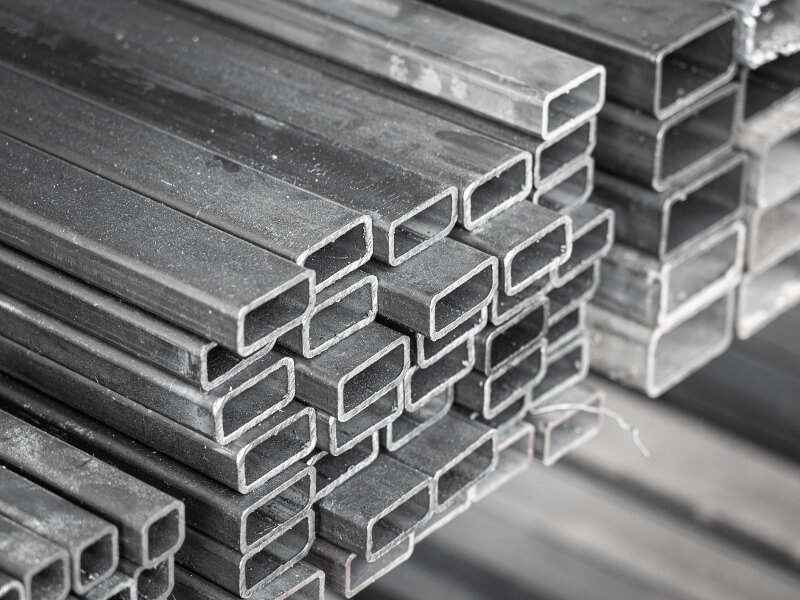
THE Stainless steel for professional ovens. The type of stainless steel should be chosen according to the function of each part. 304 stainless steel tends to be better suited for indoor, humid areas and those subject to intensive cleaning. 430 stainless steel, on the other hand, can be used in exterior panels and components exposed to less corrosive conditions.
However, the decision doesn't depend solely on the alloy. Temperature, contact with food, presence of grease, finish, thickness, welding, and frequency of use also affect performance.
Therefore, different parts of the same oven can be made of different materials. This combination allows for a balance of durability, ease of cleaning, appearance, and manufacturing cost.
Ovens used in restaurants, bakeries, pastry shops, and industrial kitchens face demanding conditions. Heat, steam, grease, and cleaning products are part of the daily routine for these appliances.
Furthermore, some surfaces come into direct or indirect contact with food. For this reason, they need to remain preserved, smooth, and easy to clean.
Stainless steel meets these needs well because it is corrosion-resistant and allows for various manufacturing processes. Sheets can be cut, bent, and welded to form chambers, panels, trays, and structures.
The material is protected by a thin film formed by the chromium in contact with oxygen. This passive layer of stainless steel It helps to prevent further oxidation.
When the surface suffers minor damage, this film can regenerate. However, the process depends on proper cleaning conditions and exposure to oxygen.
Residues of salt, chlorides, and chemicals can compromise this protection. Therefore, no type of stainless steel should be considered completely immune to corrosion.
Resolution RDC No. 216 of Anvisa establishes criteria for good practices in food services. Equipment and utensils that come into contact with food must be made of materials that do not transmit undesirable substances.
Furthermore, the surfaces need to remain smooth, waterproof, washable, and resistant to cleaning processes. Stainless steel is not the only possible material, but its characteristics help meet these requirements.
THE Anvisa's guide to good practices It also reinforces the need to keep equipment and utensils in proper condition.
In professional ovens, corners, seams, and welds deserve special attention. A quality sheet metal doesn't compensate for gaps that accumulate grease or make cleaning difficult.
Therefore, the choice of material must go hand in hand with the equipment design. Shape, assembly, and finish influence both hygiene and lifespan.
Different types of stainless steel differ in chemical composition, corrosion resistance, formability, weldability, and thermal behavior. Therefore, an alloy suitable for the external panel may not be suitable for the internal chamber.
304 and 430 stainless steels are frequently found in professional kitchen equipment. However, other alloys may be necessary in more aggressive conditions or at very high temperatures.
To know The properties and uses of stainless steel. It helps to understand why the choice needs to consider each component.
304 stainless steel belongs to the austenitic steel family. Its composition includes chromium and nickel, which enhances its resistance to corrosion, forming, and welding.
This alloy is typically recommended for areas subject to humidity, steam, and frequent cleaning. Therefore, it may be found in internal chambers, trays, racks, and surfaces near food.
304 stainless steel also allows for the manufacture of parts with more complex bends. Furthermore, it exhibits good performance in components that require welding.
These characteristics are advantageous for combination ovens and equipment that use steam during cooking. In these cases, condensation increases the surface's exposure to moisture.
However, the material still requires care. Cleaning products containing chlorine can cause stains or localized corrosion if left on the surface.
Therefore, cleaning should follow the oven and cleaning product manufacturer's instructions. After cleaning, rinsing is necessary to remove any chemical residue.
430 stainless steel belongs to the ferritic steel family. It contains chromium, but does not have a significant amount of nickel in its composition.
This feature contributes to a more predictable cost. Furthermore, the material offers a good visual finish and performance suitable for mild indoor environments.
430 stainless steel can be used in exterior panels, sides, doors, and components that are not exposed to constant moisture. It is also used in the finishes of stoves, ovens, and other equipment.
The content about Characteristics and applications of 430 stainless steel It presents other uses for this alloy.
On the other hand, 430 stainless steel has less corrosion resistance than 304 in humid environments. Its application should be evaluated more carefully in areas near sinks or steam systems.
This alloy also has limitations in forming and welding compared to 304. Therefore, complex parts or parts with many joints may require a different solution.
316 stainless steel contains molybdenum, an element that improves resistance to chlorides and some chemical environments.
This alloy can be used in equipment exposed to very salty foods, harsher cleaning products, or specific corrosive conditions. However, it is not usually necessary in all parts of the oven.
Its cost tends to be higher than that of 304 stainless steel. Therefore, its use should be based on a technical need identified in the project.
A kitchen near the coast doesn't automatically require 316 stainless steel for all equipment. Actual exposure to sea air, ventilation, and cleaning need to be considered.
Areas near burners and heating elements may experience temperatures higher than those recorded in the cooking chamber.
Under these conditions, 304 and 430 stainless steel are not always the most suitable options. Components continuously subjected to intense heat may require alloys developed to resist thermal oxidation.
This assessment is necessary for heating tubes, burner supports, baffles, and combustion-related parts. The manufacturer must consider the maximum temperature and exposure time.
The heating and cooling cycles also need to be analyzed. The repetition of these cycles causes the metal to expand and contract.
Therefore, the Stainless steel for professional ovens. It cannot be defined solely by the commercial model of the alloy. Thermal calculations and mechanical design remain indispensable.
Each type of oven creates its own conditions of heat, humidity, and cleanliness. Therefore, the specification should begin with an analysis of the cooking process.
A combination oven uses steam and dry heat. A pizza oven, on the other hand, can operate at high temperatures but may have lower humidity levels in certain areas.
Furthermore, the same appliance has different zones. The interior part faces one condition, while the exterior cabinet remains in contact with the kitchen environment.
Combination ovens operate using hot air, steam, or a combination of both. This means the internal chamber is subjected to frequent moisture and temperature variations.
304 stainless steel is often a suitable option for the interior of equipment. It can be used for internal walls, supports, trays, and parts exposed to condensation.
Stainless steel 430 can be used in exterior panels, provided the installation does not involve constant contact with water. However, proximity to washing areas should be considered.
Doors and structures can combine different materials. In this case, the design needs to consider welding, fastening, insulation, and expansion.
Convection ovens distribute heat through air circulation. They are common in bakeries, pastry shops, restaurants, and continuous production operations.
The interior can be made of 304 stainless steel when it comes into contact with moisture, residue, and cleaning products. Trays and supports also need to withstand frequent handling.
Exterior panels can be made of 430 stainless steel under moderate conditions. This choice should take into account ventilation and the temperature reached on the surface.
Furthermore, motors, fans, and internal components need materials that can withstand heat and vibration. Not all of these parts require the same alloy used in the combustion chamber.
Rotary ovens are widely used in bakeries and high-volume operations. The equipment moves carts or trays during the baking process.
This usage increases the mechanical stress on rails, supports, and internal structures. Therefore, thickness, stiffness, and reinforcements need to match the load.
304 stainless steel is suitable for humid areas and components subject to frequent cleaning. For exterior cladding, 430 stainless steel can be used, depending on the environment.
Since the equipment has moving parts, the specification must also consider wear. Corrosion resistance is not a substitute for friction and fatigue analysis.
Deck ovens use a refractory surface to transfer heat to food. Stainless steel may be found in the chamber, frame, door, and cabinet.
Areas near the ballast experience high temperatures. Therefore, the manufacturer must verify that the chosen stainless steel can withstand the expected temperature conditions.
External parts and finishes can use 430 stainless steel in dry environments. Surfaces subject to humidity and intensive cleaning can use 304 stainless steel.
The ballast itself typically uses refractory materials, not stainless steel sheets. Therefore, steel is used in the support, lining, and components of the equipment.
Stoves and salamanders have different configurations than conventional ovens. Some keep food warm, while others use intense radiant heat.
In these appliances, the parts near the heating elements require specific thermal evaluation. Trays and areas in contact with food can use 304 stainless steel.
The outer cabinet can be made of 430 stainless steel when exposure to moisture is limited. However, grease collection trays need to withstand frequent cleaning.
You benefits of stainless steel sheets They allow the material to be adapted to different formats. Even so, each piece must be sized according to its function.
Choosing stainless steel for each component avoids using a single alloy for all parts. This strategy can improve performance and control equipment costs.
Before making a selection, the manufacturer must map the temperature, humidity, food contact, and hygiene zones.
Some common applications help guide this analysis:
The oven door combines structure, insulation, glass, sealing, and finishing. Therefore, different materials can be combined in this piece.
The interior lining can be made of 304 stainless steel when exposed to steam and residue. The exterior can be made of 430 stainless steel for equipment installed in dry environments.
The quality of the seal also affects performance. Vapor leaks can increase moisture on components that were not designed for that exposure.
Furthermore, hinges and latches need to withstand repeated cycles. In these aspects, mechanical strength and wear resistance are highly relevant.
Trays come into direct contact with food and undergo frequent washing. Therefore, 304 stainless steel is a common choice.
However, very low thicknesses can promote deformation. This risk increases when the part is subjected to thermal shock or concentrated loads.
The edges should be properly finished to prevent cuts and the accumulation of residue. Additionally, welds and corners need to facilitate cleaning.
The content about Stainless steel in the food industry. It presents other factors related to contact with food.
Ducts and range hoods receive grease, heat, and steam. Condensation can form a damp film on the surface.
Therefore, interior areas and collection gutters may require 304 stainless steel. However, less exposed exterior parts can use 430 stainless steel.
Cleaning must remove grease without damaging the passive layer. Additionally, the equipment must allow access to areas where residue accumulates.
A durable material does not eliminate the need for maintenance. When grease remains on the surface, it increases the risk of stains and degradation.
The choice of alloy partially determines performance. However, thickness and finish also affect strength, hygiene, weight, and cost.
A thicker sheet offers greater rigidity. However, it increases the weight and can make it more difficult to shape certain parts.
On the other hand, a very thin sheet can vibrate, warp, or deform during use. The risk depends on the size of the panel and the supporting structure.
External panels may use different thicknesses than the chambers and trays. This is because the loads and temperatures are not the same.
A large door needs to withstand its own weight and the cycles of opening. A tray, on the other hand, needs to support food without deforming.
Furthermore, heated parts undergo expansion. The design must provide for clearances, fasteners, and reinforcements compatible with this movement.
Therefore, there is no universal thickness for ovens. The definition must consider dimensions, load, temperature, and manufacturing process.
The brushed finish features uniform lines across the surface. It is common in professional equipment because it combines appearance and ease of maintenance.
Minor signs of wear tend to be less noticeable on this finish. However, cleaning should follow the direction of the brushing.
Abrasive products can alter the visual pattern. Additionally, carbon steel wool contaminates the surface and can cause rust spots.
The article about brushed stainless steel It explains its main characteristics.
Polished stainless steel has a higher shine and less apparent roughness. Therefore, it can be used in visible parts and projects with greater aesthetic concerns.
However, fingerprints and scratches may become more noticeable. The cleaning routine should take this behavior into account.
In interior areas, the finish needs to facilitate the removal of residue. Therefore, appearance should not be the only criterion.
The manufacturer should also assess how welds and folds affect the visual result. Differences in texture may appear after manufacturing.
The durability of Stainless steel for professional ovens. It depends on the specifications and usage routine. Some mistakes can compromise even a properly fitted alloy.
The first problem is choosing the material based solely on price. This decision can lead to using 430 stainless steel in an area with constant humidity.
The opposite mistake also occurs. Using 316 stainless steel everywhere can increase costs without generating a corresponding benefit.
Another problem is contamination from carbon steel. Tools, brushes, and workbenches used on common materials can transfer particles to stainless steel.
These particles oxidize and create orange spots. Often, the defect is attributed to the stainless steel, although it originates from manufacturing or maintenance.
Products containing chlorine require care. When left on the surface, they can attack the passive layer and cause localized corrosion.
Dilution should follow the manufacturer's instructions for the cleaning product. Additionally, rinsing must completely remove the product.
Highly abrasive sponges can also scratch the finish. Therefore, the team should use materials that are compatible with the equipment.
Cleaning shouldn't only happen when the oven has visible dirt. Fine residues of salt and grease also need to be removed.
Poorly finished welds create roughness and build-up points. Furthermore, the heat from welding can alter the surface near the joint.
After the process, the area must receive appropriate treatment. Removing contaminants helps restore the material's protection.
Open seams also facilitate the entry of liquids. Over time, moisture can reach internal parts and insulation.
Therefore, manufacturing and finishing are part of choosing stainless steel. Buying a good sheet is just one step in the project.
Seals, hinges, and drainage systems need inspection. A defect in these components can direct vapor to inappropriate areas.
In addition, deep scratches and corrosion points should be assessed. The sooner the problem is identified, the less intervention is likely to be required.
The team should also follow the manufacturer's instructions. Products, temperature, and cleaning frequency may vary between models.
Thus, maintenance preserves both the finish and the operational safety of the equipment.
Choose the Stainless steel for professional ovens. It requires analyzing each component. The internal chamber, cabinet, trays, and heating zones may demand different solutions.
At Aço Cearense Comercial, we offer stainless steel materials for equipment manufacturers, industrial kitchens, and food service companies.
Discover our product options and Download the Aço Cearense catalog. to evaluate formats, finishes and specifications for your project.
304 stainless steel is usually recommended for humid areas, surfaces in contact with food, and equipment subject to frequent cleaning. 430 stainless steel can be used for panels and components installed in dry areas.
Stainless steel can corrode when exposed to chlorides, carbon steel contamination, or improper cleaning. The correct alloy, good finishing, and maintenance reduce this risk.
Stainless steel contains chromium, which forms a protective layer on the surface. Carbon steel does not have the same protection and usually requires painting or another anti-corrosion coating.
The legislation does not mandate the use of stainless steel in all equipment. However, it requires smooth, washable, impermeable, non-toxic, and well-maintained surfaces, characteristics that stainless steel meets when properly specified.
The team must use appropriate cleaning products, rinse the surface, and avoid abrasive sponges. Additionally, they need to prevent contamination from tools and carbon steel particles.