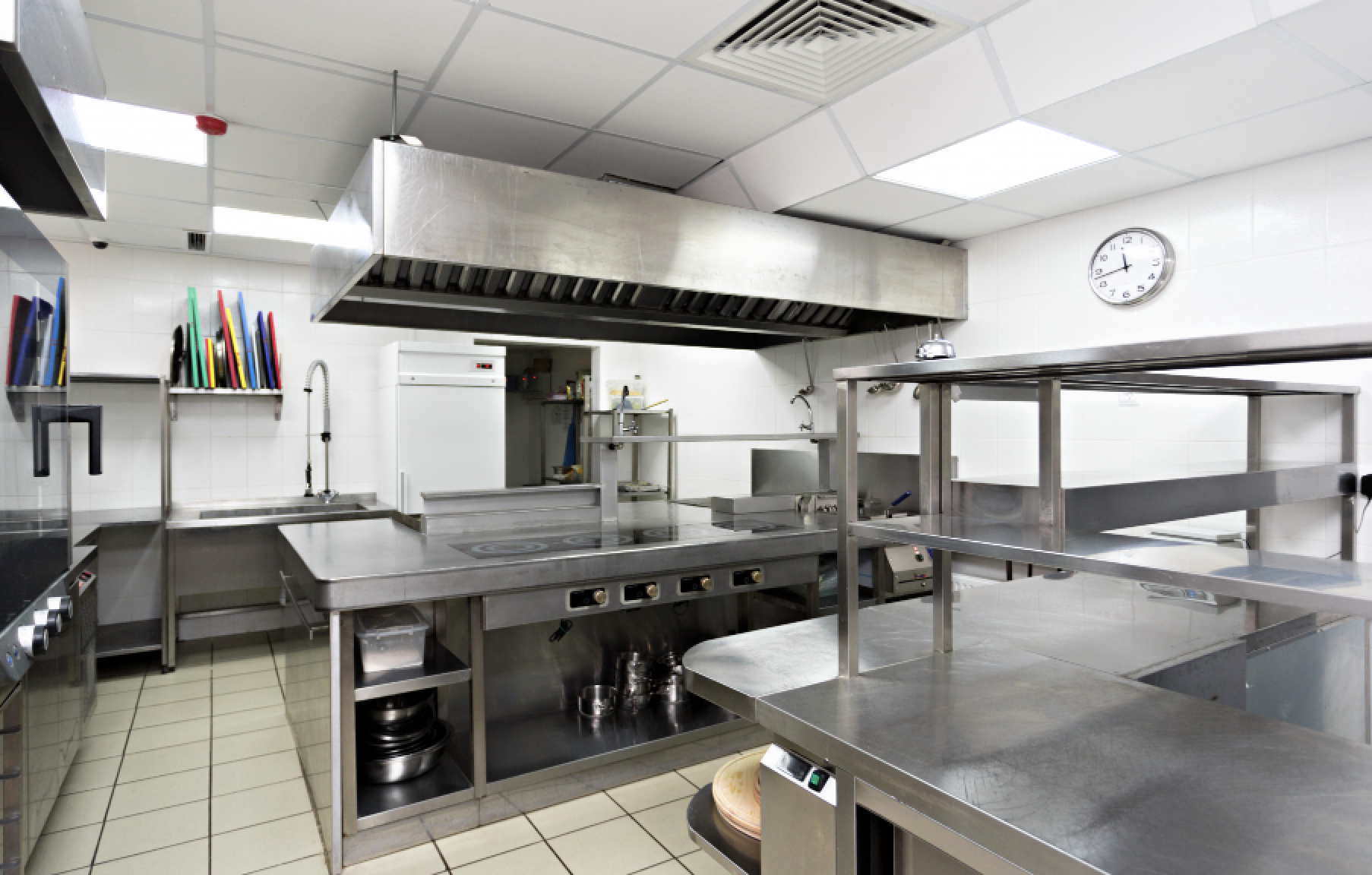
THE stainless steel in restaurants It appears in preparation, washing, cooking, storage, and service areas. The material adapts well to countertops, sinks, counters, shelves, range hoods, equipment, and support structures.
This feature is linked to corrosion resistance, ease of cleaning, and performance under heavy use. However, the choice should consider the activity, the environment, the finish, and the material composition.
Next, we show where stainless steel can be applied and what criteria help to build a more organized, durable operation that meets sanitary requirements.
Restaurants require materials capable of withstanding moisture, heat, grease, impacts, and frequent cleaning. Furthermore, surfaces need to remain in good condition during a routine of intense use.
Stainless steel meets many of these needs because it contains chromium in its composition. When it comes into contact with oxygen, this element forms a protective film over the metal.
This film, known as the passive layer, helps reduce corrosion. If it suffers minor surface damage, it can repair itself when the surface comes into contact with oxygen again.
However, the material is not entirely immune to stains or corrosion. Chlorides, accumulated residue, and unsuitable cleaning products can compromise its protection.
Therefore, performance depends on the correct choice and maintenance. The article about the advantages of stainless steel It presents other factors that explain its presence in different sectors.
Another advantage lies in the manufacturing process. Stainless steel sheets can be cut, bent, and welded to form custom-made furniture and equipment.
This flexibility makes it easy to adapt to the kitchen's workflow. A countertop can integrate a sink, protective backsplash, lower shelf, and space for appliances.
Furthermore, stainless steel combines function and appearance. In open kitchens, cafeterias, ice cream parlors, and service counters, the metallic surface conveys a sense of organization.
However, the visual result depends on its preservation. Stains, deep scratches, and poorly finished welds detract from both the aesthetics and hygiene.
The food preparation area is a frequent point of contact with ingredients, utensils, and containers. Therefore, it needs surfaces that are resistant, stable, and easy to clean.
The use of stainless steel in restaurants It usually starts with the workbenches. They can be used for cutting, plating, separating ingredients, and supporting small equipment.
In these applications, the design should avoid gaps, hard-to-reach corners, and open seams. These areas promote the accumulation of liquids and food scraps.
The workbench also needs to have an adequate structure. A sheet without sufficient support can vibrate or deform, even if it is of good quality.
In addition to countertops, stainless steel can be used in various elements of the food preparation area:
THE The use of stainless steel in the food industry. It shows how the material meets the requirements of processes that demand hygiene and durability.
However, not every area needs the same type of stainless steel. Dry environments and exterior panels may have lower requirements than surfaces that are constantly wet.
Washing areas are exposed to water, detergents, residue, and frequent contact with utensils. Therefore, corrosion resistance is a major factor in this choice.
Stainless steel sinks can be used for washing food, pots, dishes, and work tools. Depth, width, and the number of compartments should be tailored to the intended use.
A kitchen with a high volume of dishes may require larger sinks and separate areas. Conversely, a smaller operation can function with a more compact setup.
The integration between the sink and the countertop also deserves attention. Welded solutions can reduce gaps, provided the finish is well executed.
Furthermore, the slope needs to direct the water towards the drain. Surfaces with permanent accumulation increase cleaning effort and can promote staining.
304 stainless steel is commonly used in areas with frequent humidity. Its composition offers greater corrosion resistance than ferritic options used in less aggressive environments.
However, the alloy does not replace proper operational precautions. Products containing chlorine must be used according to the manufacturer's instructions and removed completely.
Carbon steel wool should also not come into contact with stainless steel. It can transfer particles that oxidize and create orange spots on the surface.
THE RDC No. 216 of Anvisa It stipulates that surfaces in contact with food must be smooth, impermeable, washable, and free of imperfections that could hinder hygiene.
Therefore, the quality of the installation matters just as much as the material. Rough welds, open corners, and warped surfaces can compromise cleanliness.
The cooking area brings together heat, grease, steam, and temperature variations. These conditions require materials that are compatible with the operation and cleaning cycles.
Stainless steel is used in stoves, griddles, fryers, ovens, cooktops, and cooking equipment. However, different components may use different materials.
The internal parts of an oven, for example, face different conditions than the external sides. Therefore, the manufacturer may combine alloys according to temperature, humidity, and contact with food.
304 stainless steel tends to be suitable for internal chambers, trays, and damp surfaces. 430 stainless steel, on the other hand, can be used in external panels installed in dry environments.
This choice should take into account the equipment design. Very high temperatures may require specific alloys, especially near burners and heating elements.
Kitchen hoods and exhaust systems also use stainless steel. They collect steam, grease particles, and condensation during operation.
In this case, filters, gutters, and ducts need to allow access for cleaning. The design should avoid areas where liquids and grease can accumulate.
Furthermore, the surface must be resistant to the products used for residue removal. An unsuitable alloy may exhibit premature wear when exposed to moisture and chemical agents.
The content about food-grade stainless steel It presents other reasons for choosing the material in professional equipment.
In all cases, the specification must be based on the actual conditions of use. The equipment name alone does not determine the correct alloy or thickness.
Refrigeration presents different challenges than cooking. Cold rooms, refrigerated counters, and professional refrigerators can generate condensation on surfaces and components.
This humidity level demands careful consideration when choosing the material. Internal parts exposed to water, food, and frequent cleaning may require 304 stainless steel.
External panels installed in controlled environments can use 430 stainless steel. However, proximity to sinks or washing areas alters this assessment.
Refrigerated display cases also need to have a balance of structure, insulation, and sealing. A failure in these elements can lead to excessive condensation.
In addition, trays and drainage areas should remain accessible. Standing water and organic debris increase the need for maintenance.
Stainless steel is also used in cold storage shelving. In this application, the design must consider load, air circulation, and ease of removal for cleaning.
Shelves that are too tightly closed can hinder the flow of cold air. Therefore, some designs utilize openwork structures or metal grids.
In dry storage areas, stainless steel can be used to form shelves, cabinets, and support structures. These elements help organize supplies and utensils.
However, the choice must take into account the conditions of the location. A dry storage tank is less aggressive than a chamber with constant condensation.
The article about stainless steel applications It shows how the material serves different functions both inside and outside the food industry.
THE stainless steel in restaurants It's not limited to the kitchen. It can also appear in areas visible to customers, such as counters, display cases, cafeterias, and self-service stations.
In these spaces, the material needs to combine durability and presentation. After all, the public observes the condition of the surfaces and equipment.
Service counters can utilize stainless steel for bases, tops, baseboards, and internal structures. Furthermore, the material can be combined with glass, wood, stone, and other finishes.
In buffets, stainless steel appears in containers, stands, trays, and heated or refrigerated structures. The design should facilitate restocking and cleaning.
Ice cream parlors also use the material in refrigerated counters, handling areas, tubs, and machinery. In this segment, humidity and low temperatures influence the choice.
A brushed finish is often used because it reduces the visibility of small marks. Highly polished surfaces, on the other hand, can show fingerprints and scratches more easily.
However, the finish should not be chosen solely based on appearance. Roughness, brush direction, and joint quality all affect cleaning.
The article about characteristics of brushed stainless steel It helps to understand this behavior.
In open-plan kitchens, visual appeal becomes even more important. Countertops and appliances become part of the customer experience.
Therefore, conservation and organization need to accompany the project. Well-maintained stainless steel conveys a different image than a scratched, stained, or poorly installed surface.
The right choice starts with analyzing the conditions of use. A restaurant doesn't need to use the same alloy on all surfaces.
304 stainless steel is usually recommended for wet areas, frequent contact with food, and intensive cleaning. 430 stainless steel, on the other hand, is suitable for outdoor components and dry environments.
The article about the characteristics of 430 stainless steel It presents its uses and limitations.
The thickness depends on the load, the size of the part, and the supporting structure. A large workbench may require reinforcement even when using a thicker sheet.
On the other hand, increasing the thickness does not improve the material's chemical resistance. The alloy composition continues to determine its behavior in the face of corrosion.
The finish also affects daily use. Brushed surfaces may better conceal minor marks, while polished finishes offer more shine.
In addition, the design must consider folds, welds, fasteners, and corners. A continuous surface facilitates cleaning and reduces retention points.
The technical publication of World Stainless on stainless steel in the food sector. It emphasizes that the connection, finish, design, and maintenance should be evaluated together.
Therefore, the best choice doesn't depend solely on the price per sheet. It needs to consider the activity, frequency of use, and expected lifespan.
Stainless steel requires care to maintain its appearance and durability. The cleaning routine should remove grease, salt, and residue before it remains on the surface.
Neutral detergents and soft cloths are suitable for many situations. However, the equipment manufacturer's recommendations should always prevail.
Chlorinated products, strong acids, and abrasives require caution. When used incorrectly, they can damage the finish and protective layer.
In addition, the team should avoid steel wool and contaminated tools. Carbon steel particles can adhere to the surface and create rust spots.
Cleaning should follow the direction of the brushed finish. This care helps preserve the visual pattern.
Welds, joints, and corners need inspection. If gaps or deformations appear, they should be corrected before debris accumulates.
Mobile equipment also requires attention to wheels and structures. Misalignments can compromise stability and create stress on the metal sheets.
Therefore, durability doesn't depend solely on the material purchased. Installation, use, cleaning, and maintenance all contribute to the final result.
The use of stainless steel in restaurants It can improve the organization, hygiene, and durability of environments. However, each application requires its own analysis.
At Aço Cearense Comercial, we offer stainless steel materials for equipment manufacturers, industrial kitchens, and companies in the food service industry.
To explore options, finishes, and formats, Download our catalog. and evaluate the materials that are suitable for your project.
Yes, provided the alloy is compatible with the food and the contact time. Acidic, salty, or chloride-containing products may require greater corrosion resistance.
Tools, brushes, and workbenches made of common steel should not be shared without supervision. Transferred particles can oxidize on the stainless steel surface.
Superficial scratches do not necessarily mean immediate failure. However, deep scratches can retain residue and make cleaning difficult, especially in food handling areas.
Magnetic testing can provide clues, but it doesn't confirm the alloy. Certificates, manufacturer identification, and chemical analyses offer more reliable results.
Welds should have a uniform finish, without gaps, pores, or rough areas. They also need to allow for thorough cleaning and prevent the accumulation of liquids.