The lifespan of metal structures depends on a factor invisible to the naked eye, but devastating when ignored: corrosion. This topic is of utmost importance to everyone working in civil construction and steel structures, especially for companies seeking to ensure quality in their projects and avoid unnecessary expenses on maintenance and repairs.
Understanding the importance of this, in this article we address every detail about corrosion in steel structures, its causes, effects, forms of protection, and practical examples that we have experienced in the market.
The goal is to demonstrate, in practice, why understanding and combating corrosion is fundamental for anyone who builds or works with metal solutions. This content is based on our experience as part of the Aço Cearense Group, a leader in the sector, to equip engineers, metalworkers, builders, and technical professionals with up-to-date knowledge and reliable recommendations.
Corrosion in metallic structures is a physical-chemical process of spontaneous deterioration resulting from the interaction between the metal and its surrounding environment.
From a thermodynamic perspective, steel tends to return to its lowest energy state — the iron oxide found in nature — through anodic and cathodic reactions that occur on its surface.
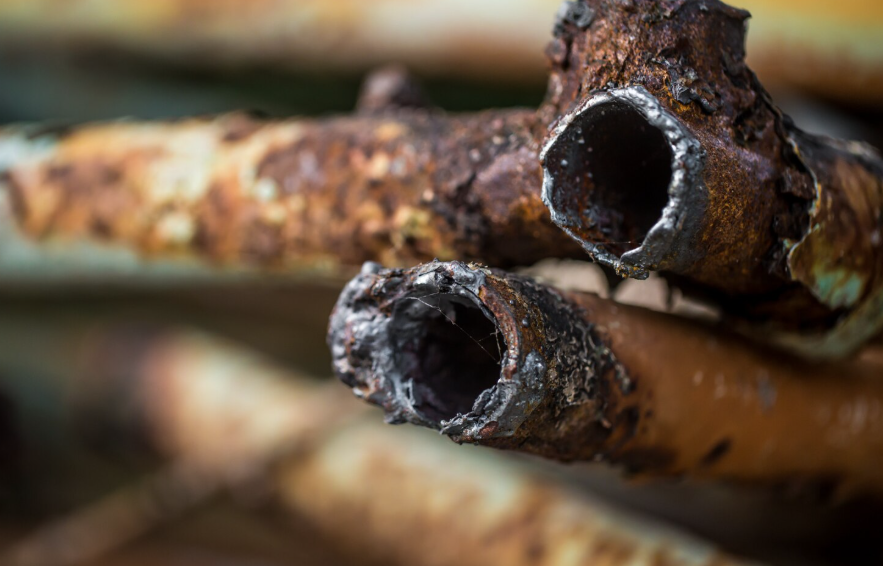
This electrochemical phenomenon converts metallic iron into hydrated and unstable compounds, generically known as rust, whose main characteristic is an increase in volume and a drastic loss of ductility and mechanical strength.
In engineering, this transformation compromises the cross-section of structural elements, reducing the load-bearing capacity and reliability of components that were originally designed to withstand critical tensile and compressive stresses.
This process can manifest itself overtly in exposed structures, such as bridges and warehouses, or in an insidious and hidden way, such as carbonation corrosion or chloride attack in reinforced concrete structures.
In these cases, the phenomenon is particularly dangerous, as the expansion of corrosion products generates internal stresses that cause the concrete cover to detach, silently accelerating structural degradation.
In field audits conducted by the Aço Cearense Group, we found that negligence in specifying protective barriers and underestimation of environmental aggressiveness are the main catalysts for severe pathologies.
Understanding corrosion kinetics is therefore a safety imperative. By delving deeper into this topic, we equip the construction industry with the necessary expertise to adopt cathodic protection systems., galvanization or high-performance coatings, ensuring the longevity of the structures and, primarily, the preservation of life.
Steel, a combination of iron and carbon, is widely used in construction due to its mechanical strength and versatility. However, it is not an inert material. When exposed to the atmosphere, it undergoes spontaneous chemical reactions that lead to the formation of oxides. The main agent responsible for this is oxygen, present in air and water.
Prolonged contact with moisture, oxygen, and chemical pollutants accelerates the appearance of rust.
From small parts to large structures, the risk is shared. Furthermore, agents present in industrial, marine, or urban environments concentrate aggressive compounds, such as chlorides and acids, which enhance metallic wear.
Certain applications, such as structures in coastal regions, require extra layers of protection. This is because, in these locations, the salinity of the air drastically reduces the time it takes for corrosion points to appear.
Corrosion begins with a series of chemical reactions between the metal, oxygen, and moisture. When steel comes into contact with water and air, an electrochemical cell is formed.
Different areas of the metal act as poles (anode and cathode), and the transfer of electrons transforms the iron into ions, which react with oxygen to form iron oxides – what is known as rust.
This process can be intensified by several factors, such as chemical contaminants, temperature variations, soil acidity, and even welding residue left over from manufacturing. Below, we detail common steps in this process:
Once rust takes hold, it tends to spread, increasing the affected area. This demonstrates the need for preventative action. Correct interventions during the design phase represent a huge gain for the durability of the structure.
We know that protecting steel requires understanding the environmental and operational conditions that promote wear. Some factors are especially crucial:
In our field diagnoses, we always emphasize that The environment where the metal structure will be installed is crucial in determining the type of protection that will be chosen.. Therefore, each project requires detailed analysis to determine the most appropriate treatment.
Steel corrosion has a direct impact on the economy, safety, and durability of buildings. In civil engineering, its effects go beyond mere aesthetic loss.
At Grupo Aço Cearense, we have a history of projects where choosing quality materials and appropriate treatments has generated direct gains in performance and peace of mind for clients in the civil construction segment, preventing future problems and preserving safety standards.
Knowing that steel, by itself, is susceptible to environmental degradation, we employ different techniques to increase its durability and performance. In this way, we guarantee safer structures with low maintenance costs over the years.
The methods currently considered most efficient are galvanizing, industrial anti-corrosion painting, chemical treatments and cathodic protection, and the appropriate selection of materials.
Galvanization consists of applying a layer of zinc to steel, either by hot-dip galvanizing or electroplating. This physical barrier prevents water and oxygen from reaching the metal surface. Furthermore, zinc is a more reactive metal, acting as a "sacrificial" element to protect the steel from corrosive attacks.
Galvanized structures have a significantly extended lifespan, even under constant exposure to the elements.
It consists of applying special paints or coatings directly onto the steel, forming a protective barrier. These products generally contain epoxy resins, polyurethane, or other components with high adhesion and chemical resistance.
Painting is not just for aesthetics: it is a fundamental tool in the fight against corrosion. THEWe recommend the use of multi-layer paint systems for structures exposed in industrial or coastal environments, as they offer superior durability.
Other methods involve passivating the steel surface, which alters its chemical response to the environment. Products such as corrosion inhibitors, phosphate coatings, or direct application of electric current (cathodic protection) are used to block the effects of oxygen and moisture.
THE cathodic protection, For example, it is widely used in buried metal pipelines and tanks. It "forces" the steel to act as a cathode and thus prevents its oxidation. Although more common in industrial environments, it can be adapted to various needs.
Selecting the appropriate type of steel is the first step against unnecessary risks. There are corrosion-resistant alloys, such as stainless steels and weathering steels, which have elements in their composition capable of forming natural protective films.
For applications exposed to harsh environments or high loads, we always recommend consulting a specialist. Furthermore, in our content about steel types and their applications, we detail the specifications for each material.
Our journey at Grupo Aço Cearense is marked by numerous practical examples where steel protection has made a difference in the sustainability and durability of projects. Some applications illustrate well the effectiveness of the solutions adopted:
Investing in the protection phase from the start of the project generates long-term savings and adds value to the venture.
We emphasize that all these actions are implemented according to technical analysis, respecting safety and sustainability standards, values that guide the Aço Cearense Group in its commitment to quality civil construction.
Effective protection doesn't end after the structure is delivered. Regular inspection, combined with a maintenance program, ensures that potential problems are identified before they escalate into serious situations.
Maintaining an inspection schedule is essential for caring for the property and ensuring the longevity of the structures. Below, we've put together a checklist of recommended practices for inspection and maintenance:
We advise our clients on the importance of these phases, as this helps avoid unpleasant surprises that result in high costs and operational risks.
A growing concern in the construction sector is the environmental impact of industrial processes. Accelerated corrosion demands constant replacement of materials, increasing the consumption of natural resources and the emission of waste. Taking care of metal structures is also taking care of the environment.
At Grupo Aço Cearense, we reinforce our socio-environmental responsibility through initiatives such as eucalyptus planting by Sinobras Florestal, which contributes to the sustainable cycle of steel production and the replenishment of what is extracted. In addition, we pay special attention to supporting social projects through the Instituto Aço Cearense.
Adopting modern anti-corrosion practices extends the lifespan of structures and reduces the need for new metallic materials. Thus, we combine performance, safety, and ecological commitment, aligning client objectives with the interests of society.
The decision regarding the type of protection depends on multiple factors and should be made by a qualified specialist. Before deciding on a corrosion protection method, we recommend considering:
We base our technical services on these guidelines, building relationships of trust with builders and engineers, who know they can count on our guidance at crucial moments.
A large proportion of pathologies in metal structures could be avoided through the correct application of preventive techniques. This brings a number of concrete benefits to the projects, both from an economic and technical point of view:
Product quality, even at the acquisition stage, is crucial to the success of any project. Well-produced steel, with traceability, process control, and a factory guarantee, is less prone to defects and protective failures.
Within the Aço Cearense Group ecosystem, Sinobras is responsible for ensuring steel production meets strict standards, guaranteeing integrity, strength, and the absence of contaminants. Aço Cearense, on the other hand, acts as a commercial distribution channel, ensuring materials are always available and with the best logistics to quickly meet needs in Ceará.
Therefore, we work closely with clients from the selection of materials to the definition of surface treatments and installation methods. We make a point of providing content that answers frequently asked questions, such as our articles on how chemical attack occurs in structures and another on strategies to avoid damage.
Combating steel corrosion requires knowledge, planning, and reliable products. The costs to repair damaged structures far exceed the initial investment in quality materials and effective protection.
Our experience shows that well-thought-out projects, with correct technical specifications and support from expert partners, result in more durable, safe, and valuable buildings.
Every step — from choosing the steel to regular maintenance — makes the difference between a reliable structure and a future headache.
We invite you to explore more of our portfolio, whether by consulting our technical team or evaluating solutions tailored to your needs. We guarantee personalized service, a large inventory of high-quality Sinobras products, and a commitment to sustainability in all our actions and products.
The profitability of a project begins long before its foundation, solidifying in the intelligence applied to the selection of each input and in the logistics of supplies. Knowing how to select materials that balance durability, sustainability, and ease of assembly is fundamental to guaranteeing a return on investment.
Click to read our complete guide on the Construction planning for 2026: how to choose the best building materials Bring more efficiency and cost savings to your construction site.
Corrosion in steel is the chemical process in which the material undergoes degradation due to reaction with oxygen, water, and other agents present in the environment, forming oxides and other undesirable products. It generally manifests as rust and leads to loss of mass and strength of the metal, threatening the integrity of structures.
Prevention begins with choosing methods such as galvanizing, anti-corrosion painting, using stainless steel, and regular inspections. Controlling exposure to moisture and chemical contaminants, along with proper maintenance, are fundamental to extending the lifespan of steel.
The main types include:
Knowledge about the type of corrosion is essential to determine the appropriate treatment.
The cost of treatment depends on the extent of the damage, the method used, and the complexity of the structure. In general, treating existing corrosion is more expensive than prevention. Costs increase if replacements, reinforcements, or operational shutdowns are necessary.
Effective materials and methods include zinc galvanizing, painting with specialized anti-corrosion paints, cladding with stainless or weathering steels, and the adoption of cathodic protection systems for buried tanks and pipelines. The selection of protection must respect the characteristics of the work and the environment in which the steel will be applied.