THE steel cutting and bending It is a service that delivers reinforcing bars in the sizes and shapes specified in the structural design, ready for assembly of the reinforcement. Instead of buying straight bars and carrying out all the processing on the construction site, the construction company receives pieces that are cut, bent, and identified according to the project.
This format transforms the routine of those who organize the steelwork. The team no longer spends hours cutting and bending bars manually and can focus their efforts on assembly. As a result, the construction site can reduce the time dedicated to this stage and free up space for other activities.
In this content, we explain how the request process works, which products meet this type of service, and what precautions help reduce waste and rework.
Steel cutting and bending involves the industrial processing of reinforcing bars for reinforced concrete structures. In this process, specialized equipment cuts the bars to the required lengths and performs the bends specified in the structural design.
Thus, the work receives stirrups, hooks, clamps, starters, and other parts according to the ironwork manifest. This document compiles measurements, shapes, gauges, and quantities that guide production.
The main difference lies in the processing location. While the conventional method requires workbenches and equipment on-site, the industrial service transfers this activity to a specialized facility.
This way, the parts arrive organized by batch, which facilitates receiving and assembling the armor.
However, the service does not replace the structural design. The engineer remains responsible for defining gauges, categories, lengths, and bending formats.
The specification of steel rebar It is necessary to follow the structural calculations, as each element of the construction requires its own specific characteristics.
Cutting and bending executes project specifications with greater standardization, but it does not replace the technical decisions of the person responsible for the structure.
The process begins when the client submits the structural design or the rebar list. This document contains the information needed to manufacture each piece, such as gauge, length, quantity, and bending pattern.
Based on this data, our sales team evaluates the request, checks the availability of gauges, and prepares a quote. We also align production and delivery times according to the order volume.
After the budget is approved, the production line begins processing the bars. The equipment follows the measurements and formats indicated in the delivery note, while the team organizes the pieces according to the batches.
In the next step, identifying the sets facilitates the verification and supply of materials to the work fronts.
When the material arrives at the construction site, the person responsible for receiving it must compare quantities, formats, and identification details with the original order.
This conference deserves attention because it allows for the identification of discrepancies before the assembly of the framework.
Several factors can interfere with the progress of the process:
Therefore, a complete and up-to-date packing list helps to avoid delays, doubts, and rework during execution.
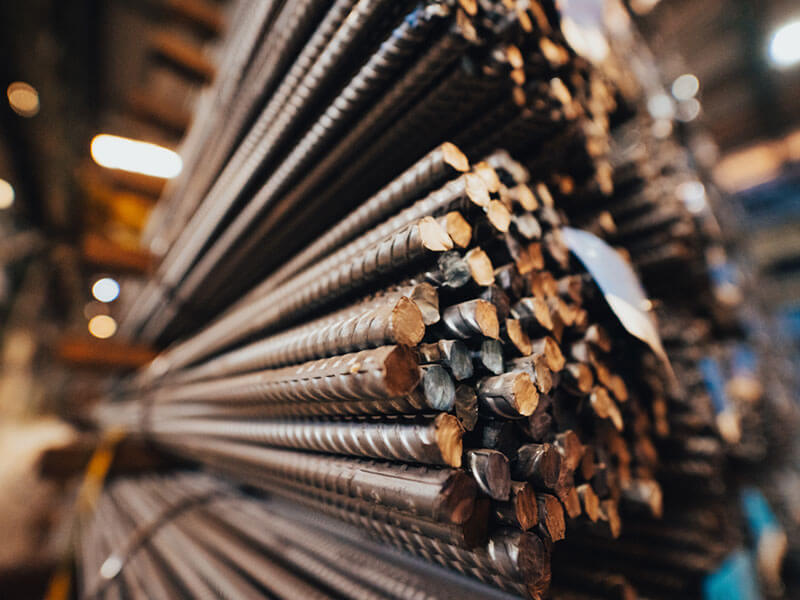
Reinforcing bars are the main product associated with cutting and bending services. They are used in foundations, columns, beams, slabs, blocks, and other reinforced concrete elements.
Among the materials used in this process, CA-50 and CA-60 reinforcing bars stand out, according to the specifications of each project.
In addition, the SI 50 Spooler and the AC-SI 60 Spooler meet the needs of applications that use coiled rebar and industrial cutting and bending processes, according to the technical characteristics and product availability.
The most common gauges for foundations, columns, and beams tend to be in higher demand. However, certain dimensions may require specific supply conditions.
The steel grade also influences the order. CA-60 rebar, For example, it can accommodate stirrups, transverse reinforcement, and other elements, provided the design specifies its use.
Other metal products may also require custom cutting processes, depending on their applications.
THE flat bar It appears in closures, reinforcements, and metalwork components. The... simple U-profile and the reinforced U-profile They meet different needs for lightweight structures and reinforcements.
In these cases, the buyer must separately confirm the availability of the transformation processes, as cutting metal profiles does not necessarily correspond to the same service as cutting and bending rebar.
The main benefit is the reduction in manual processing activities. When the rebar arrives ready, the team can begin assembling the reinforcement without having to prepare a complete cutting and bending structure on the construction site.
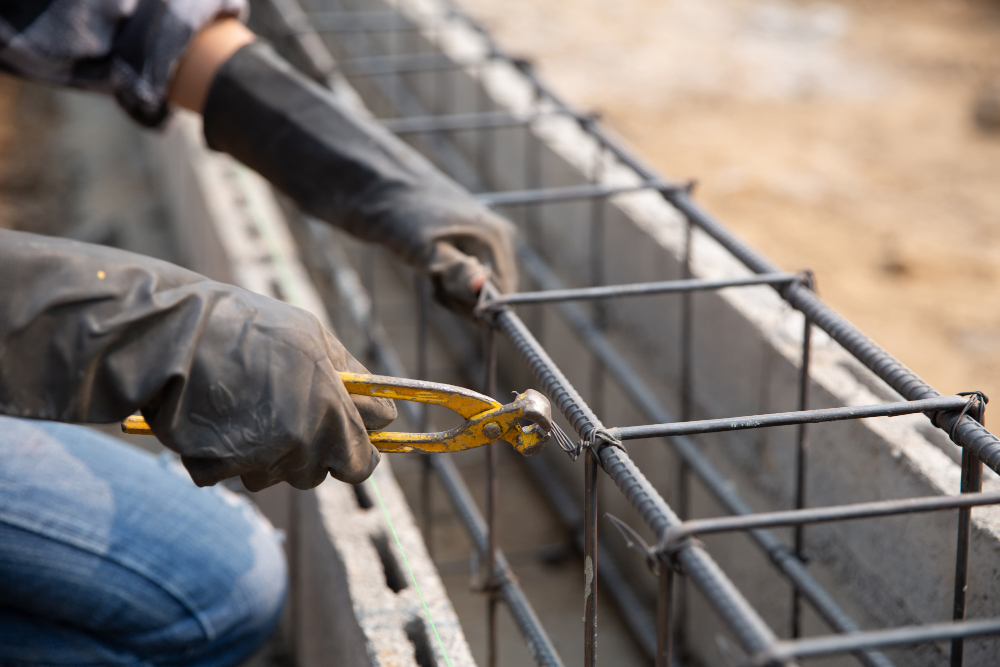
In this way, professionals focus their efforts on positioning, securing, and checking the parts.
Furthermore, identifying the batches facilitates organization by construction phase. The person responsible for the reinforcement can locate the necessary materials without manually separating large quantities of bars.
The physical space also benefits. Without cutting benches and extensive stockpiles of straight bars, the construction site can free up areas for circulation, storage, and other activities.
This advantage is especially apparent in urban construction projects, renovations, and plots of land with limited available space.
Another benefit involves standardization. Industrial processing allows for the repetition of measurements and formats with production control, reducing variations that can arise during manual operations.
However, these gains depend on an up-to-date project and accurate information in the packing list.
Cutting and bending not only reduces manual labor, but it can also improve the organization of receiving, storing, and assembling reinforcement bars.
In conventional processing, the construction company buys straight rebar and uses its own team to cut and bend the bars.
This model offers flexibility for minor adjustments during execution, especially when the project undergoes frequent changes.
On the other hand, it requires equipment, trained professionals, physical space, and strict control of measurements.
It can also generate leftover material, especially when the team is unable to utilize all the lengths of the bars.
Industrial cutting and bending transfers the processing to a specialized structure. This way, the construction site receives the parts according to the delivery note, reducing some of the manual tasks.
However, this model requires advance planning. Changes after the request is approved may result in reprocessing, additional costs, and delays.
Therefore, projects with a defined structural design and an organized schedule tend to make better use of the service.
Conversely, projects that undergo constant adjustments may retain some of the processing on-site for specific situations.
The decision depends on the volume of steel, the stability of the project, and the infrastructure available to carry out the work.
Sending an incomplete or outdated delivery note is among the main mistakes when contracting cutting and folding services.
When the document does not include the latest project revision, production may follow measures that no longer meet the needs of the project.
As a result, the team may face delays, a need for new parts, and increased waste.
Another problem arises when the buyer reports the wrong steel category. CA-50 and CA-60 have different characteristics, and the technical manager needs to validate any discrepancies.
It is also common to underestimate the production time. Unlike purchasing stock materials, cutting and bending requires processing according to the specifications of the order.
Lot identification deserves similar attention. When the packing list doesn't specify the destination of the parts, the team wastes time searching for the correct sets.
In addition, assembly requires supplementary materials. annealed wire It helps to keep the bars in the intended positions during assembly, although it does not correct cutting or bending problems.
Therefore, an updated project, correct specifications, and delivery planning must accompany the entire contracting process.
The packing list compiles the data that guides the pricing, production, and verification of reinforcing bars.
Therefore, the document must present complete information that is consistent with the latest revision of the structural design.
Key data points include:
In addition to this information, the technical manager must review the document before sending it.
This validation helps to avoid discrepancies between the design, quantities, and the actual needs of the project.
When the delivery note contains all the data correctly, the supplier can better organize production. At the same time, the construction site gains a clear reference point for checking materials.
Steel waste often occurs due to repeated cuts, measurement errors, leftover bars, and design changes.
When the team performs manual processing, yield depends on planning the cuts and controlling the pieces produced.
In projects with multiple formats, this activity can be more time-consuming and lead to additional losses.
In industrial cutting and bending, production starts from the measurements indicated in the delivery note. Therefore, planning the cuts can improve material utilization.
Furthermore, batch separation reduces the risk of mixing gauges and formats during assembly.
Clear identification also prevents professionals from using a particular part in an element different from that specified in the project.
These gains are especially noticeable in projects with a high volume of steel and repeated reinforcement.
However, the service does not eliminate all losses. Design changes, incorrect orders, and storage difficulties can still lead to waste.
Therefore, the planning the purchase of steel for construction projects. You must consider quantities, deadlines, and organization by stage.
Reducing waste depends both on the accuracy of the processing and on the quality of the planning and checking of materials.
Cutting and bending can reduce the assembly time of the reinforcement bars, but it requires advance planning.
Ultimately, the process involves quoting, approval, production, picking, transport, and delivery.
When the team requests the materials only on the scheduled date for starting assembly, the risk of delay increases.
Therefore, the person responsible for planning needs to consider the delivery timeframe from the moment the structural stages are defined.
One alternative is to organize the orders according to the sequence of the work.
For example, the construction company can schedule the receipt of foundation materials before the batches intended for the pillars and beams.
In this way, the construction site avoids receiving large volumes all at once and maintains the supply according to the progress of the work.
Emergency orders, on the other hand, can increase logistical costs and hinder the availability of certain track gauges.
In larger projects, the steel quotation for large construction projects You should consider volumes, deadlines, transportation, and delivery conditions.
Thus, cutting and bending becomes integrated into the project schedule, instead of being a separate contract.
The price of cut and bent rebar usually exceeds the value of straight material, as it includes the industrial processing of the pieces.
However, this difference does not necessarily represent the total cost of the operation.
When comparing the two models, the construction company needs to consider the labor involved in manual cutting, the equipment used, and the space occupied on the construction site.
Also factored into the calculation are leftover materials, processing time, and the risk of rework.
In small projects with a low volume of rebar, the service may not generate significant savings compared to processing it in-house.
In larger projects, the repetition of parts and the reduction of manual labor can make hiring more attractive.
Another factor is the deadline. When the schedule allows little room for delays, receiving the parts ready-made can help organize the assembly.
Furthermore, gardens with limited space can make better use of the available area by reducing the need to store long bars.
Therefore, The analysis should consider the total cost of the operation, not just the price per kilogram of rebar..
The first step involves combining the structural design and the rebar list with the latest revision.
The document must specify the gauge, category, length, bend type, and quantity of each piece.
With this information, the buyer can forward the request to the sales team.
At Aço Cearense Comercial, we evaluate the order details, verify the availability of materials, and provide guidance on delivery times and conditions.
The more complete the shipping manifest, the simpler the quotation analysis will be.
Conversely, requests with incomplete information may require further clarification and extend the processing time.
You can also visit our online store to see the available products and purchase channels.
Before confirming the contract, the person in charge of the project must check the project version, the quantities, and the delivery conditions.
In this way, the construction company reduces the risk of ordering parts that are incompatible with the project's requirements.
An updated structural design and a complete manifest help to take advantage of the benefits of steel cutting and bending.
At Aço Cearense Comercial, we serve construction companies, contractors, and supply teams that need to organize the purchase of reinforcing bars for different stages of civil construction.
Our team will provide guidance on specifications, availability, and supply conditions according to the characteristics of your order.
To compare products and gauges, Download our complete catalog.. Then, with the itinerary defined, Request a quote from our team. and provide the quantities and deadlines for your project.
It is the rebar that undergoes industrial processing and arrives at the construction site with the measurements and shapes specified in the project. This allows the team to begin assembling the reinforcement without having to perform all the cutting and bending manually.
The service usually increases the price per kilogram because it includes processing. However, the comparison also needs to consider labor, equipment, waste, and site time. Therefore, the total cost may differ from buying straight bars.
Availability depends on the characteristics of the material, the equipment, and the demand of the production line. Therefore, the buyer should confirm the gauges and formats before finalizing the order.
The lead time varies depending on the volume, the complexity of the bends, and the availability of steel. Furthermore, changes to the delivery note may require adjustments to production and affect the delivery date.
The online store allows you to browse products and initiate commercial contact. However, cutting and bending orders require confirmation of specifications, service availability, and supply conditions.
The change may require reprocessing and alter the agreed-upon deadline. Therefore, the technical manager must validate the latest revision before contracting and immediately communicate any subsequent changes.
No. The service delivers the parts in the shapes specified in the project, but the team remains responsible for assembling the reinforcement. This includes positioning, tying, and checking before concreting.