Welding is fundamentally the critical link that defines the safety and longevity of any steel construction system. The process involves a complex thermal and metallurgical interaction that alters the Heat Affected Zone (HAZ) of the material, requiring a keen technical understanding to ensure that the joint's strength is equivalent to or greater than that of the base metal.
Throughout decades of industrial experience, we have consolidated the understanding that most pathologies found on construction sites and in factories—such as solidification cracks or porosity—result from negligence regarding good welding practices and technical standards, factors that can be mitigated with rigorous planning and quality control.
The technical responsibility behind joining metal parts goes beyond immediate assembly, as the welded joint must guarantee structural continuity under dynamic stresses such as wind, thermal variations, and variable loads. A technically deficient weld acts as a stress concentrator that can lead to premature steel fatigue or localized collapse.
In steel structures, joining elements serves not only to hold parts together. It ensures the integrity of projects, supports varying loads, and withstands environmental challenges such as wind, rain, and temperature variations. When a weld is poorly done, the consequences can range from simple rework to serious structural failures.
In our projects and relationships with construction clients, we always emphasize that the joining of metal components is central to a strong and durable result. After all, each type of structural steel has its own requirements and behaviors during the process.
From initial preparation to finishing touches, many details influence the final result. We will highlight the most relevant ones that we have identified in our work, based on the main demands of the sector.
Before joining two pieces, it is essential to ensure that the surfaces are clean, free of residue, oil, or corrosion. Dirty surfaces or surfaces with paint residue hinder material penetration and weaken the connection.
There are different methods for joining metals, such as MIG/MAG, TIG, coated electrode, submerged arc, among others. Each technique has specific advantages and limitations depending on the thickness of the material, the work environment, the position, and the type of stress the piece will withstand.
We always advise evaluating the project beforehand and consulting specialists to select the most appropriate method. This initial decision prevents rework and raises the quality standard of the result.
THE Incorrect heating can cause Cracks, deformations, and even affecting the structure of the steel, making it more fragile in sensitive areas. Therefore, it is essential to closely monitor the heat applied, including between successive passes.
Techniques such as preheating and gradual cooling are recommended depending on the type of steel used, especially in thicker sections.
It's common to find flaws in construction projects due to simply choosing the wrong joining material. For each type of steel, there are specific wires, electrodes, and fluxes that guarantee adhesion and strength. Furthermore, expired materials compromise quality; therefore, we always check certificates and specifications before starting any stage.
Over the years, we have encountered recurring problems in client projects, which serve as collective learning experiences. Some mistakes are more common and can put lives and property at risk.
These errors could be avoided with rigorous inspection and specialized monitoring, which are constant pillars of our services and training.
Ensuring quality in metal joints is not limited to the execution phase. Success begins in the planning stage and is consolidated with well-defined processes.
Developing a work plan includes analyzing drawings, technical specifications, and clearly defining the locations and types of connections. Close monitoring from the beginning prevents doubts in the field and communication failures.
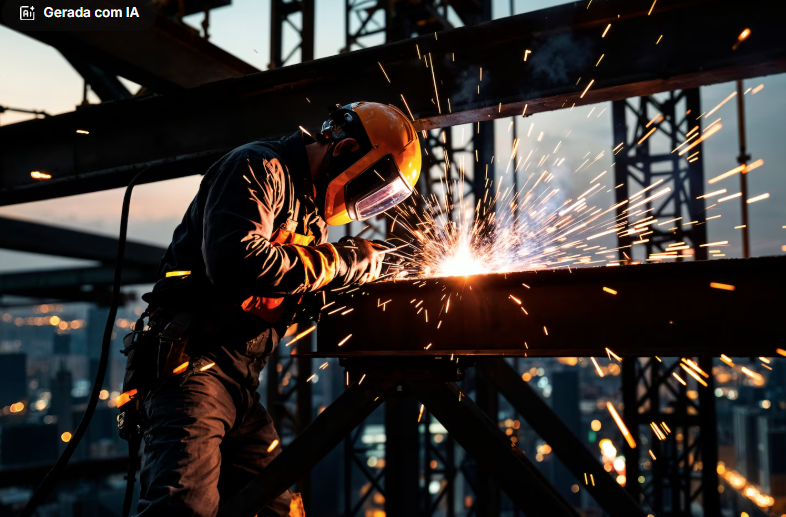
Welding requires constant technique and practice. Investing in team training and requiring the use of protective equipment, such as masks, gloves, and aprons, reduces the risk of accidents and ensures better results.
Destructive and non-destructive tests (such as liquid penetrant testing, ultrasound, and radiography) are necessary to ensure the integrity of joints after the completion of the service, especially in projects with higher demands, such as buildings and industrial sheds.
We also reinforced the adoption of documented processes, facilitating traceability and compliance with the specific standards of each segment.
Regular inspection of the joints ensures that any cracks or corrosion are identified before they cause bigger problems.
We have observed that even in projects with high technical demands, maintenance often receives little attention. We reinforce this practice in all programs developed with our partners.
For those who wish to better understand how different profiles influence stiffness and assembly, we suggest reading the content on the main structural steel profiles.
At Grupo Aço Cearense, we believe that great structures are built on three pillars: technical knowledge, environmental responsibility, and social commitment. While Sinobras guarantees the origin and quality of the steel, our commercial arm makes these materials available in Ceará with agility, including through... e-commerce.
The secure connection of the structures we deliver reflects our commitment to durability, sustainability, and positive impact, something that is part of initiatives such as custom steel cutting and bending, as well as the use of welded wire mesh for civil construction.
Choosing good suppliers, in addition to having a good executive project, makes all the difference. We recommend seeking partners with... Proven responsibility, a track record of reliable steel delivery, and alignment with sustainability requirements..
Seeking technical information about metal pillars and types of steel also facilitates dialogue with designers and suppliers, raising the level of requirements and protecting your investments.
Partnering with Grupo Aço Cearense means guaranteeing access to high-quality materials, technical support attentive to market needs, and a commitment to sustainable development.
Avoiding welding defects is just one aspect of ensuring the financial and structural health of your project. True optimization happens when you can identify hidden losses and idle time in your production line.
By aligning the quality of the inputs used by Grupo Aço Cearense with evidence-based management, its operations gain in predictability and profitability.
Discover now the metrics that can revolutionize your process control in this article. Industrial Production Indicators: 7 Essential Metrics to Optimize Your Factory.
It is a set of techniques that permanently joins two or more pieces of metal through localized fusion, forming a single, strong piece. This procedure is widely used in civil construction and industrial sectors to ensure the strength, stability, and durability of structures.
The risks include accidents such as burns, electric shock, inhalation of toxic fumes, eye injury (due to intense light), and explosions. In addition to physical risks, improper construction can compromise the safety of the constructed structure.
Properly using all personal protective equipment (mask, apron, gloves, and boots), undergoing regular training, maintaining a clean and well-ventilated environment, and following technical standards. Supervision by qualified professionals is also essential to avoid risks and structural failures.
The choice depends on the method used: specific machines, adjustable power sources, appropriate cables, electrodes or wires, and complete PPE. To ensure quality, it is important to keep the equipment in good working order and properly calibrated.
The cost varies depending on the size, complexity of the structure, type of method applied, number of joints made, and materials used. Experienced professionals and specialized companies provide appropriate quotes after analyzing the project.