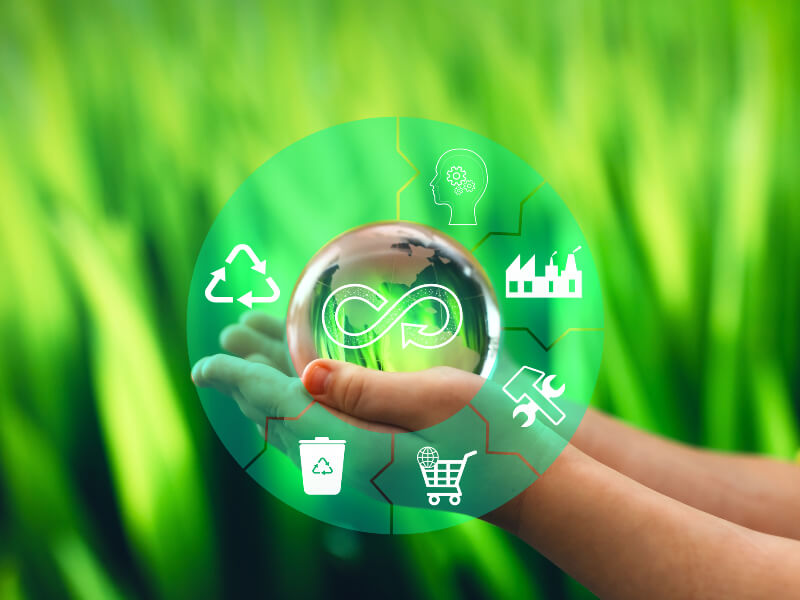
The circular economy is an innovative economic model that seeks to maximize the value of available resources while minimizing waste and reducing environmental impact.
In other words, it opposes the traditional linear model of production and consumption, based on "extract, produce, use, and discard." Thus, the circular economy promotes the reuse, recycling, and regeneration of materials, closing product life cycles.
In the steel industry, it plays a key role in reducing demand for virgin raw materials, such as iron ore. Want to learn more about the relationship between the circular economy and steel? Keep reading and find out!
The circular economy is a production paradigm that aims to optimize the use of available resources, minimizing waste generation and environmental impact. Thus, it encourages the reuse, recycling, and regeneration of materials, seeking to maximize added value throughout their life cycle.
In the steel sector, the circular economy involves recycling scrap steel into new products instead of extracting more iron ore. This reduces the need for natural resources and reduces the amount of waste generated.
Therefore, dealers of steel, for example, can purchase and sell recycled material, contributing to reducing environmental impact and meeting the demands of sustainability-conscious customers. Furthermore, recycled steel can be competitively priced compared to virgin steel, opening up business opportunities and strengthening their market position.
There are several examples of circular economy that can be applied in the steel sector, as steel scrap is collected, processed, and recycled into new steel products. This reduces the need for additional iron ore extraction and reduces waste.
Furthermore, they can be reused for other purposes, such as being refurbished and transformed into a new product or part. And, instead of selling these items, it's possible to offer leasing or sharing services, where customers have temporary access to the products, reducing the need for production and excessive consumption.
Another option is to adopt more efficient practices and technologies in the steel manufacturing process, such as the use of renewable energy, waste reduction, and resource optimization, contributing to a more sustainable circular economy.
The circular economy in Brazil has gained prominence and is being applied in various segments, including the steel industry. Learn more!
Recycling scrap steel is a common practice in our country. Specialized companies collect, process, and recycle the material, transforming it into new products.
Several sectors have implemented reverse logistics programs, which create systems for collecting and properly disposing of products after use. These initiatives involve the return of discarded steel products by consumers, enabling their recycling and reintegration into the production chain.
The Brazilian government has implemented tax incentives and regulations that promote the circular economy. This includes benefits for companies that adopt practices. sustainable, such as recycling materials and requiring products to be designed to facilitate recycling and reuse.
Partnerships have also emerged between companies across different sectors to promote the circular economy. For example, steel industries can partner with steel product manufacturers to ensure the recycling of waste generated during production.
Brazilian companies have invested in sustainable technologies to make their production processes more efficient and less environmentally damaging. This includes the use of renewable energy, improved waste management, and the adoption of eco-efficient practices.
The circular economy is based on three fundamental pillars. See below!
Sustainable design is the first pillar of the circular economy. It involves designing products, including steel, taking into account their durability, ease of repair, disassembly, and recyclability. This process ensures that items are made to last, can be easily repaired, and have their materials reused at the end of their useful life.
The second pillar of the circular economy is the promotion of long product life cycles, which involves the reuse of items and components, remanufacturing (i.e., the restoration of used products), and the recycling of materials such as scrap steel.
By extending this useful life and avoiding premature disposal, the value of the resources used in its manufacture is maximized.
The third pillar involves using natural resources, such as iron ore, responsibly and optimally. In the case of steel, this includes recycling scrap to reduce the need for new raw material extraction, as well as the use of technologies and practices that minimize waste and environmental footprint during the production process.
The relationship between steel and the circular economy is quite significant. After all, as we've said, the circular economy seeks to minimize waste and maximize resource efficiency—and the steel sector plays a key role in this context.
Furthermore, steel is a highly recyclable material, meaning it can be reused repeatedly without losing its properties. Therefore, steel scrap recycling is one of the main pillars of the circular economy applied to this sector.
By recycling steel, we avoid extracting more iron ore, reducing the demand for virgin raw materials and decreasing the environmental impact associated with its production.
Finally, recycling steel scrap also helps reduce waste generated during the production process. Instead of discarding the material after use, it can be collected, processed, and transformed into new steel products. This closes its life cycle and prevents waste.
For you, as a steel retailer, the circular economy represents a business opportunity. By purchasing and selling recycled steel, you contribute to environmental preservation and meet the growing demand for sustainable materials. Furthermore, recycled steel can be price-competitive compared to virgin steel, opening up new market opportunities.
Recycling brings several significant benefits to the steel industry. Below, learn about some of the main ones!
As we said, the steel recycling reduces the need to extract more iron ore. This preserves natural resources, such as iron ore, which are limited and non-renewable. By recycling steel, we contribute to the conservation of these precious resources.
Steel recycling also consumes less energy compared to producing steel from ore. This results in a significant reduction in greenhouse gas emissions and environmental footprint. Furthermore, recycling avoids the disposal of solid waste, reducing pressure on landfills.
Steel recycling requires less energy than production from ore, generating significant energy savings during the manufacturing process. By opting for recycling, we contribute to reducing energy consumption and, consequently, mitigating the environmental impacts associated with energy production.
The demand for sustainable products is growing. By offering recycled steel, you meet this need and strengthen your market position. Furthermore, recycled steel tends to be more profitable, which opens up opportunities for sustainable businesses and increases your company's competitiveness.
THE steel recycling demonstrates your company's commitment to environmental responsibility and sustainability, which will strengthen your corporate image and can attract customers who value responsible business practices.
The circular economy brings several important benefits to the steel sector. Check it out!
As you've seen, the circular economy aims to maximize the use of available resources, such as steel, through reuse, recycling, and material recovery. This means fewer resources are wasted, leading to more efficient and sustainable use.
By adopting a circular economy, the consumption of virgin raw materials, such as iron ore, is reduced, resulting in a lower environmental impact associated with its extraction. Furthermore, steel recycling consumes less energy compared to production from ore, leading to a reduction in greenhouse gas emissions.
The process also drives innovation, leading to the development of new technologies, processes, and products. This creates opportunities for the emergence of new businesses and jobs in the steel sector, boosting the economy in a sustainable way.
Adopting a circular economy in the steel sector promotes greater independence from imported raw materials. By recycling steel and reusing it in production, dependence on external resources is reduced, making the supply chain more resilient and secure.
The circular economy is becoming increasingly important for consumers and businesses that value sustainability. By offering recycled steel products and adopting circular economy practices, you position yourself as a responsible and sustainable supplier, earning competitive advantage and access to new markets.
The implementation of the circular economy in the steel sector brings significant opportunities and challenges. Stay tuned!
One of the challenges is ensuring adequate infrastructure to collect, separate, and recycle steel scrap. This process requires investment in recycling facilities and efficient reverse logistics systems.
The quality of steel scrap can vary, which often makes it difficult to use in certain applications. Therefore, it's necessary to establish quality standards and develop scrap sorting and preparation techniques to ensure its suitability for recycling.
To promote the circular economy, it's important to have clear regulations that encourage recycling and establish sustainability goals. Additionally, financial and tax incentives may be necessary to encourage companies to adopt circular practices.
The adoption of the circular economy in the steel sector can open up new markets and attract customers who value sustainable products. There is a growing demand for recycled steel products, which can represent business opportunities for retailers.
Implementing the circular economy requires collaboration between the different actors in the steel value chain, from manufacturers to retailers and consumers. Through partnerships and cooperation, it is possible to create integrated solutions that maximize the recycling and reuse of materials.
Adopting a circular economy in the steel sector brings significant environmental benefits, such as reducing the consumption of natural resources and reducing greenhouse gas emissions.
Furthermore, promoting sustainable practices improves corporate reputation and can attract engaged and environmentally responsible customers and partners.
See how the circular economy relates to steel? This stems from steel's ability to be recycled and reintegrated into the production cycle, reducing waste, resource extraction, and environmental impact.
Did you enjoy the content on the circular economy and its relationship with steel? Read other blog posts and learn more about the Aço Cearense Group on our website!
 EN
EN  PT_BR
PT_BR