Managing materials in the industrial and logistics sectors presents a daily challenge. When considering segments such as civil construction, metallurgy, and the distribution of supplies, attention to different types of storage is not just a choice, but a condition for the proper functioning of the company.
At Grupo Aço Cearense, we experience this reality firsthand by meeting the demands of the North and Northeast regions, offering solutions that go far beyond simply supplying steel.
In this article, we will show you the most common inventory categories, their practical functions, and how to use them to benefit multiple business models and industrial projects. Read on and find out.
We can state thatbecause inventory is the lifeblood of industry.. He ensures that production continues without interruption, whether in a steel mill, a distribution center, or even in large-scale construction projects.
The balance between costs, service time, and production flow depends on making the right choices regarding the quantity, type, and location for storing materials.
Managing inventory effectively is avoid visible and invisible losses.When considering the steel industry, proper storage prevents damage, waste, and delays. Therefore, understanding the different inventory categories and aligning them with the business profile makes all the difference in financial and operational results.
When dealing with industrial and commercial logistics, we classify inventory according to the stage of the process or the purpose of that material within the production, commercial, or distribution cycle.
The existence of different forms has the purpose of To better meet demand and ensure that supplies, work-in-process, and finished goods are always available when and where they are needed..
Here at Grupo Aço Cearense, we segment our storage areas to track the different journeys of materials — from the moment they arrive as raw materials to the stage when they leave our logistics center as finished products for construction, industry, or commerce.
This is the first link in the production chain. It consists of storing basic, unprocessed inputs that will be used in the manufacture of products. In the steel sector, we are talking about coils, sheets, billets, and reinforcing bars, which are awaiting the start of industrial processing.
Maintaining a balanced inventory of this type is crucial to avoid the risk of loss due to oxidation, physical damage, or obsolescence. We employ rigorous batch control, invoice management, and traceability through labels in the raw materials areas.
During manufacturing, some materials cease to be raw materials and have not yet reached the finished product stage. This is called intermediate inventory or WIP (work in process).
Sheets being cut, tubes in the forming phase, or even hardware awaiting painting or welding are classic examples in projects related to steel.
Control over materials in WIP (Work in Progress) is essential to avoid wasting resources on stalled processes or unnecessary rework, which directly impacts the final cost.
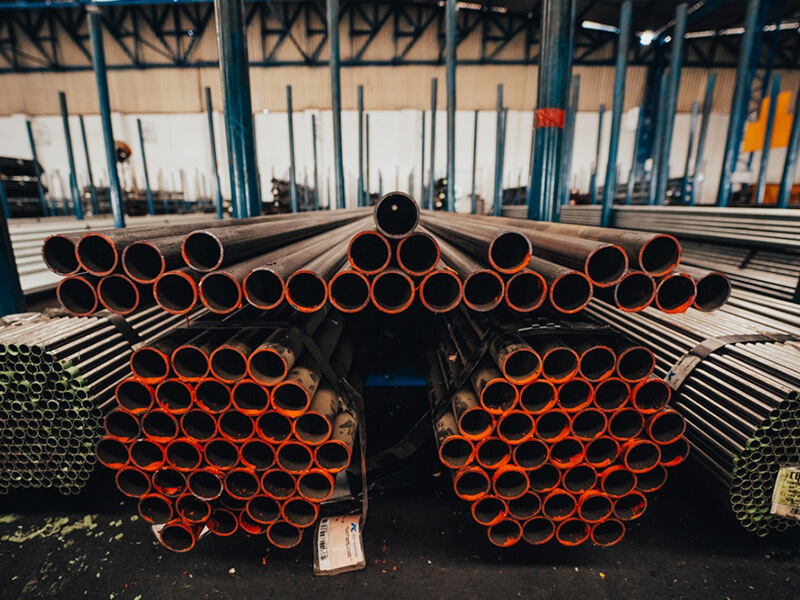
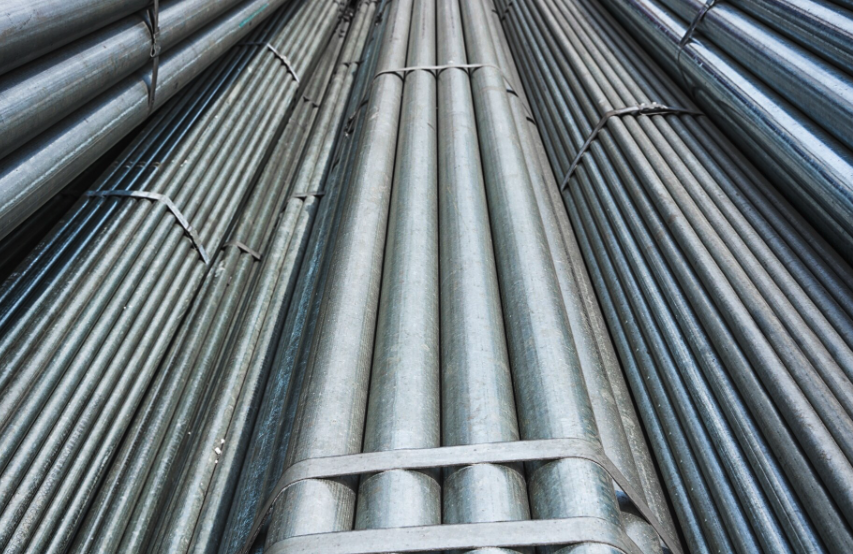
Finished goods inventory maintains merchandise ready for delivery or sale. In the steel industry, this includes structural profiles, galvanized pipes, custom-cut sheets, hardware, and other items purchased by Grupo Aço Cearense's clients.
Having ready-made products available means meeting emergency demands and maintaining commitments to the customer, without delaying deliveries.
This is the stage where logistics takes center stage: secure storage, frequent inventories, and attention to the correct handling of items are good practices to ensure their integrity until shipment.
Finished product sitting idle for too long is like frozen money.
Throughout the entire industrial chain, there are uncertainties: supplier delays, unexpected demands, or fluctuations in transportation. safety stock It is the extra amount of material kept to account for these variations.
For example, if a project requires 100 tons of steel and there is always the risk of leftover cuts or lost parts, ensuring an additional margin prevents work interruptions or penalties for delays. This inventory level is calculated based on historical sales data, consumption variations, and average replenishment time..
These two categories function as operational limits. The minimum stock level defines the lower point, signaling the need for replenishment. The maximum stock level sets the limit that should not be exceeded to avoid excess inventory and unnecessary storage costs..
In the steel industry, the calculation of these levels takes into account sales volume, supplier delivery time, and storage costs. Exceeding these parameters can lead to wasted space, risk of deterioration, and even "loss of market share" due to a lack of agility.
To maintain these adjusted values, we use digital monitoring tools and frequently analyze the items' output history.
The ABC Curve is a method of classifying inventory according to the economic importance of the items. It is not a "physical category," but a prioritization filter to organize what should receive more attention from the purchasing, planning, and control team.
Focusing on managing A-list items reduces the risk of high losses; C-list items require less intensive monitoring, but cannot be neglected.
Let's imagine an industrial project that relies on the supply of steel for metal structures. First, the company receives coils or sheets as raw material, stored in a specific location with automated control. These items then go to cutting, bending, or welding, entering the work-in-process inventory.
At the end of the cycle, the finished components are organized in the final inventory, ready for shipment. If there is an unexpected increase in consumption, the safety stock covers this difference, making it possible to serve the customer without delay.
Each segment of inventory has its own function and value; the secret lies in combining the categories so that everything translates into speed, savings, and satisfaction.
At Grupo Aço Cearense, this logic is repeated daily, with integrated processes and dedicated monitoring to avoid waste and maintain the standard of service recognized by the market.
Modern management depends not only on ample physical space, but also on efficient methodologies and technology. We suggest:
These precautions prevent losses, improve decision-making, and allow for quick identification of the location of each material, especially when demands change rapidly.
The truth is that there is no single model that works for everyone. Choosing the most suitable option depends on:
Our experience has taught us that balancing safety stock with production and logistics efficiency is... always a data-driven decision, never an intuition-based one.. In the steel sector, minimizing this margin can be risky during periods of greater market volatility.
Another good practice is analyze inventory turnover. If you notice that some items remain in storage for too long, it's time to review purchasing processes and readjust minimum and maximum order quantities.
Maintaining well-controlled inventory levels impacts a company's total costs. Excess idle material means invested capital without return, while replenishment failures can result in production downtime or contractual penalties.
Within the Aço Cearense Group, all inventory decisions undergo rigorous analysis, with monitoring of indicators and ongoing adjustment of internal policies. We always strive to:
Have you realized how choosing the right category of inventory can change the fate of a project and the company as a whole?
By separating raw materials, monitoring products in process, maintaining strategic reserves, and tracking items ready for shipment, we protect our business against unforeseen events and take advantage of market opportunities.
At Grupo Aço Cearense, we apply these best practices daily to support our customers, partners, and suppliers at every stage of the steel supply chain.
Do you want to enhance your management, ensure reliable service, and be part of a network that knows how to combine quality with commitment?
Complete your inventory with Aço Cearense: request a quote.
The most common types are: raw material inventory, work-in-process inventory, finished goods inventory, safety stock, minimum inventory, maximum inventory, and inventory classified by the ABC curve. Each of them has a specific function within the industrial or commercial flow and must be monitored according to the operation's profile.
The decision should be based on sales volume, product characteristics, purchase terms, physical space, and financial resources. We always suggest combining different methodologies and monitoring turnover, sales, and replenishment indicators to avoid excesses or shortages.
Inventory classification guides the use and prioritization of materials, reduces errors, facilitates inventories, and speeds up decision-making. Methods such as the ABC Curve help focus management efforts on the most financially valuable items.
Physical inventory refers to what is actually stored and can be counted and handled. Virtual inventory, on the other hand, is what is recorded in the systems, taking into account purchases, sales, and reservations that have not yet been physically processed.
Different storage models allow you to cover risks (safety stock), balance resources (minimum and maximum), streamline production (work-in-process), and quickly meet market demand (finished goods). The result is greater efficiency, fewer losses, and satisfied customers.