Steel in commercial projects can enhance the environment by combining strength, space optimization, and visual identity. The material is suitable for everything from warehouse structures to exposed elements in stores, restaurants, and distribution centers.
The choice, however, needs to consider the function of each component. Roofs, facades, enclosures, and interior details face different conditions regarding humidity, contact, and maintenance.
When a project connects materials, finishes, and space utilization, steel ceases to function solely as structural support. Instead, it becomes an integral part of the experience for clients, teams, and visitors.
A commercial project needs to meet the operational needs and the company's visual identity. Circulation, lighting, comfort, maintenance, and brand identity all influence the perception of the environment.
In a store, for example, the facade presents the business even before the customer enters. In a warehouse or logistics center, however, the roof, openings, and internal flow affect productivity.
Steel allows for the creation of structures with different shapes and dimensions. Furthermore, it can be suitable for projects that require large areas and minimal internal obstructions.
However, the project's value doesn't depend solely on the amount of steel used. The specification must consider loads, environment, finish, and expected service life.
In other words, the applications of steel in civil construction They demonstrate how the material can fulfill structural and architectural functions in commercial projects.
Profiles, tubes, sheets, and roofing sheets allow for the development of structures adapted to the operation. This flexibility is useful in stores, supermarkets, restaurants, warehouses, and corporate buildings.
Larger spans can reduce the need for pillars in certain solutions. This allows for a more open internal layout to accommodate storage, equipment, vehicles, or service areas.
Steel also facilitates future expansions when the project allows for this possibility. After a technical evaluation, it is possible to integrate new modules, roofs, or enclosures into the existing structure.
Another benefit is evident in the manufacturing process. It's also possible to produce some of the components off-site and then transport them for assembly.
This process requires dimensional control and logistical planning. Even so, it can reduce improvised adaptations during execution.
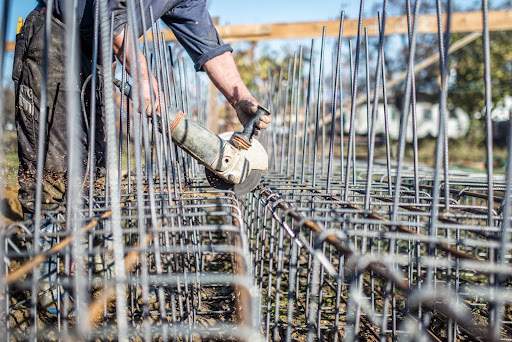
Steel can appear in visible and technical areas of the project. Each application requires a specific type of product and protection compatible with the location, according to the technical guidelines of the manufacturer. CBCA (Brazilian Steel Construction Center).
Among the most frequent uses are:
Ultimately, the choice shouldn't be based solely on appearance: an interior counter faces different conditions than a facade exposed to rain and pollution.
Roofing affects comfort, protection, and appearance. In commercial projects, it can also interfere with business continuity.
Water infiltration can affect products, electrical installations, or equipment. Therefore, roof tiles, fasteners, flashing, and gutters need to form a compatible system.
The tile profile influences rigidity and spanning capacity. The coating, in turn, contributes to corrosion protection.
Environments near the coast or subject to high humidity require extra attention. In these conditions, salts and condensation can accelerate wear and tear.
For example, the content about types of metal tiles and its applications help to compare formats used in commercial and industrial works.
Furthermore, the design can combine insulation and ventilation to improve thermal comfort. The roof tile alone does not meet all the requirements of the interior environment.
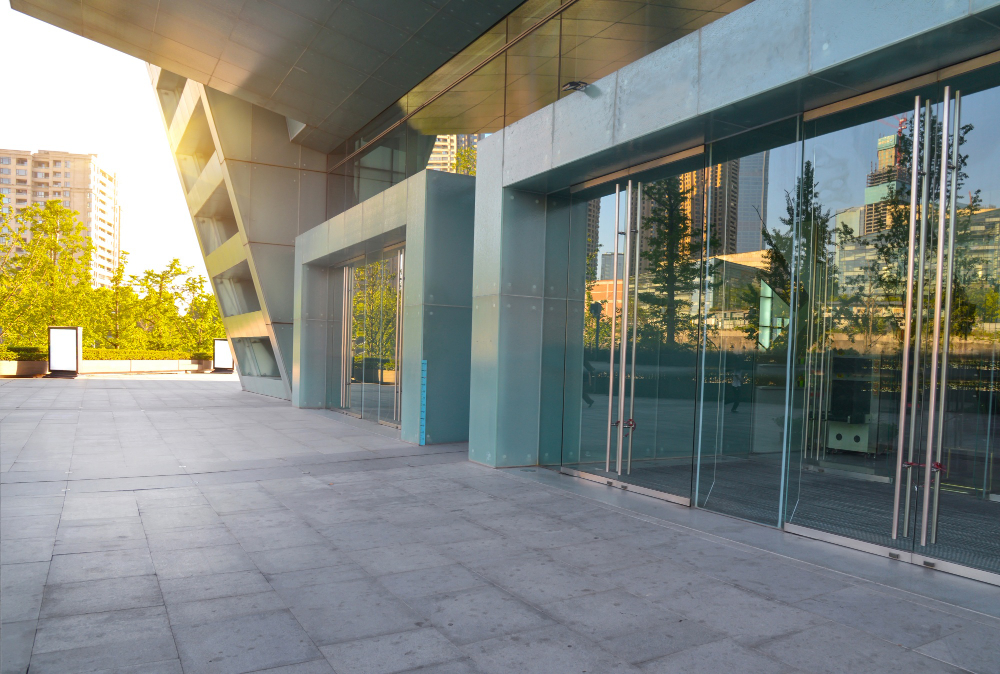
Metal facades can create a contemporary image and facilitate the repetition of visual elements. Lines, cutouts, and surfaces help to identify the brand in the urban space.
The result depends on the uniformity between the pieces. Differences in texture, color, or direction of the finish become evident in large areas.
The design also needs to plan for fasteners and joints. When these elements appear unintentionally, the facade can look improvised.
In addition, the design must consider expansion joints, drainage, and access for cleaning. Exterior panels are exposed to rain, dust, solar radiation, and pollutants.
In this sense, the corrosion of steel It directly influences the applied finishes, which helps define the visual effect and maintenance requirements for commercial facades.
Commercial projects seeking metal roofing with a uniform visual finish and greater attention to final appearance may consider galvanized steel.
This feature may be of interest to stores, restaurants, shopping centers, and businesses where the roof remains visible. Additionally, the product can also be used in outdoor areas requiring protection compatible with exposure.
The recommendation must take into account the environment, the inclination, the fastening system, and the maintenance conditions. Therefore, it is essential to consult the technical data sheet before specifying.
In commercial projects, the finish should not function as a separate element from the function. The surface needs to maintain visual consistency without compromising drainage, sealing, or performance.
Therefore, it is necessary to evaluate galvanized steel in conjunction with the structure, accessories, and other elements of the roofing.
Ultimately, a street-level store, a restaurant, and a logistics center have different needs—and the selection of materials begins precisely with the use of the space.
Next, we need to consider exposure to rain, sea air, humidity, and chemicals. These factors determine the type of steel, the coating, and the frequency of inspection.
We also need to check the profile, thickness, dimensions, and fastening method. Replacing one product with another requires validation from the responsible technician.
We also evaluated the appearance directly on samples, since natural and artificial lighting can alter the perception of brightness, color, and texture.
Finally, the budget should include installation, maintenance, and potential replacements. The lowest initial price doesn't always translate to the lowest overall cost for the project.
Our page steel products for civil construction It brings together materials for structures, roofing, and various commercial applications.
In summary, steel can be used for structure, roofing, facades, and finishing in commercial projects. The result depends on the combination of technical specifications, exposure, and visual identity.
At Aço Cearense Comercial, we offer steel products for stores, warehouses, logistics centers, restaurants, and other businesses.
Check out the available options and download the Aço Cearense catalog to compare materials for your project.
Yes. The combination creates textural contrasts and allows for different compositions. The design also needs to account for fixings, material movement, and contact between surfaces.
They can be helpful when the initial design already takes expansion into account. Any subsequent changes must undergo a technical evaluation of the existing structure.
The design should promote drainage and reduce water accumulation. Regular cleaning and the use of appropriate products also help to preserve the surface.
Frequency depends on the coating and the environment. Coastal, industrial, or very humid areas usually require more frequent inspections.
Color and reflectance influence heat absorption. However, the design also needs to consider insulation, ventilation, and building characteristics.