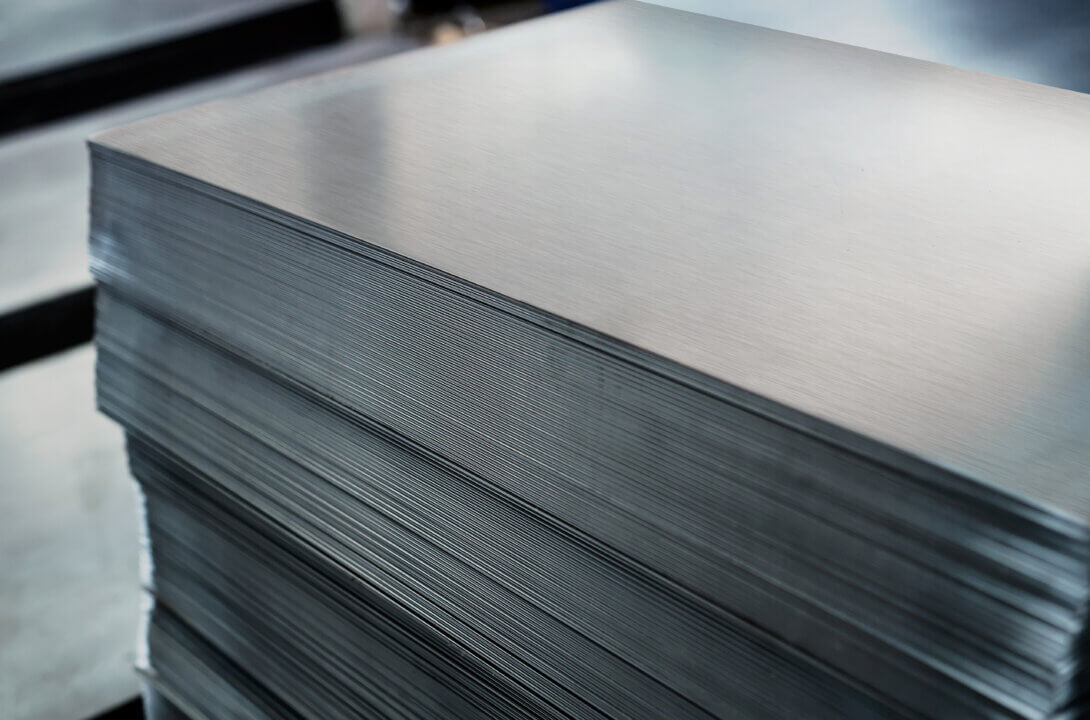
When it comes to iron and steel materials, product quality is essential to closing sales and promoting store growth. Therefore, it's important to evaluate your suppliers and ensure they meet the standards expected by your customers. A good strategy for this is to check whether the company is ISO 9001 certified.
Relying on certified suppliers means greater assurance of the products sold, whether for large structures or home renovations. If you're unsure about a particular company before entering into a new partnership, ISO 9001 certification is a good starting point for your evaluation.
Follow along and understand the importance of finding ISO 9001 certified suppliers!
ISO 9001 is a certification granted to companies that adopt international quality standards for their products and services. It can be granted to any business, not just those in the iron and steel industry.
The certification originated in 1946 in Geneva with the International Organization for Standardization (ISO). This organization was founded with the goal of developing quality standards that could be followed in various industries around the world. Therefore, ISO 9001 facilitates choice of suppliers for your store.
Even though it's not an industry-specific certification, ISO 9001 carries significant weight for companies in the iron and steel sector. Below, you'll find its main benefits!
At the time of evaluate suppliers, it's essential to consider the quality of your product, as well as its logistics. ISO 9001 certification proves that the supplier's products adhere to strict quality standards, adopting specific methods to meet market demands.
Another important aspect of ISO 9001 certification is that it guides the company's decisions regarding its customers. In other words, the priority is to meet customer demands and deliver better quality, not just follow protocols and bureaucracy. This concern is important both for your store and for the end buyer of iron and steel.
A company with high internal efficiency, a characteristic inherent to ISO 9001 certification, generates less waste, is more profitable, and can maintain its productivity over the long term. This consistency is another important characteristic in a supplier, as it aids in their planning, whether to improve their sales, capture more customers or take advantage of market opportunities.
ISO 9001 advocates a policy of continuous improvement, aligned with the PDCA (Plan-Do-Check-Act) concept. This ensures your supplier remains competitive with other businesses and offers increasingly higher-quality products.
To meet the standards of the market, the ISO 9001 certification requirements are based on a series of guiding principles. Follow along and better understand what they mean!
The main point raised in ISO 9001 is the importance of focusing on your customers' needs. The best customer experience should always be the company's priority, ensuring that your products meet their demands and that your purchasing process has as few bottlenecks as possible.
As we know, leadership plays a central role in a company's performance. In addition to guiding the team on a daily basis, leaders are responsible for encouraging continuous improvement, motivating employees, and facilitating internal communication.
ISO 9001 certification emphasizes the importance of leaders for teams, with the goal of maximizing the quality of products and services.
An engaged team goes hand in hand with effective leadership. Therefore, it's essential that every company has policies aimed at increasing employee satisfaction and engagement.
This involves actions that preserve employee well-being, a realistic and motivating goal system, a good benefits package, among other initiatives that can be developed by the Human Resources department.
ISO 9001 also encourages companies to view their work as a chain of actions, rather than isolated ones. Each step is clearly linked to the others, creating a cohesive process for customer service, production, and service delivery. This way of viewing processes also has benefits for your store, such as improved productivity. supplier management.
As we mentioned, market quality standards are constantly changing. The way a company produces parts, stores the steel or communicates with the public must follow the available methods and tools and monitor their updates.
Part of ISO 9001 certification involves establishing clear quality management processes, which can be refined within the company over time.
The larger the scale of a business, the more important it is to make strategic decisions based on data, analysis, and evidence. Companies that base their planning on subjective observations are much more likely to make mistakes and miss market opportunities.
This is a principle that is part of ISO 9001 and applies to all its processes, not just product quality control.
Above all, service quality depends on a positive relationship with the public and partner companies. A good iron and steel supplier is available to answer questions and solve problems whenever necessary. This allows for the development of mutually beneficial relationships, in addition to contributing to a positive image for the business.
Now you know more about ISO 9001, its standards, and its importance when choosing your iron and steel suppliers. Regardless of your end customer profile, it's essential to rely on a company that delivers quality products on time.
Was this article helpful in understanding the principles behind ISO 9001? Share it on your social media and show more people the importance of this certification!
 EN
EN  PT_BR
PT_BR