Increasingly familiar with technology, consumers are no longer limited to a single path to finding products or services. They want to have many options. sales channels presented in a practical and agile manner.
Therefore, companies must utilize a variety of communication alternatives to reach customers and expand their sales and brand reach. In other words, they must become multichannel.
Below, you'll learn about the various options for using the channels that best suit your business. So, keep reading to find out more!
Sales channels are the different means by which a product or service is marketed and sold to customers. They can be physical, such as stores or kiosks in shopping malls, or virtual, such as e-commerce websites or marketplaces.
It is important for companies to carefully evaluate their means and adjust them as necessary to meet customer demands and maximize sales and profits. This is because each one has its own advantages and disadvantages.
There are several examples used to illustrate the relationship between companies and consumers. They can be traditional or digital sales channels, but they all have their own particularities. Below, you'll learn about them and be able to evaluate them more clearly.
One of the most traditional retail sales channels, it requires specific marketing strategies to reach the public. Essentially, it involves selling directly to the end consumer in a physical environment, such as a store in a mall, street, gallery, etc.
It allows customers to see, touch, and try products before purchasing, which can be a decisive factor in their purchase decision. It also offers personalized service, which can increase loyalty.
However, physical stores also have their drawbacks, such as high rent, maintenance, and employee costs, among others. Furthermore, their geographic reach is limited, which can make it difficult to attract new customers.
When a company becomes successful, it repeats the same sales strategies and distribution in new locations, maintaining its characteristics.
Thus, it is a business model in which a company (the franchisor) grants other people (the franchisees) the right to use its brand, technology, operating methods and market knowledge, in exchange for an initial fee and royalties about sales.
It's advantageous because it allows you to expand your brand and products to different locations without having to bear all the costs of opening new stores. Franchisees can count on the franchisor's support in areas such as marketing, training, and management, which can help them achieve success more quickly.
One of its challenges is requiring franchisees to follow strict operating rules and use the same processes and brands, which can limit their creativity and flexibility.
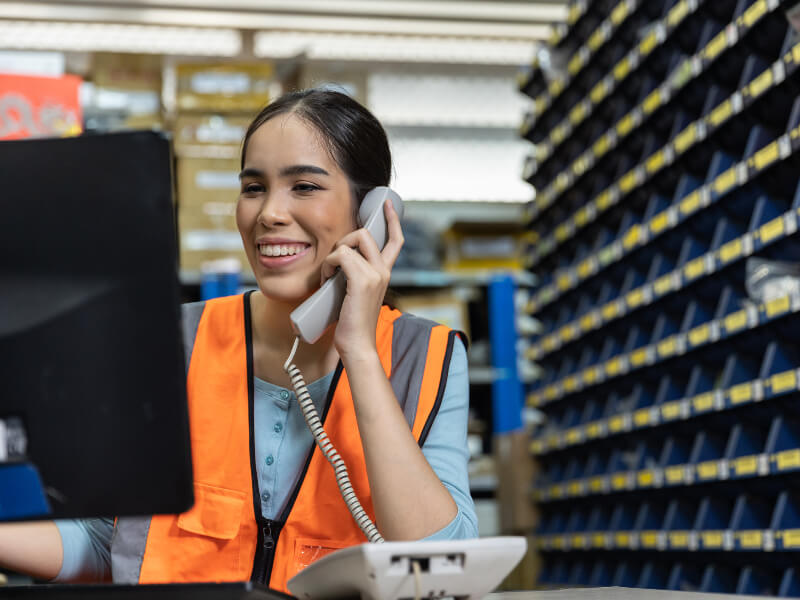
A call center is created to stimulate sales. The target audience is people who don't use more advanced technology, such as the internet.
It's common in sectors such as direct sales, financial services, beauty and health products, etc. The main advantage is that companies can reach countless customers in a short period of time, without the need to establish a physical presence in multiple locations.
On the other hand, customers may have difficulty assessing product quality before purchasing, which can lead to dissatisfaction and returns.
It offers a personalized and intimate type of sales. It's a marketing model in which companies recruit and train a team of independent consultants, paid a commission, to promote and sell their products or services.
In a way, it allows you to connect directly with your customers, receiving feedback and suggestions. This can help you improve your products and services and better meet consumer needs.
However, there are costs to support consultants and the quality of service may vary, considering that they are not internal employees and may have different levels of skill and knowledge.
Also called Facebook Commerce, social network It is useful when gathering a brand's consumers and measuring their profile and needs.
Businesses create a page or online store on Facebook and offer their products or services directly to consumers through this platform.
The main advantage is the possibility of reaching a large number of customers through a platform that is already widely used by many internet users.
Additionally, Facebook is among the online sales channels that offer audience targeting tools, allowing businesses to reach people with specific interests and use their interactions to build lasting relationships.
It functions as an online store where products are presented and sales are made online. Websites or sales platforms are created to reach a large number of customers in different geographic regions, without the need to open multiple physical stores.
One of its benefits is its 24/7 operation, allowing purchases at any time, as well as the opportunity to personalize the customer experience and offer products and services that meet their needs and preferences.
However, e-commerce requires investment in technology and infrastructure to keep your online stores running and offer a quality shopping experience to customers.
Known as Mobile Commerce, these are smartphone apps that serve as a way to discover and purchase products and services. It's a way to leverage mobile devices to increase sales.
Since many people use their cell phones to access the internet, m-commerce allows companies to reach these consumers more effectively. After all, adapting to the behavior of modern shoppers is a current necessity.
The biggest challenge in this medium is the smaller screens and interfaces that are different from those of desktop computers or laptops, which requires websites to be responsive so as not to impact user navigation and experience.
It's a channel that brings together products from different companies and sellers in one place. Examples include Amazon, Shopee, Shein, and Americanas.
This type of channel is popular among those looking to expand their online business. These platforms offer broad visibility and exposure for products and services, which can lead to increased sales and revenue.
Not to mention that you can benefit from features like marketing, logistics and customer service, offered by the platform itself.
However, there is fierce competition, which may lead to a reduction in profit margins. You also have to pay a fee for the tool and follow policies and regulations, which can limit flexibility and autonomy.
WhatsApp can be an excellent sales channel. It's an instant messaging platform increasingly used by consumers in their daily lives, allowing for direct communication with customers. Therefore, Grupo Aço Cearense provides easier contact for its customers.
To develop good sales on this platform, it's important to maintain personalized communication, respond quickly, offer after-sales support, be proactive, and send exclusive promotions.
Additionally, you need to use WhatsApp Business to have your account verified and build trust with customers, who will see the app as another option for asking questions and making purchases.
Choosing sales channels can have a significant impact on your business's success, as different channels have different costs and effectiveness in reaching and serving customers. Here are some tips.
It is necessary to select the products according to the target audience and the company's demands. Therefore, it's essential to study the items that can be offered online, based on their sales probability and reach, and on consumer habits, needs, and preferences.
One must think about management of stock to meet the number of orders, means of distribution and how to work on your business's communication.
If a company wants to establish a digital presence but believes that not all of its products are suitable for this type of business, it can make only part of its catalog available online and offer the remaining products only in the physical store.
Consider product delivery. Look for partnerships with companies that offer competitive prices and efficient service, and only offer digital products that can be guaranteed for delivery.
Even if the physical store and the online store offer different merchandise, they should be consistent. After all, customers will identify the company by its brand, not its chosen channel.
If you're new to the market, start with low-investment options like marketplaces. More established companies can invest in their own channels, such as physical stores or e-commerce.
Finally, always consider the advantages and disadvantages of each medium. After all, selection is an investment that should yield returns. sales target.
It's a good idea to test different resources and evaluate the results. This can help you identify which ones are most effective and make any necessary adjustments to your sales strategy.
As we've seen, being a multichannel company means managing multiple sales and marketing tools simultaneously. Entrepreneurs can work with communication channels like social media and e-commerce, as well as create strategies for physical stores to expand their customer base, taking into account contemporary diversity.
Choosing the right sales channels is essential to increasing a company's revenue. By utilizing multiple options, you can reach a larger audience and increase the visibility of your products and services. Fortunately, you know the main ones and know which ones to use!
Also take the opportunity to read others blog contents and, if you liked it, share this post on your social networks.
 EN
EN  PT_BR
PT_BR