In the civil and industrial construction sector, few solutions combine as much reliability and versatility as galvanized steel. For decades, engineers, architects, and construction managers have sought materials that can withstand harsh weather, ensure structural safety, and provide long-term cost savings.
Steel protected by the galvanizing process has come to occupy a prominent place in this context, mainly because it combines strength, affordability, and sustainability.
In this article, we will discuss all aspects of the material, its different applications, and industry advancements in a straightforward, simple, and up-to-date manner. Read until the end!
To understand the relevance of galvanization, It is important to remember that ordinary steel, by itself, is susceptible to atmospheric corrosion, especially in humid, coastal, or industrial locations. Contact with oxygen and water allows iron molecules in the steel to oxidize, leading to the well-known rust, which weakens and degrades the material over time.
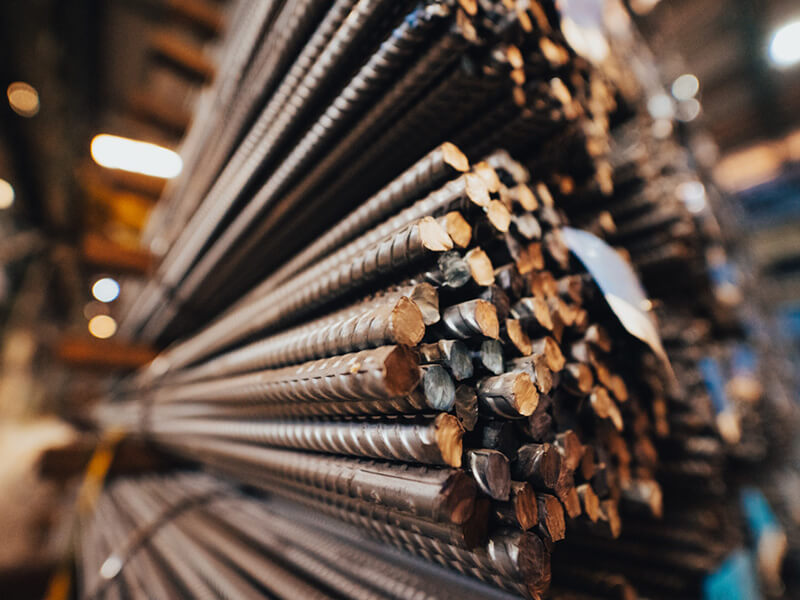
Galvanization emerges as a definitive solution to this problem. It involves coating steel with a layer of metallic zinc, usually obtained by hot-dip galvanizing. This thin film, applied under strict quality control, acts as a physical and chemical barrier.
By blocking contact with corrosive agents, it considerably extends the lifespan of metal structures, sheets, pipes, and other components widely used in modern construction.
In the most widely used method in the industry, the steel is immersed in a bath of molten zinc at approximately 450 °C. This contact causes metallurgical reactions on the surface of the steel, creating a protective layer that not only covers but partially fuses to the base material, ensuring robustness and adhesion.
Two industrial processes are more widely used: hot-dip galvanizing (immersion) and electrolytic galvanizing (electroplating). The main difference lies in the method of applying the zinc layer to the steel:
For harsh environments and heavy construction, hot-dip immersion proves to be more efficient.
In Brazil, the production and application of galvanized steel is guided by technical standards that guarantee the safety and standardization of products and processes.
Companies that respect these parameters, such as the Aço Cearense Group, guarantee reliable products, ready to meet the demands of complex projects.
Among the most valued benefits are:
Furthermore, studies of State University of Maringá Studies show that incorporating elements like niobium into steel, in small percentages, further enhances its mechanical properties and corrosion resistance, making the material even more suitable for sustainable applications in civil construction.
Steel roofing sheets and tiles treated with galvanization are widely used in the roofing of industrial sheds, residences, public institutions, and rural areas. Their low weight, combined with resistance to sun and rain, allows for quick and economical solutions. In terms of facades, the modern look and customization with electrostatic painting add aesthetic and functional value to architectural projects.
In this area, galvanized sheet metal, in particular, is gaining ground due to its versatility, wide range of sizes available, and excellent cost-benefit ratio.
Galvanized profiles, beams, columns, and trusses make it possible to assemble structures in record time. Warehouses, walkways, industrial staircases, mezzanines, and sports courts are just a few examples. The practicality is even greater in modular construction systems and Light Steel Framing (LSF), which is increasingly being adopted for housing, commercial buildings, and infrastructure projects.
In a Comparative study between the Light Steel Framing system and conventional masonry., It was found that, even with a larger initial investment, the use of galvanized steel allows for much faster deliveries, which is strategic in social interest projects and large-scale public works.
Companies like Grupo Aço Cearense offer galvanized pipes, metal profiles, and fittings for metalworking, hydroelectric installations, agricultural projects, and various industries. These products are preferred in both new constructions and renovations and expansions.
With growing environmental concerns and the search for clean solutions, the demand for recyclable and long-lasting materials has increased significantly. Zinc-coated steel facilitates disassembly, reuse, and recycling. In the field of design, the sophisticated industrial finish has allowed for uses in urban furniture, artistic interventions, and even hospital equipment.
Despite its robustness, galvanized steel may require care in specific situations to ensure the protective layer lasts for many years.
When cuts, welds, or surface damage occur, there are specific products for touch-ups, reapplying zinc to vulnerable areas.
Nationally recognized, the Aço Cearense Group stands out for combining tradition, technology, and sustainable commitments throughout the galvanized steel supply chain. From e-commerce to in-person service, attention to technical standards, customization of measurements, fast turnaround times, and a focus on environmental responsibility guarantee products that go far beyond conventional offerings.
In addition to its industrial line, the company maintains social projects, incentives for the circular economy, and eucalyptus planting practices, aligning itself with the new paradigms of sustainability and corporate responsibility in the civil construction sector.
Customers receive comprehensive support: technical guidance, customized project development, and after-sales assistance, reflecting the brand's care and prestige in the B2B market.
Anyone who values quality, sustainability, and excellence in the supply of galvanized products already recognizes that the tradition of the Aço Cearense Group represents a safe and personalized choice for the most demanding needs of the sector.
To learn more and see our complete product lines of sheets, profiles, tubes, and custom solutions, visit our website. product catalog.
Galvanized steel is ordinary steel coated with a layer of zinc, usually applied through hot-dip galvanizing, to protect the material against corrosion and rust, ensuring greater durability in harsh environments. The zinc prevents contact between the steel and corrosive agents, creating an effective barrier in both indoor and outdoor areas.
Among the main benefits, the following stand out: long service life, low maintenance requirements, uniform protection across the entire part, high mechanical performance, economic return over time, and support for sustainable practices, as the material can be recycled and reused.
Galvanized steel is recommended for roofing, facades, metal structures, Light Steel Framing systems, pipes, metal profiles and industrial components, as well as urban applications and projects seeking greater durability against rust.
Under normal conditions, zinc coating protects steel from corrosion for many years. However, if the layer is damaged, exposed to aggressive chemicals, or installed in extremely acidic atmospheres, localized deterioration of the zinc may occur, but protection remains under usual conditions.
The price per meter of galvanized steel varies depending on the thickness, type of product (sheet, tube, profile), quantity purchased, and market conditions. As a rule, the initial investment is competitive when compared to the lifespan and reduction in maintenance, making it an excellent cost-benefit option for construction and industrial projects.
 EN
EN  PT_BR
PT_BR