The construction industry in Brazil has shown constant evolution, driven by the search for efficient, durable solutions that meet contemporary engineering demands. Among the key components of this progress are steel pipes, widely used in the structuring of civil works, foundations, roofs, plumbing, handrails, and other systems requiring reliability.
Global crude steel production reached 1.88 billion tons in 2024 alone, and the country contributed significantly with 33.7 million tons, according to the data from the journal Cadernos do Desenvolvimento. This highlight demonstrates the central role of steel, and especially industrial and structural pipes, in national development.
In this article, you will find a detailed overview of the most common types of steel pipes used in buildings and infrastructure projects, practical examples, relevant technical standards, and, above all, the differentiating factors that make the products developed by companies like Aço Cearense key elements for the safety and modernity of constructions.
Over the past few decades, construction companies, engineers, and architects have opted for steel pipes due to its combination of durability, adaptability to different types of projects, and ease of assembly. The durability of these materials redefines the lifespan of structures.
These elements, molded from carbon steel, galvanized steel, or stainless steel, occupy prominent positions, from large beams for buildings to conduits for electrical and hydraulic installations, adding versatility, safety, and, increasingly, a sustainable approach to environmental challenges.
Steel is among the top five building materials, alongside concrete, wood, glass, and ceramics, establishing itself as a basic input on any construction site.
The most commonly used pipes in the construction industry can be classified according to their material composition, coatings, manufacturing processes, and geometric shape. Understanding these differences ensures more accurate choices for each application.
Manufactured from an iron alloy with a small amount of carbon, they are the most widely used in structural and industrial projects. This material exhibits high levels of mechanical strength, good weldability, and ease of shaping, meeting standards such as... ABNT NBR 5580 and NBR 6591.
Galvanization involves coating the steel pipe with a thin layer of zinc, resulting in excellent corrosion protection and making the material ideal for outdoor areas, hydraulic systems, or environments subject to humidity and weather.
In addition to preserving structural integrity, the zinc coating reduces the need for maintenance over the years.
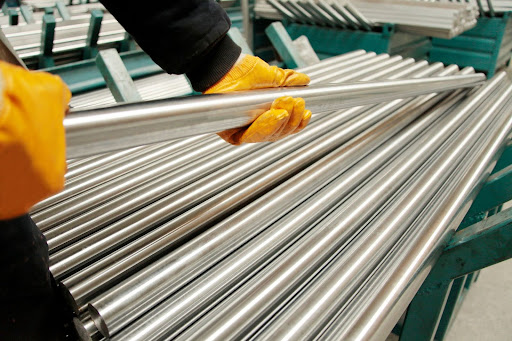
They stand out for their cleaner look, glossy finish and, above all, superior resistance to corrosion, even in extreme situations such as harsh industrial environments or saline atmospheres.
They are frequently chosen for handrails, guardrails, exposed structures, and high-traffic areas where aesthetics and hygiene are also priorities.
Designed for applications requiring resistance to high pressure, impact, and loads, industrial pipes encompass a range of connections and shapes tailored for foundations, technical passages, machinery supports, and large roofs.
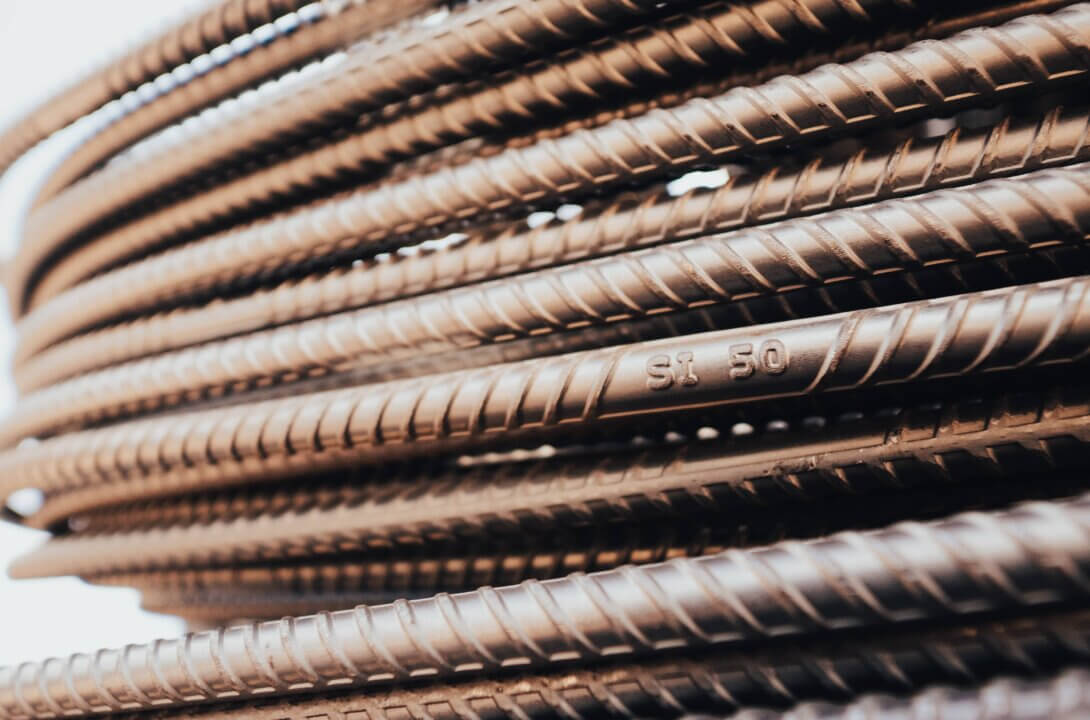
Its properties are, in many cases, optimized through the use of additives such as niobium. Research from State University of Maringá Studies show that adding 0.05% of niobium to steel can increase its mechanical strength and corrosion resistance, making it even more suitable for civil construction.
The pipe's topology directly influences its use. Among the most sought-after options are:
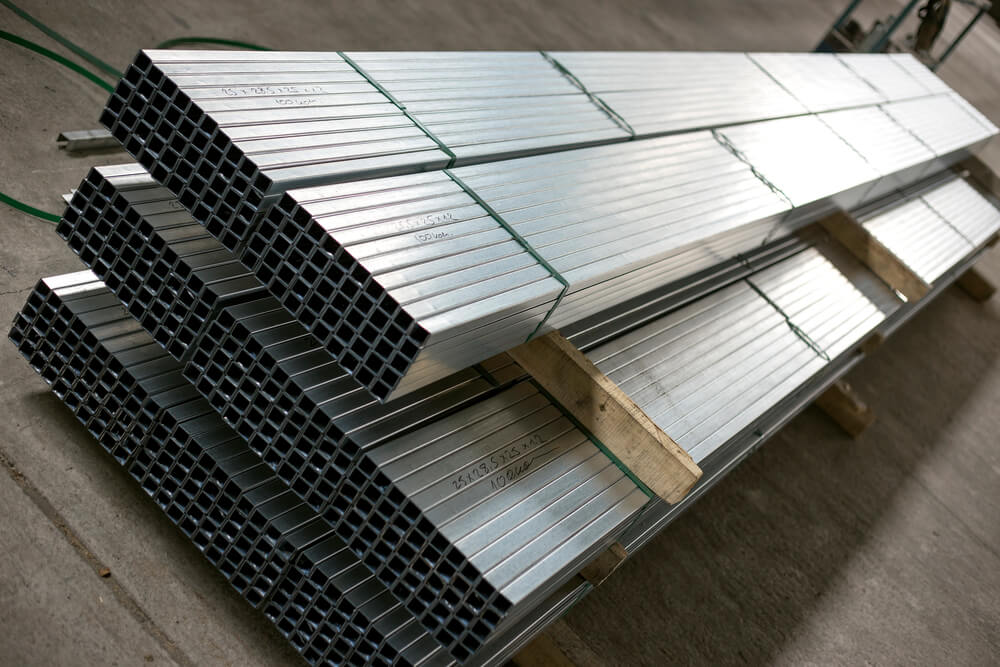
The choice between formats takes into account the type of load applied, desired aesthetics, and fastening methods adopted in the construction.. Square and rectangular metal profiles, known as metalons, are among the favorites in the commercial and industrial sectors, facilitating the execution and finishing of projects.
From a practical standpoint, steel pipes find their place in the most varied stages of construction:
According to an article about the applications of steel pipes in civil construction, the versatility of the pipes allows them to be used in projects ranging from residential and commercial buildings to large-scale urban infrastructure.
Another point of interest is the use of steel pipes in sustainable projects, such as water reuse systems and the expansion of green areas, reinforcing the environmental concern that is ingrained in the DNA of the Aço Cearense Group.
Industrialized steel offers advantages when compared to traditional materials such as wood and PVC. Mechanical strength, flexibility, relative lightness in transport and assembly, ease of welding, and durability stand out as key benefits.
These characteristics ensure structural safety, as well as a reduction in construction time, since prefabricated tubes allow for quick assembly through fittings, welds, and screws. Steel does not deform, does not crack, and withstands the test of time: it lasts for generations.
Another attractive feature is its sustainability: steel is 100% recyclable. Large-scale projects, such as Brazilian footbridges and bridges, use steel to achieve environmental certifications and implement green building concepts.
Choosing certified pipes that comply with Brazilian standards and thickness regulations protects professionals, investors, and future users of buildings. The quality of the steel is directly linked to the safety of a building, influencing its performance against weather, fire, loads, and unexpected impacts.
In the context of costs, IBGE-Sinapi data from 2021 Studies reveal that the price of steel pipes significantly impacted the cost variation of construction projects, along with items such as reinforcing bars. Investing in high-quality materials, however, prevents waste and avoids the need for future repairs.
The Aço Cearense Group, for example, follows rigorous production control and traceability procedures, providing technical assurance on the tubes delivered to corporate customers.
The durability of steel pipes depends not only on manufacturing, but also on correct storage and cutting procedures at construction sites.
These precautions prolong quality and ensure that technical specifications are maintained even as the project progresses.
Steel pipes play a strategic role in the transformation of the Brazilian construction industry. Through the multiple options of alloys, geometries, and finishes, they respond to the structural, economic, and environmental challenges imposed on modern engineering.
Choosing pipes with guaranteed certification and origin is an investment in longevity, safety, and value creation for any project. The Aço Cearense Group is a leader in this endeavor, offering pipes suited to a wide range of needs, always with environmental and social responsibility and a commitment to the future.
Discover the complete product line of Pipes and solutions from the Aço Cearense Group and transform your projects into examples of innovation, quality, and sustainability.
Steel pipes are metal components in cylindrical, square, or rectangular shapes, used in structures, foundations, and internal systems of civil engineering works. Their function is to support loads, conduct fluids, protect wiring, and ensure the robustness of buildings.
Among the main types are carbon steel pipes (plain or galvanized), stainless steel pipes, and industrial pipes, which vary according to their intended use. All of them can be manufactured with or without seams and in round, square, or rectangular shapes, meeting the requirements of national technical standards.
These pipes have diverse uses: they are employed in metal structures, tubular foundations, handrails, railings, fences, water and gas piping, and as conduits in electrical and plumbing installations. Their strength and durability make them key components in any modern construction project.
Yes, especially galvanized or stainless steel pipes, which receive special treatments to resist oxidation and the action of aggressive agents. The use of modern additives, such as niobium, further contributes to increasing this resistance, as shown by the university research mentioned in this article.
The price varies depending on the type of steel, pipe dimensions, manufacturing process, and finish (galvanized, stainless steel, industrial). Factors such as fluctuations in the steel market and demand from the construction industry also impact prices over time, according to indices such as the Sinapi presented by IBGE.
 EN
EN  PT_BR
PT_BR