We have very important information for you about the tiles we sell.
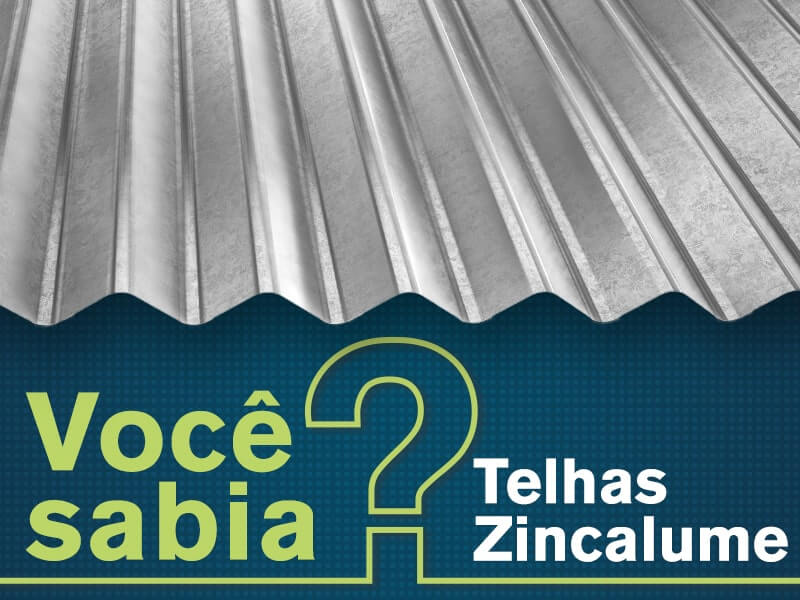
Tiles are products made from flat galvanized or aluzinc (zincalume) steel. They are used for roofing and side walls of buildings, residences, and industrial and commercial facilities of various sizes. excellent properties as thermal insulation, useful life, ease of installation, protection and aesthetics, in addition to two basic geometric shapes: wavy and trapezoidal.
As you can see, the advantages of using this product are immense. However, we want to emphasize that it's important to consider the appropriate environment for installing the tiles and other products. Don't worry, we'll explain further.
A good example of this is Zincalume Tiles. And why?
These products are not recommended for use in environments with high sulfur concentrations. After all, the conditions for corrosion* are favorable, such as in brickworks, which, due to the firing process, generate gases containing sulfur and create an environment conducive to corrosion. In this case, steel tiles are not the most recommended product lines.
* Corrosion is a natural process in metals, consisting of the deterioration of materials through the chemical or electrochemical action of the environment, which may or may not be associated with mechanical stress. In corrosion processes, metals react with non-metallic substances present in the environment, such as O2, S, H2S, CO2, and others, producing compounds similar to those found in nature, from which they were extracted. Thus, it can be interpreted that corrosion corresponds to the inverse of the metallurgical process.
When used in this type of industrial environment, they are prone to accelerated corrosion, especially those closest to the gas emission source (furnaces). Sulfur corrosion is typically characterized by widespread mass loss or wear of the exposed surface, resulting in the formation of sulfide.
Interesting, isn't it?
This happens because during the production process, bricks are generally heated to temperatures in the order of 750 -1000°C, for approximately 4 days until completion and in this process, gases are released, the main one being sulfur dioxide.
The release of SO2 (sulfur) occurs mainly in activities such as burning coal, which, when it comes into contact with oxygen, transforms into sulfur dioxide and trioxide, which, when reacting with humidity in the air, forms sulfuric acid, which can also react with ammonia present in the air and form ammonium sulfate.
All these gases formed, when in contact with metal structures, are responsible for accelerating the corrosive process.
Knowing this helps you choose the best material to use in your projects, renovations and environments.
Can galvanizing and painting help?
The galvanizing or painting process will reduce contact with non-metallic substances present in the environment, such as O2, S, H2S, CO2, and others. However, both the zinc in the coating and the paint will be consumed due to contact with these substances, leaving the material unprotected. Therefore, galvanized and/or painted materials have a longer useful life, but it is not possible to estimate the time, as the degradation rate may be faster or slower depending on the environment in which the material was exposed.
Want to know more about our product portfolio? Click here and speak to one of our consultants.
 EN
EN  PT_BR
PT_BR