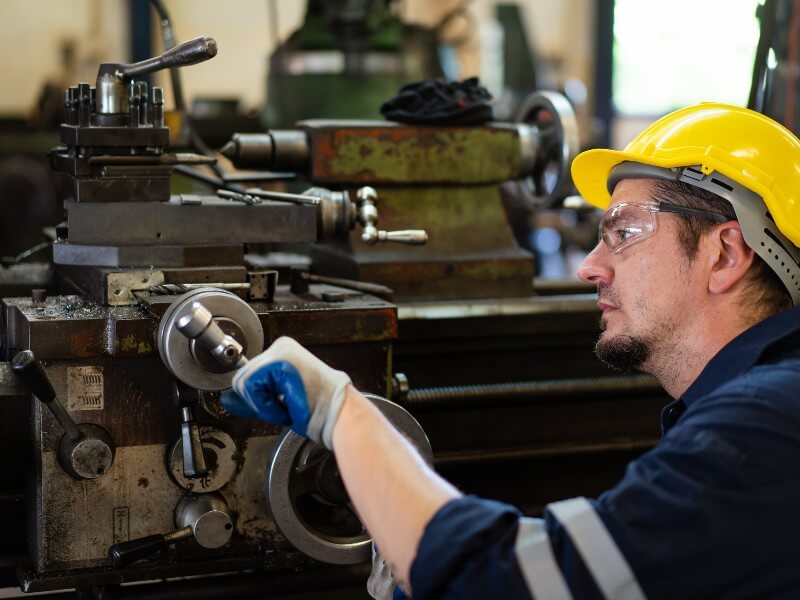
In industry, sudden machine failures cause significant losses, delay production, and compromise product quality. To prevent these problems, predictive maintenance is a great solution, as it allows for early identification of defects.
Using smart devices and data analysis, this approach frequently monitors equipment performance to make interventions at the ideal time.
But how can predictive maintenance be applied effectively? What techniques are used to optimize production capacity and reduce waste? Check out this content and learn about the main practices and advantages.
It is a methodology of management Based on identifying faults before they become critical defects. To achieve this, sensors attached to the equipment monitor variables such as pressure, temperature, and vibration to ensure targeted interventions.
Predictive maintenance ensures the continuity of operational flow. Machines in good condition offer greater reliability, avoid production bottlenecks, and help meet deadlines.
This practice benefits strategic planning by obtaining accurate information about how machinery is working, which optimizes the allocation of resources.
Neglecting predictive maintenance is detrimental to a company because waste and sudden failures can lead to large-scale losses. Therefore, using this approach is essential to achieve efficiency and sustainability.
Predictive maintenance uses various verification practices to intervene in equipment before it stops working. Generally speaking, it's necessary to understand the machine's failure conditions and then define the ideal analytical procedure.
Discover the most widely implemented techniques in industry!
Machines generally emit vibration frequencies when they are operating. Vibration analysis interprets this frequency through sensors coupled with accelerometers that convert mechanical vibration energy into electrical signals.
The log is sent to specific software for interpretation by a specialist. Here are some issues that can be detected:
An ultrasonic acoustic emission detector monitors noise and captures sound waves imperceptible to humans. Ultrasound is used to diagnose problems in various parts and equipment, such as machine casings, compressors, welded joints, bearings, piping, turbines, and bearings.
It is a very sensitive equipment, capable of identifying the following conditions:
Thermography can create images using different temperatures on a surface, highlighting defects invisible to the naked eye. Since heat is an early sign of damage or malfunctioning machinery, this is a good diagnostic tool.
The main applications of thermography in industries are:
This procedure assesses whether the additives remain active and whether there has been any change in the oil's viscosity. The properties of the fluids in the machines are also analyzed, as well as the level of contamination and particle size.
In addition, it is possible to know what types of oil residues there are and where they come from, whether there are other solutions mixed in, and whether there are any internal leaks.
Large particles indicate adverse reactions and areas of overheating or friction in the system's components. This allows us to determine which part caused the wear, as well as the cause and severity of the problem.
This test identifies defects such as cracks, fissures, and holes in metal surfaces—conditions that can lead to the failure of parts and equipment. Crack analysis is widely used in gas pipelines, oil pipelines, and ore pipelines.
This approach requires some investment, but it is a process that brings many advantages to the industry, including in the sector steelmaker.
Check out the main benefits of predictive maintenance!
With a more in-depth understanding of how machinery works, it is possible to develop good prevention practices and a care routine that extends its useful life.
Although predictive maintenance has a significant initial cost, it helps reduce repair costs because:
Other unfavorable conditions are also mitigated when there is clarity in the signals presented by the equipment.
Using data collected through predictive review, it is possible to identify accident scenarios. This allows those responsible for occupational safety to anticipate and take control and prevention measures to ensure the protection of employees. collaborators.
Predictive maintenance prevents process interruptions and downtime in affected departments. It provides data that makes repairs more accurate and efficient, optimizing time.
Medium and large industries face stringent environmental and safety guidelines. Predictive practices contribute to:
Predictive maintenance is an intelligent solution that delivers efficiency and increases competitivenessBy monitoring equipment and anticipating failures, companies improve production results and increase operational safety.
Investing in this strategic practice is also a way to promote organizational innovation. With the support of technology and management planning, it's possible to transform challenges into opportunities for growth and success in the iron and steel industry.
Want to stay up to date with the latest news from Grupo Aço Cearense? Follow us on social media, we're on Facebook, Instagram, YouTube and LinkedIn!
 EN
EN  PT_BR
PT_BR