Building a property is no simple task, regardless of its size. However, the larger and more complex the project, the more important it is to follow regulatory standards and prioritize quality. One example of this is slab shoring, a procedure that should receive special attention in your project.
This is one of the most important steps in building a property, as it improves construction quality and ensures team safety. For this reason, slab shoring is required and regulated by law.
Follow this post to understand in depth how to perform slab shoring and what the main requirements are.
The construction of complex buildings requires specific techniques and important safety precautions, especially during critical stages. For the construction of the slab, a temporary support system is required before the columns are installed.
The purpose of slab shoring is to support this structure while its permanent support points are still under construction. This allows the team to move around the structure. slab and bring the necessary equipment to carry out your work safely.
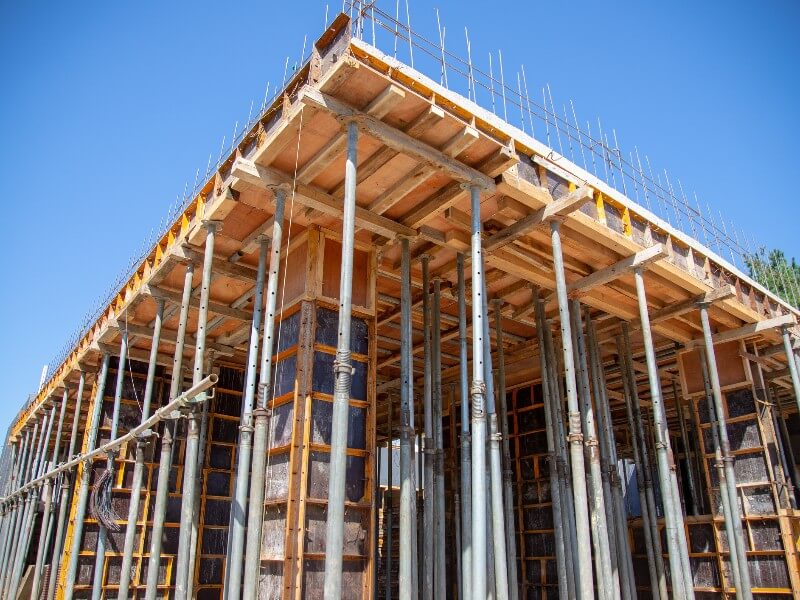
To shore up slabs, support pieces called struts are used. They support the workers and the initial structures at this stage. There are two main types, depending on their material.
They are struts made of steel, more resistant, lightweight, and versatile. Metal props are ideal for complex constructions that require agile assembly and removal of this temporary structure.
There are also high-quality wood struts capable of supporting the required weight. These are less resilient than steel struts, but they can be useful if they are more readily available on site.
Slab shoring must be performed in accordance with NBR 15696, both in terms of quality standards and application. Below are the main points to consider.
The first point to consider is the stipulated load limit. It's necessary to evaluate the structure to be supported, ensuring that the load doesn't exceed the safety limit during construction. The standard limit is 200 kg/m² to avoid the risk of falls or collapses.
It's also important to consider the technical specifications of the terrain where the struts will be installed. Check whether the foundation is solid, whether there's enough space for the entire structure, and whether any adjustments to the design or preparation are necessary, as all of this can significantly impact the construction process.
It's crucial to calculate the number of workers involved and the estimated total weight on the shoring at any given time. This will ensure the system supports the necessary number of people to work on the construction throughout the project.
The shoring must also be capable of supporting the weight of all construction materials used in the process, whether temporary or permanent. These include concrete, metal beams, tiles, bricks, among other items needed to carry out the construction.
At the same time, it's important to consider the tools you'll need. Examples include sanders, drills, screwdrivers, and welding machines.
Finally, a report on the environmental impacts of shoring the slab as part of the project is required. Since this is a temporary structure, all materials used must be removed and, depending on the project, discarded.
With a large volume of material comes a larger amount of debris, which requires proper treatment. Therefore, you must determine how this waste will be treated, whether through recycling, reuse, or proper disposal.
The main objective of slab shoring is to provide adequate support for the team and equipment. civil construction, safely. To do this, it's necessary to take some factors into consideration. See the main ones below!
As mentioned, it's crucial to calculate the total weight the shoring will need to support throughout the entire construction project. This includes your crew, equipment, construction materials, and, in some cases, additional upper floors.
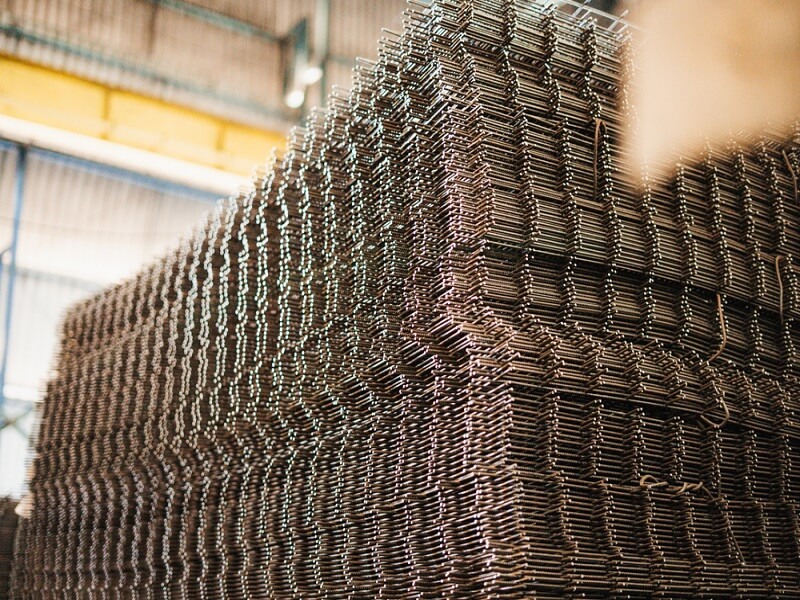
Even relatively light pieces, such as the truss for slab, need to have their weight calculated and considered. The larger the scale of the project, the greater the total impact of these components, even if they are small.
Shoring support must provide stability for the structure and all workers. However, team movements during work can affect the load-bearing capacity of these components, requiring careful consideration during project design.
This way, you ensure adequate safety for your team while they're working. If the structure isn't stable enough, the risk of an accident or the structure losing support is much higher.
In addition to the movement essential for the team's work, it's important to consider external factors that affect the stability of the shoring, especially wind. If the weather at the site is very intense, installing support reinforcements to keep the structure stable may become essential.
We've already specified that slab supports are divided into two types: wood and metal. Here are some criteria you can use to choose the right material for your project.
The first criterion when choosing any shoring system is the total weight the shoring can support. This is essential to ensuring the safety required for the project.
Both metal and wood supports can support a lot of weight. However, when it comes to larger, more complex projects, metal tends to be the safer alternative, both for its resilience and for the lower overall weight of the structure.
Another important element is the overall stability of the structure during construction. As we know, the movement of personnel and equipment, as well as external factors, must be taken into account to ensure the structure is not damaged during construction.
Again, both metal and wooden props can meet your stability needs. The most important thing is that they are properly anchored to the ground, with their joints reinforced to accommodate the expected movement.
In many cases, the main criterion for choosing the best type of slab shoring is the availability of the material needed for its construction. Depending on the location of the project and the available resources, one of these may be easier to access.
It's worth remembering that, regardless of the material's accessibility, your choice must meet the safety requirements for your project. Therefore, in some cases, it's necessary to make a larger investment to obtain adequate shoring or modify the design to adapt it to the available materials.
Practicality and efficiency are fundamental qualities in any construction project, including temporary structures. Therefore, your slab shoring should be as simple as possible to install to avoid delays in the construction schedule.
In general, metal props are more efficient, as they are lighter and easier to install. Wood requires more planning and careful construction to avoid potential defects and safety issues.
Finally, you must plan for the removal and proper disposal of the struts after the work is completed, something that also falls under the point on environmental impact established in NBR 15696.
Both wood and metal can be reused or recycled if properly disposed of. Steel, in particular, is easier to recycle, as it can be melted down and used to form new struts or even other types of components.
Below, we show you a step-by-step guide on how the slab shoring process should be carried out on your project.
The first step in any construction project is defining a project and preparing a plan. The same applies to the slab shoring system. Before even beginning the foundation, it's important to consider how this temporary structure will be installed to enable construction.
At this stage, we must consider the dimensions of each strut, its support points, and how each piece will be installed and removed. A study of the main risks that may occur during the project is also essential.
The next step is to estimate the total weight the shoring system will need to support throughout the project. This includes your team, equipment, construction materials, and the weight of the structure itself.
This calculation is necessary to determine the safety limit and find the most appropriate supports for the project's requirements. In some cases, the project is reevaluated to ensure the construction will be carried out safely.
If all your planning has been done correctly, the next step is to install the slab shoring. The sooner this structure is constructed, the better, as it is positioned over the foundation to ensure the team's support on the slab during construction work.
In fact, this assembly should receive the same attention as any other component of the property. Any failure could cause accidents during construction, putting your team at risk and significantly delaying your schedule.
Once the slab shoring system is in place, it's time to begin construction. If everything is in order, the process is expected to be completed on time, without the need for reinforcements or interruptions.
It is worth remembering that, for properties with multiple floors, it is usually necessary to use new supports in the construction of the upper parts, because it will be difficult to raise all the floors at once.
Once the slab is built and the property's permanent support is in place, you must remove the struts to complete the construction. After all, they're no longer needed.
Initially, there is no legally defined deadline for the removal of these structures. This will be determined by the concrete's curing time.
One of the most important parts of building a slab is curing the concrete. This is the minimum waiting time for the material to solidify and maintain its stability. Curing typically takes 10 to 15 days, but in some cases, it can be longer.
Therefore, it is recommended to wait at least 28 days before removing the entire shoring structure, avoiding any risk of cracks or other problems resulting from an incomplete curing process.
If you are looking for material to make slab shoring, know that SINOBRAS has what you need. You can count on excellent metal parts for this structure, such as beams, stiffened U-shaped profiles, tubes, trusses, and more. All SINOBRAS parts are made from high-quality steel.
Now you better understand how slab shoring works, its purpose, and how the process should be conducted. This structure is crucial to ensuring the success of a construction project. Furthermore, with proper planning, your projects are much safer.
Want to find the best materials for your shoring system? Then check out product catalog from SINOBRAS!
 EN
EN  PT_BR
PT_BR