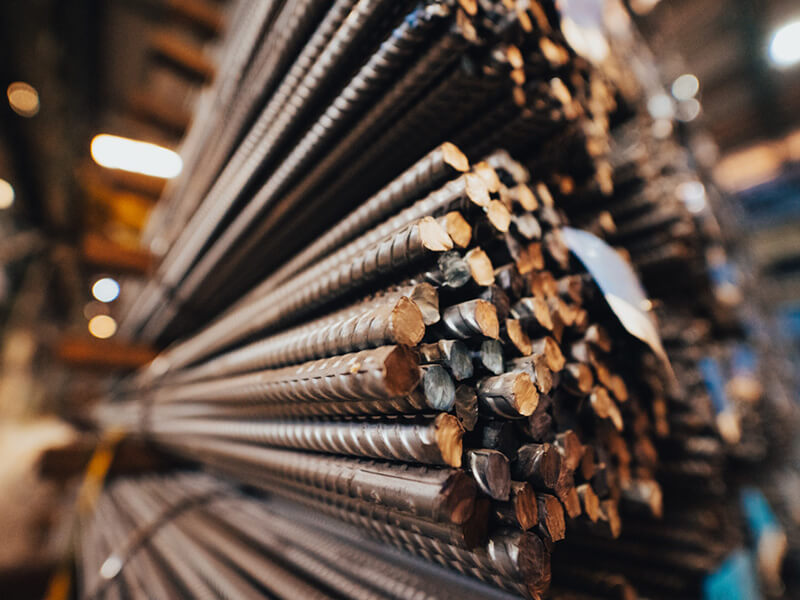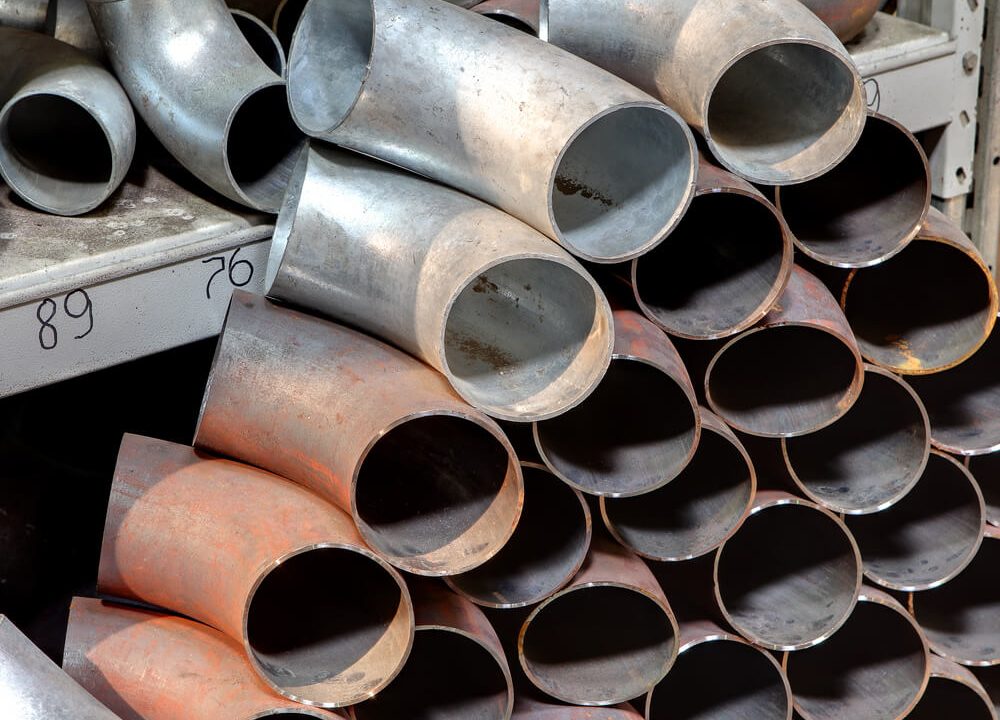
One of every designer's responsibilities is to analyze the environment to which the metal will be exposed, as well as the exposure time. Generally speaking, it's more advantageous to use resistant materials or methods of protection against the effects of the environment.
However, often, primarily due to financial reasons—and even with the knowledge that deterioration will occur—unprepared metals are used. One of the problems caused by steel's exposure to the environment is corrosion, a chemical phenomenon that degrades the metal, even compromising its mechanical properties.
In this post, we'll briefly explain what steel corrosion is and how it occurs, and we'll present some ways to overcome this problem. Check it out!
Corrosion is caused by two electrochemical processes: oxidation and reduction. The first is the removal of free electrons from an atom. The second occurs when the atom takes free electrons for itself.
Simply put, for corrosion to occur, these free electrons must exist — that is, atoms that need electrons to stabilize themselves and a medium through which this will occur (such as water, for metals, present even in atmospheric air).
Corrosion can occur in a number of ways: affecting the entire material, part of it, in cracks or in the grains (very internally) of the metal.
Some of these problems are merely cosmetic. Others, more serious, involve parts that lose their mechanical properties, causing leaks and process interruptions.
Specific paints serve as protection, as they create a kind of barrier against external agents. When applied this way, they are called inhibitors.
The coating can also be temporary, for transportation or storage purposes, using oils or emulsions. In this case, subsequent cleaning is an important step in the process.
Remember to also prevent the material from coming into contact with water before it is protected.
Another way to prevent corrosion is by using materials specifically designed for situations where the problem can be anticipated. After all, if the designer already knows where a particular metal will be used, why not prevent corrosion at its source, avoiding future problems?
For this, there are stainless metals, a alloy steelThese metals are obtained by adding nickel and chromium. The latter element, when reacting with oxygen, creates a very thin layer of corrosion, preventing deeper corrosion.
There are limitations to its use when chlorine and salinity are present in the environment, but overall, this is an effective solution.
In addition to stainless steel, there are galvanized and galvalume steels. Galvanized steel has a layer of zinc deposited on its surface. This coating, like stainless steel, serves as a sacrificial layer.
Galvalume is an alloy of aluminum, zinc, and silicon. Its major advantage is its resistance to corrosion in atmospheric environments, making it ideal for roofing. It can also undergo surface treatments, further improving its durability.
Simpler corrosion prevention methods involve preventing metal joints from accumulating water, acting as a barrier to atmospheric air, or allowing water to flow between the plates. If complete water retention is not possible, the suggestion is to create drainage gaps in the joints.
As we can see, there are several ways to prevent steel corrosion. Analyze the metal's application site to determine which solution—or solutions—to use to prevent corrosion.
Have you thought of any other ways to prevent steel corrosion? Tell us in the comments and share your knowledge!
 EN
EN  PT_BR
PT_BR