Companies that work with iron and steel deal with a series of dangerous procedures on a daily basis, whether during forging, cutting, transporting, or handling these materials. Therefore, it's essential to adhere to safety standards in these work environments to ensure the protection of all employees.
Compliance with these standards involves the proper use of Personal Protective Equipment (PPE) and Collective Protective Equipment (CPE). Continue reading to learn about the main safety standards for iron and steel companies!
NR 6 states that companies must provide free PPE appropriate for each type of risk faced by their employees. It also establishes that the equipment must be in perfect condition and that PPE must be made available when:
It's important to remember that the use of PPE should also be observed in the environments where the service takes place. Among the Collective Protective Equipment, some examples are worth highlighting:
Planning is essential to promote workplace safety in iron and steel companies. See below the main steps you should follow.
The first step in any safety program is to understand the main risks involved in your processes. In the case of iron and steel companies, this includes:
Based on this mapping, you can establish more effective measures for your work environment.
Once the main risks have been identified, the next step is to prepare your team to deal with them. You need to have general safety procedures that everyone must follow, including training on the correct use of PPE and EPC. This is the most important step in preventing accidents in any area of the company.
Much of workplace safety depends on the condition of your equipment and tools. Therefore, your company should include safety inspections in its work routine. Daily checks are important to identify faulty equipment and replace it. You should also conduct thorough inspections regularly.
The quality of the protective equipment used by your team directly impacts their performance and safety. Therefore, it's important to perform preventive maintenance as soon as any defects are identified. Even small flaws can pose a high risk to professionals, especially in iron and steel companies, which often handle hazardous processes.
Even if your employees have all the necessary prevention measures in place, accidents can still occur. Therefore, your safety program should include defined responses in the event of an emergency or accident. This way, your team can act quickly to minimize potential negative impacts.
There's a way to classify PPE according to its use, which makes it easier to understand when these items are needed and how they should be used. See below!
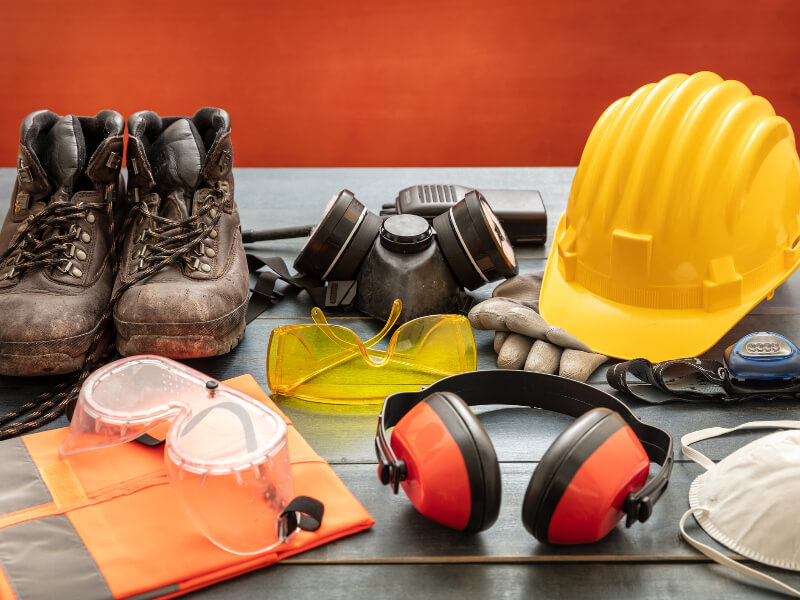
Here, PPE consists primarily of a helmet and hood. The former prevents injuries from impacts and electrical shocks, while the latter provides protection against chemicals, loose parts, and thermal injuries.
Goggles, face shields, and welding masks are primarily used to prevent injuries from materials and particles that could hit the employee's eyes or face. Additionally, these PPEs protect against sparks and excessive light, which contributes to safety and labor productivity.
Saws and other tools can produce very high-level noise, which can damage the hearing of workers who must remain in the environment for long periods. Therefore, hearing protection is essential.
Certain chemicals used in the maintenance of metal items can be harmful to health when inhaled, as can dust, mist, and fumes. Therefore, some employees may require respirators.
Safety clothing is necessary to protect employees from certain physical threats in the workplace. In the case of an iron and steel company, galvanized steel, the greatest risks are those of mechanical origin due to material handling. Therefore, trunk protection is necessary.
Braces, protective creams, gloves, and sleeves are part of the list of upper limb protectors. Their main purpose is to prevent injuries to the hands, fingers, arms, wrists, elbows, and forearms.
This group includes pants, leggings, socks, and special footwear. Without these items, the risk of accidents during handling and transportation is greater.
Full-body protection is the good old work coverall. It prevents splashes of harmful chemicals, prevents accidents with parts that are still hot, and protects against flames. Coveralls are mandatory in spaces where workers may be exposed to these factors.
Fall arresters and harnesses are the basic fall protection equipment for employees who experience falls from height differences. They should be used when employees are moving through environments that pose a risk of injury due to height differences, and are essential for various workloads. civil construction.
Now you better understand some of the safety regulations in iron and steel companies. Considering the risks inherent in working in this field, it's crucial to adhere to legal requirements. This care not only helps avoid fines but also ensures the best performance, safety, and well-being for your team in their daily work.
Want to stay informed about safety standards and updates? Then follow us on Facebook, Instagram, LinkedIn and YouTube right now!
 EN
EN  PT_BR
PT_BR