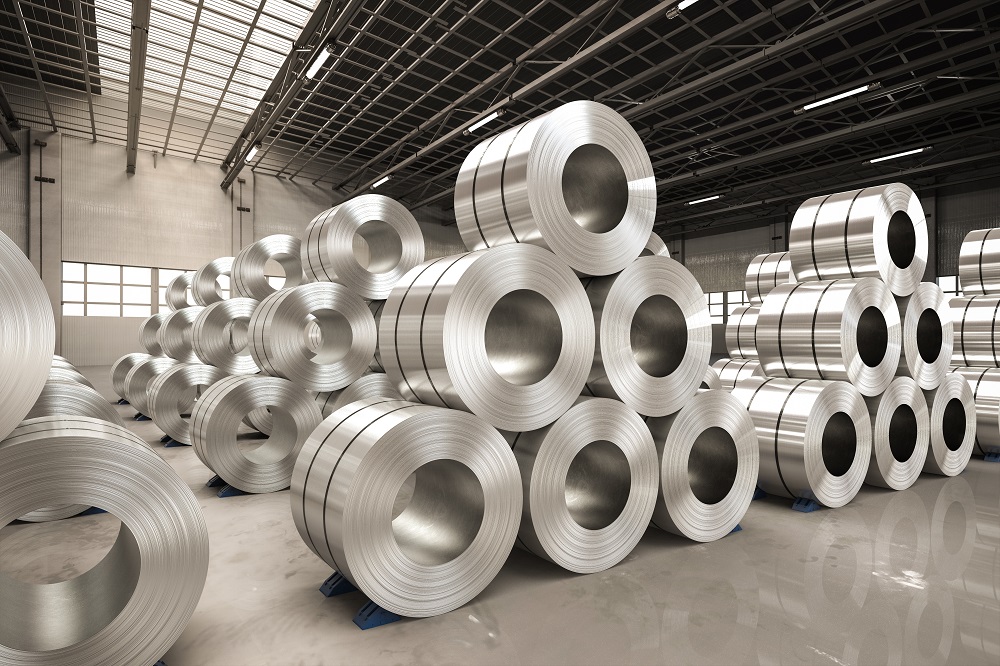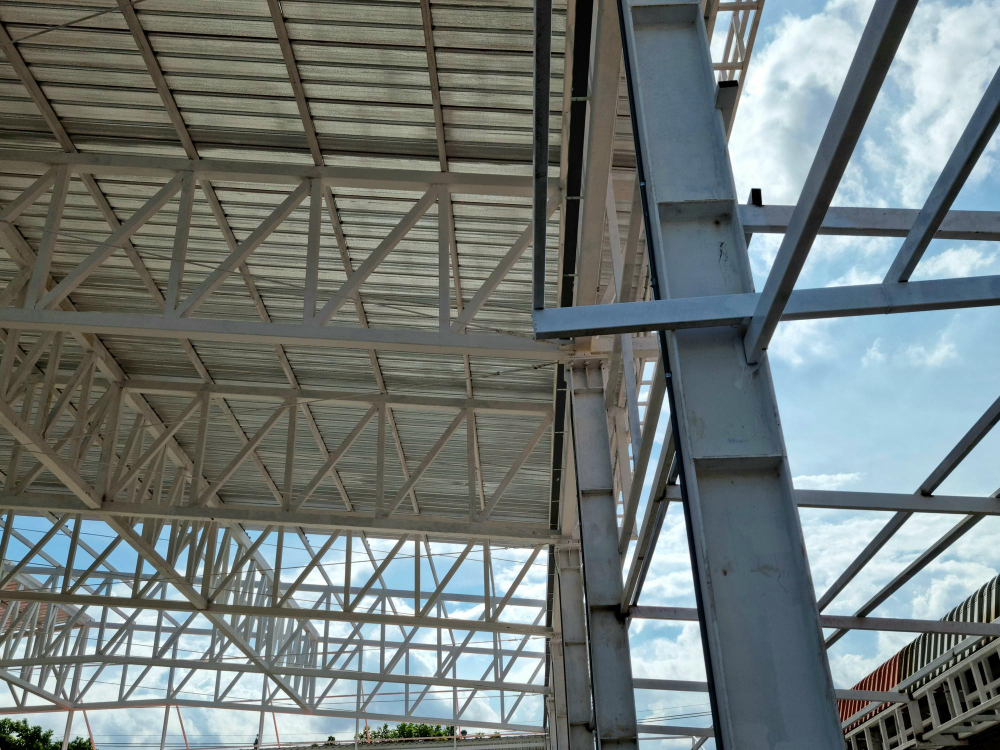
To the metal roofing They need to use steel that is compatible with the environment, the project, and the planned maintenance. The correct choice reduces the risks of corrosion, leaks, deformation, and replacements before the expected deadline.
Galvanized steel, zincalume, galvalume, and pre-painted materials offer different levels of protection. However, the coating alone does not act. Thickness, tile profile, slope, fastening, and installation quality also affect performance.
In this content, we explain how to compare these options and choose materials for residential, commercial, and industrial roofing, as well as projects with large covered areas.
The roof protects the building from rain, sun, wind, and temperature variations. Therefore, any failure can affect the interior of the building, the equipment, and the structure itself.
The steel used in roofing tiles needs to withstand mechanical stress and environmental exposure. At the same time, it must maintain stability during transport, installation, and years of use.
The strength of the roofing doesn't depend solely on the thickness of the sheet metal. The type of steel, the shape of the tile, and the quality of the coating also contribute to the result.
A very thin tile can deform under load or during assembly. On the other hand, increasing the thickness without analyzing the profile and supports can raise the cost without solving the main problem.
The metal coating protects the sheet metal from corrosion. However, cuts, scratches, and incorrect fastenings can create vulnerable points.
Furthermore, the design must consider wind, distance between supports, and slope. Tiles specified for smaller spans may exhibit displacements when installed on purlins that are too far apart.
Therefore, the selection must follow the roof design and the manufacturer's guidelines. Similar appearance between two tiles does not guarantee the same performance.
Our content about main types of metal roofing It helps to understand the differences between formats and applications.
The environment determines the intensity of the agents acting on the roof. A warehouse located in a dry region faces different conditions than a building near the sea.
THE humidity It directly participates in the corrosive process. When the surface remains wet for extended periods, the coating suffers greater wear.
Rain can remove dust and some contaminants. However, areas protected from natural washing can accumulate salts and residues.
Solar incidence also influences the system. Heating causes expansion, while cooling causes contraction. These cycles affect fasteners, joints, and seals.
Among the main environmental factors are:
THE corrosion of steel It depends on the relationship between the material, moisture, oxygen, and contaminants.
Before choosing the roofing tile, we need to analyze the microenvironment of the construction site. Distance from the coast, ventilation, industrial activity, and ease of cleaning all affect the exposure.
Galvanized steel receives a layer of zinc that reduces the steel's contact with water and oxygen. In addition, the zinc offers sacrificial protection in small exposed areas.
This material appears in roof tiles, profiles, gutters, flashing, and components of roofing systems. Its widespread application is linked to the balance between protection, availability, and cost.
Galvanized steel is typically suitable for urban and rural environments with moderate levels of aggression. However, the thickness or mass of the coating needs to be adjusted accordingly.
In regions with high humidity, intense pollution, or sea air, the zinc coating can be consumed more quickly. In these locations, the project may require more resistant coatings or additional protection.
The quality of the galvanizing process also matters. The process needs to form a continuous and adherent layer, compatible with the transformation of the sheet metal.
In roof tile production, the sheet usually receives its coating before shaping. Therefore, the material needs to withstand bending without exhibiting excessive detachment.
The content about Advantages and applications of galvanized steel. It presents other relevant criteria for the selection.
Another important consideration involves the accessories. Screws, washers, gutters, and flashing must be compatible with the roofing material. Otherwise, the assembly may suffer from concentrated corrosion.
Galvanized steel offers good performance when its limitations are respected in the application. However, the design should avoid the idea that any galvanized material is suitable for all environments.
Zincalume and galvalume are names associated with sheets coated with alloys that combine aluminum and zinc. The coating aims to provide both barrier protection and sacrificial action.
Aluminum helps create a barrier against external agents. Zinc, on the other hand, helps protect small exposed areas.
These materials are primarily used in roofing tiles, side cladding, and roofing components. In many applications, they offer superior performance compared to conventional galvanizing against atmospheric corrosion.
Therefore, they can be considered for use in industrial warehouses, logistics centers, commercial buildings, and constructions with large covered areas.
The content about zincalume roofing sheets It explains the characteristics and uses of this type of coating.
However, the trade name does not replace the technical specification. We need to verify the composition, amount of coating, sheet thickness, and manufacturer's recommendations.
The compatibility of the fasteners also remains essential. Certain metals in contact, in the presence of moisture, can develop galvanic corrosion.
Furthermore, cuts and edges require care. While coatings can protect small areas, extensive damage leaves the steel more exposed.
In coastal or industrial environments, the assessment should consider the actual intensity of exposure. In some projects, pre-painted materials or complementary protection systems may offer better results.
Therefore, zincalume and galvalume should not be treated merely as aesthetic alternatives. They represent coating systems with their own performance characteristics.
The shape of the tile alters its rigidity and its ability to span gaps. Therefore, two sheets with the same thickness may exhibit different behaviors.
Corrugated roofing sheets have continuous curves that help distribute stress. They are used in residential, commercial, and rural roofing.
Trapezoidal roofing sheets, on the other hand, have more defined ribs. Depending on the model, they can span larger distances and support higher loads.
THE trapezoidal tile It is common in warehouses, factories, logistics centers, and commercial buildings.
The height of the ribs influences the rigidity. In general, taller profiles can span larger gaps, provided that the thickness and fastening are compatible.
However, this relationship needs to be confirmed in the product's technical specifications. The designer must analyze wind loads, maintenance, and potential overloads.
The length of the tile also affects thermal movement. Longer tiles experience greater dimensional variation between hot and cold periods.
Furthermore, transportation and lifting become more complex. A long tile can deform when supported or moved improperly.
Therefore, the choice of profile must consider structure, logistics, and assembly. The decision should not be based solely on the appearance of the roof.
Sheet thickness influences rigidity, impact resistance, and ease of handling. However, it should not be considered in isolation.
The designer needs to combine thickness, profile, span between purlins, and expected loads. Changing one of these factors may require changes to the others.
Thinner roof tiles tend to be lighter. However, they can be damaged during transport, handling, or installation.
Thicker roof tiles offer greater rigidity. On the other hand, they increase weight, cost, and handling requirements.
The distance between supports has a significant influence. A tile suitable for closely spaced purlins may exhibit deformation when the span increases.
Wind load also needs to be factored into the calculation. In regions subject to strong gusts, anchorages and overlaps require additional attention.
Furthermore, some roof structures need to allow access for maintenance. In this case, the design should include walkways or safe circulation points.
We do not recommend walking directly on roof tiles without a specific procedure. The concentrated weight of the body can cause deformities or accidents.
That's why, The thickness should match the entire system., and not just the size of the area covered.
The final choice must follow the manufacturer's data and the assessment of the responsible technician. Replacing one thickness with another without validation may compromise safety.
Each environment presents its own unique combination of humidity, corrosive agents, and maintenance challenges.
In urban areas far from the coast, galvanized steel can be used for many roofing applications. However, pollution and proximity to busy roads need to be considered.
In rural environments, organic waste and chemicals can increase pest aggression. Sheds intended for animals or fertilizers require specific evaluation.
Industrial areas can release particles, vapors, or gases. The nature of the activity determines which materials are most compatible.
In coastal regions, chlorides from sea air accelerate corrosion. Therefore, the design must consider appropriate coatings and periodic cleaning.
The choice can follow an analysis like this:
THE quality of metal roofing tiles It also needs to be checked before purchase.
Therefore, the best roof tile is not the same for all locations. The material must be suited to the specific conditions of the construction site.
Metal roof tiles heat up when exposed to solar radiation. This heat can be transferred to the interior of the building.
The intensity depends on the color, finish, ventilation, insulation, and shape of the roof. Therefore, the type of steel is not the only factor related to thermal comfort.
Light colors tend to reflect a greater portion of radiation. Dark surfaces, on the other hand, absorb more heat.
However, reflectance can change with dirt and aging. Therefore, maintenance and cleaning also influence thermal behavior.
Projects requiring greater comfort can utilize thermoacoustic roof tiles. These solutions combine metal sheets with insulating materials.
Another possibility is to install blankets under the roof. The system needs to be compatible with ventilation, humidity, and the risk of condensation.
Ventilation between the roof and ceiling also helps remove some of the heat. In warehouses, skylights and openings can contribute to this control.
Furthermore, the geometry of the roof affects solar incidence. Orientation, inclination, and shading alter exposure throughout the day.
Therefore, choosing a roof tile based solely on color can yield limited results. Comfort depends on the combination of roofing, insulation, and ventilation.
The solution needs to meet the internal activity requirements. A warehouse has different demands than a factory with people and equipment in continuous operation.
The installation can either preserve or reduce the lifespan of the roofing. Many problems begin with cuts, fasteners, and overlaps performed without proper control.
The first precaution involves handling. Tiles dragged over each other can lose part of their coating.
During lifting, the supports need to distribute the weight. Long pieces require adequate support points to prevent bending.
Cuts should be made using tools compatible with the material. Equipment that generates excessive heat can damage the coating near the edge.
In addition, all metal shavings need to be removed. These residues oxidize on the coating and create stains.
The screws must be fastened at the points specified by the manufacturer. Screws in the wrong position may allow water to seep in or deform the tile.
The sealing washers also need to remain in good condition. Insufficient tightening allows water to enter, while excessive tightening damages the component.
In overlapping structures, the design must consider wind direction and slope. A small overlap can promote water infiltration.
Gutters, flashing, and ridge tiles need to form an integrated system. Failures at these junctions tend to trap water.
The content about galvalume roofing sheets and their applications It presents other characteristics of this type of roofing.
Finally, the team must protect the tile during subsequent work. Splashes of welding, mortar, and paint can damage or stain the surface.
Cuts and punctures break the continuity of the coating. Small areas may receive some protection from the surrounding metal, but larger damage requires treatment.
The procedure depends on the type of material and the coating specifications. Zinc-rich products or paint systems may be indicated in certain situations.
However, any repair needs to be compatible with the coating. Applying paint without proper preparation does not guarantee adhesion or protection.
The fasteners also require attention. Incompatible screws can corrode before the tile or create electrochemical differences.
In humid environments, this combination can accelerate galvanic corrosion. Therefore, the screw, washer, and plate must function as a unit.
The edges of gutters and downspouts are critical points. Water remains in these areas for longer, especially when the slope is insufficient.
In addition, debris can accumulate around the fasteners. Periodic inspection should look for stains, gaps, and deterioration of the seals.
THE ICZ galvanizing manual It explains the protective mechanisms of zinc and the factors that affect its durability.
When the team identifies damage during assembly, they must address it before releasing the cover. Correcting the fault at this stage is usually simpler.
The lifespan of a roof begins with the choice of material, but it also depends on maintenance. Roofs need to be inspected, even when using high-resistance coatings.
Frequency varies depending on the environment. Coastal or industrial regions may require more frequent checks.
During the inspection, we should observe fasteners, overlaps, gutters, flashing, and points of accumulation. Stains and opaque areas also deserve evaluation.
Leaves and debris should be removed. They retain water and can block drainage.
Cleaning methods must be compatible with the coating. Abrasive or overly aggressive products can damage the surface.
We should also check the seals. Dried-out washers and degraded sealants promote leaks.
Gutters need to remain clear to channel water away. When overflow occurs, moisture reaches areas that were not designed for constant exposure.
Another consideration involves equipment installed on the roof. Solar panels, air conditioning systems, and walkways require compatible fixings.
Maintenance crews must use safe pathways. Direct traffic over the roof tiles can cause dents and damage to the coating.
Therefore, Inspection, cleaning, and repair form the routine of maintenance.. Waiting for the leak to appear increases the cost of the repair.
The price per square meter is only one part of the decision. Transportation, installation, maintenance, and replacement also factor into the cost.
A cheaper roof tile may require frequent maintenance. Conversely, an option with greater protection may reduce repairs over time.
Tall or extensive roofs require more complex maintenance. Access, safety equipment, and operational interruptions increase costs.
In industrial settings, water infiltration can damage machinery, products, or electrical installations. Therefore, the impact can exceed the value of the roofing tile itself.
Therefore, we recommend comparing solutions for the same period. An analysis over ten or twenty years offers a different perspective than the initial purchase.
The plan should also include the availability of accessories. Gutters, flashing, and fasteners need to be readily available for future replacements.
Another point involves warranty and documentation. Identified products facilitate maintenance, expansion, and replacement.
Life cycle costing helps balance investment and performance. It also prevents the selection of an incompatible material simply because it has a lower immediate price.
THE Aço Cearense product page It offers solutions for roofing, structures, and various applications in civil construction.
To the metal roofing They need to combine steel, cladding, profile, thickness, and installation. When these decisions are aligned, the roof tends to be more resistant and require less intervention.
At Aço Cearense Comercial, we offer roofing tiles and steel products for residential, commercial, and industrial construction projects.
Discover our options and Download the Aço Cearense catalog. to evaluate materials that are compatible with your project.
It depends on the building's use and the desired level of comfort. Warehouses, commercial buildings, and residences can utilize thermal and acoustic insulation blankets, linings, or roofing tiles to reduce heat transfer.
Yes. Each profile has a minimum slope specified by the manufacturer. Inadequate slopes increase the risk of water backflow and leaks.
Yes, provided the system is compatible with the existing coating. The surface needs to be cleaned and prepared to ensure adhesion.
Deep scratches, red spots, localized stains, and peeling should be evaluated. Areas near cuts and fasteners require special attention.
Yes, provided the structure, fasteners, and sealing are properly sized. The installation must not puncture or deform the tile without a compatible system.
Durability varies depending on the type of steel, coating, environment, installation, and maintenance. Therefore, there is no single lifespan applicable to all roofing materials.